
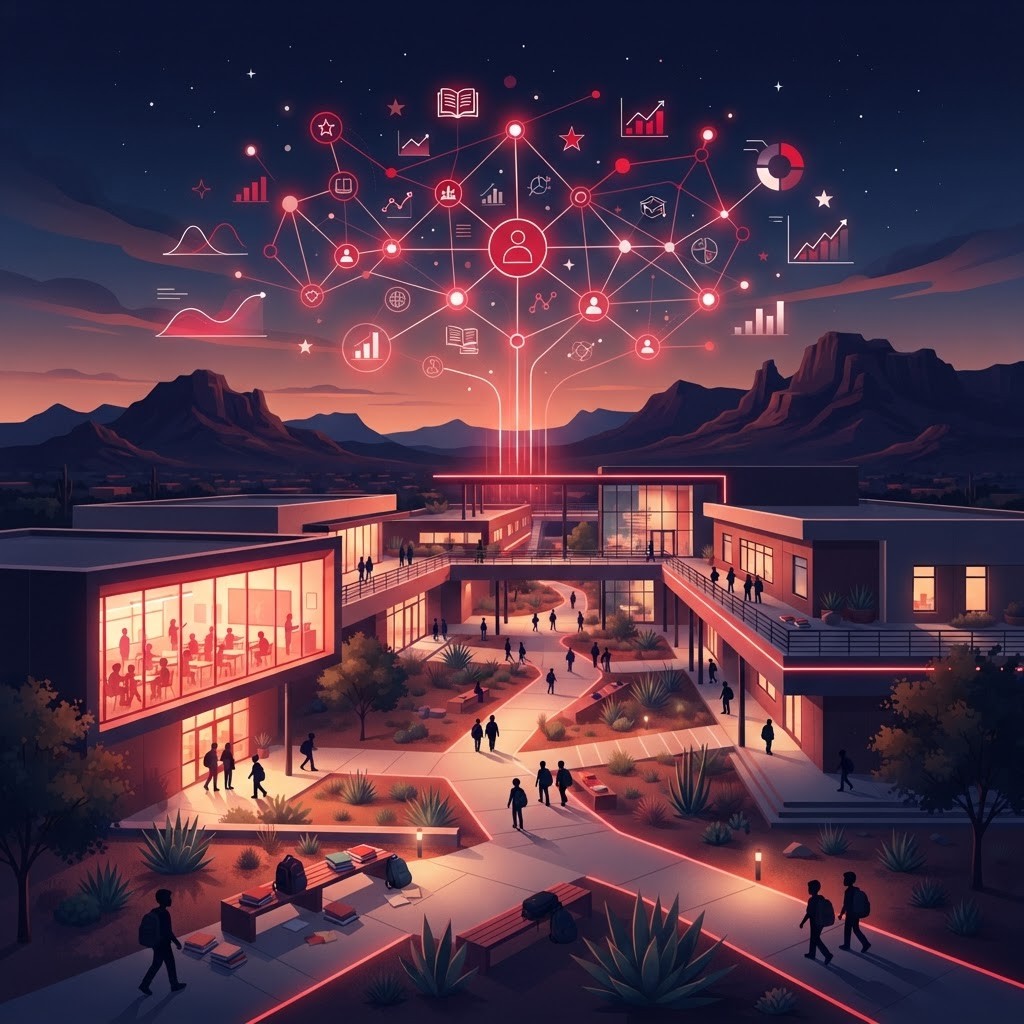
Understanding the El Paso Education Landscape
El Paso's K-12 landscape is larger and more varied than many visitors assume. Several sizable public districts serve different portions of the metropolitan area, each operating neighborhood campuses alongside specialized magnet and early college programs. Layered on top are public charter networks that emphasize college preparation, independent and parochial private schools with long local histories, and dual-language programs that leverage the region's binational character as an academic asset rather than an obstacle.
That variety is genuinely useful, because students differ. A child who thrives in a large comprehensive high school with extensive athletics, band, and career pathways may struggle in a small, intense academic environment, and the reverse is equally true. The goal is fit rather than prestige.
The Top 10 School Options in El Paso
1. Early college high schools. Among the most consequential innovations in local education, early college programs allow students to earn substantial college credit, and in some cases an associate degree, while completing high school. Partnerships with local higher education institutions make this possible, and graduates frequently enter university with two years of coursework behind them at minimal cost.
2. Magnet programs in health professions. Given the city's substantial medical sector, health science magnet programs give students clinical exposure, certification pathways, and a realistic view of healthcare careers before graduation. These programs are consistently competitive for admission and produce strong postsecondary outcomes.
3. STEM and engineering academies. Schools organized around science, technology, engineering, and mathematics offer project-based coursework, robotics competition teams, and industry mentorship. In a region with manufacturing and logistics employers, these pathways connect directly to local job markets.
4. IDEA Public Schools campuses. This charter network operates multiple El Paso campuses built around a college-for-all model, with extended instructional time, structured curriculum, and heavy emphasis on college advising. Families seeking a highly structured environment often find it a strong match.
5. Harmony Public Schools. Harmony's charter campuses emphasize STEM instruction and individualized attention with relatively small class sizes. The network is known for science fair participation and steady progression into engineering and computing programs.
6. Loretto Academy. A long-established Catholic school, Loretto serves students from early grades through high school with a college-preparatory curriculum, service learning, and a values-based environment. Its alumni network in El Paso is notably strong.
7. Cathedral High School. Another cornerstone of the city's parochial education tradition, Cathedral offers a rigorous academic program combined with a distinctive school culture and competitive athletics. Small cohorts allow close faculty relationships.
8. Radford School. As an independent private school with a long history in El Paso, Radford emphasizes small classes, individualized attention, and a broad liberal arts foundation from early childhood through secondary grades.
9. Dual-language and bilingual programs. Programs that develop full literacy in both English and Spanish are a regional strength. Research consistently links strong bilingualism to cognitive and academic benefits, and in a border economy the practical career value is obvious.
10. High-performing neighborhood campuses. Finally, many of El Paso's strongest schools are ordinary neighborhood campuses with exceptional leadership, stable faculty, and engaged parent communities. These schools rarely market themselves, but sustained academic growth and low teacher turnover are reliable indicators of quality.
Trends Shaping Local Schools
Career and technical education has expanded dramatically, with pathways in healthcare, cybersecurity, welding, automotive technology, aviation maintenance, and logistics. Students can now graduate holding industry certifications that lead directly to employment or reduce the cost of further training. This shift reflects a broader recognition that a single academic track does not serve every student well.
Technology integration has stabilized after years of rapid change, with most campuses now operating one-to-one device programs and using data systems to identify students who need intervention early. Mental health support has become a mainstream priority, with counselors, social workers, and structured social-emotional curricula increasingly standard rather than optional.
Enrollment patterns are also changing. Growth on the east side and in outlying areas has driven new construction, while older neighborhoods face consolidation pressure. Families evaluating schools should ask directly about enrollment trends and facility plans, because boundary changes can affect a student's path through middle and high school.
How to Evaluate a School Properly
Published accountability ratings are a starting point, not a conclusion. They correlate heavily with student demographics and can obscure exceptional teaching. Look instead at academic growth measures, which show how much students improve during a year, and at longitudinal outcomes such as advanced coursework participation, college credit earned, and postsecondary persistence.
Then visit. Walk the halls during a normal school day and observe whether students are engaged, whether classrooms are orderly without being rigid, and how adults speak to children. Ask about teacher retention, because stable faculty is one of the strongest predictors of sustained quality. Ask how the school supports students who fall behind and how it challenges those who move quickly, since both answers reveal instructional philosophy.
Finally, consider logistics honestly. A superb school with a forty-five minute commute may cost your family more in time and fatigue than it returns in academic advantage. Transportation, aftercare, sibling placement, and extracurricular schedules all shape whether a school works in practice.
Final Thoughts
El Paso offers families real choice, from early college and health science magnets to charter networks, established private schools, and strong dual-language programs. Define what your student needs, gather evidence beyond ratings, visit campuses in person, and pay attention to culture and teacher stability. The best school is the one where your child is known, supported, and consistently challenged.
