
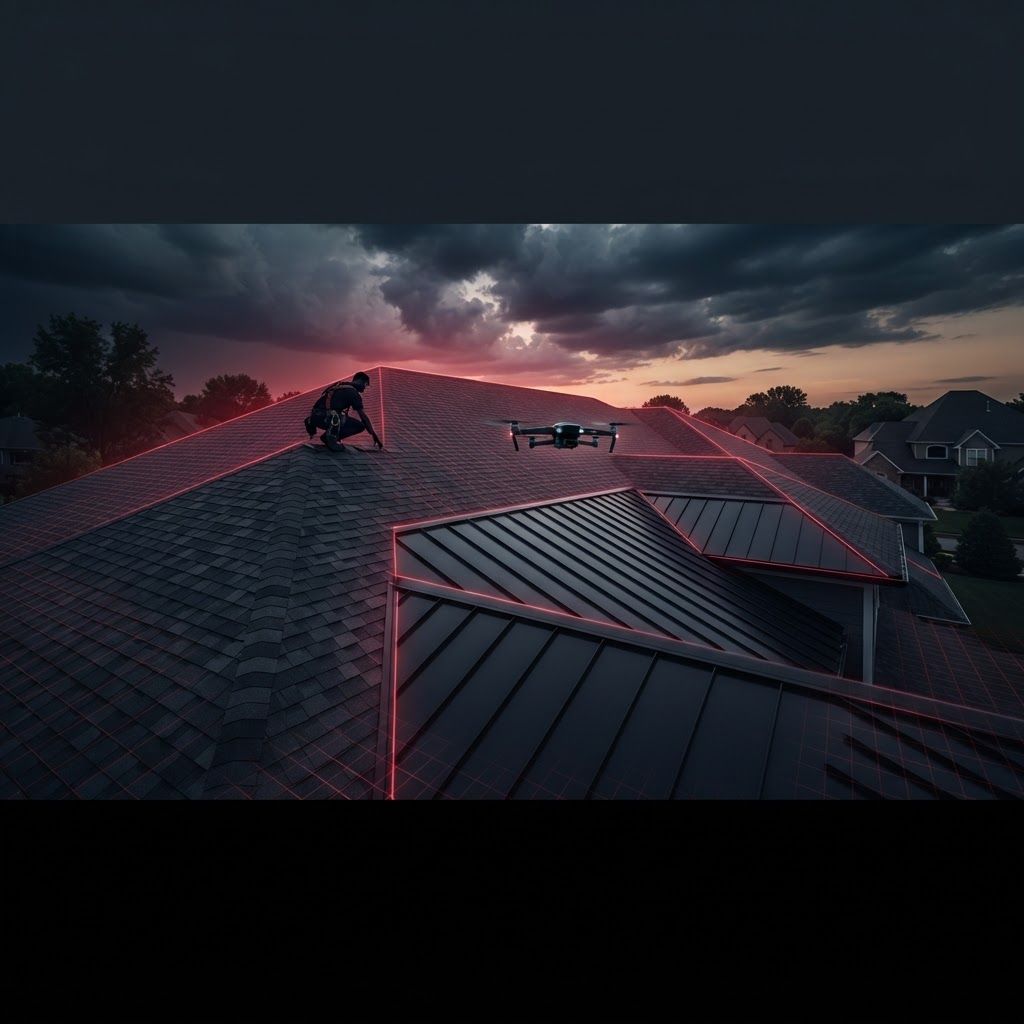
Why Roofing Is Especially Demanding in Memphis
A roof in the Mid-South works harder than most people realize. Summer surface temperatures on dark shingles can exceed one hundred and fifty degrees, accelerating the loss of volatile compounds in asphalt and shortening service life. Humidity is persistently high, which makes attic ventilation and vapor management critical to preventing condensation, sheathing decay and mold. Rainfall arrives in intense bursts that overwhelm undersized gutters and expose any deficiency in flashing or underlayment. Spring and early summer bring severe thunderstorms with hail and straight-line winds capable of stripping shingles and denting metal panels. Occasional winter ice events add freeze-thaw stress and the weight of accumulated ice on eaves.
The result is a market where roof quality is determined less by material brand than by installation detail. Most leaks originate not in the field of the roof but at penetrations, valleys, wall intersections, chimneys and eave transitions. Ventilation errors cause damage invisible from the street. A roof installed correctly with mid-grade materials will consistently outlast a premium product installed poorly.
Roofing Systems and Where They Fit
Architectural asphalt shingles dominate residential roofing for good reason: reasonable cost, wide color selection and service life typically in the twenty-five to thirty year range when properly ventilated. Impact-resistant classifications are increasingly popular given regional hail exposure.
Standing seam metal offers exceptional longevity, wind resistance and reflectivity, with concealed fasteners that eliminate the gasket failures common in exposed-fastener panels. Higher upfront cost is offset by decades of service.
Exposed-fastener metal panels remain economical for agricultural, industrial and outbuilding applications, though periodic fastener and gasket maintenance is required.
Single-ply membranes including TPO and EPDM serve low-slope commercial roofs, where seam welding quality and drainage design determine performance.
Modified bitumen and built-up systems continue to be used on low-slope roofs with heavy foot traffic or complex penetration patterns.
Tile, slate and synthetic slate appear on historic and high-end homes, requiring structural capacity verification and specialized installation expertise.
The 10 Best Roofing Contractors in Memphis
1. Bluff City Roofing Company
Bluff City Roofing Company is among the most established residential and light commercial roofers in the metro. Full tear-off practices, complete deck inspection and replacement of damaged sheathing, ice and water barrier at vulnerable areas, and corrected attic ventilation are standard rather than upsell items. Detailed written scopes and photographic documentation of each stage have earned it strong repeat and referral business.
2. Delta Commercial Roofing Systems
Focused on low-slope commercial and industrial roofs, Delta Commercial Roofing Systems installs TPO, EPDM and modified bitumen assemblies along with tapered insulation for positive drainage. The firm also performs infrared moisture surveys and roof asset management programs for owners managing multiple buildings, a valuable service in the region's large warehouse market.
3. River City Metal Roofing
River City Metal Roofing specializes in standing seam systems, with on-site panel roll forming that eliminates transport-related damage and allows continuous panels on long runs. Concealed clip fastening, proper thermal movement allowance and careful flashing fabrication are hallmarks of its work on both residential and agricultural projects.
4. Memphis Storm Damage Restoration
Severe weather claims require documentation expertise as much as construction skill. Memphis Storm Damage Restoration performs thorough hail and wind damage inspections, produces detailed photographic reports, meets adjusters on site and completes repairs to code. The firm is known for honest assessments, including telling homeowners when damage does not warrant a claim.
5. Wolf River Roofing and Exteriors
Serving the eastern suburbs, Wolf River Roofing and Exteriors handles roofing alongside siding, soffit, fascia, gutters and window replacement. Coordinating the entire exterior envelope under one contractor eliminates the flashing disputes that arise when roofing and siding are installed by separate companies.
6. Precision Flat Roof Specialists
Low-slope residential and small commercial roofs are frequently mishandled by shingle-focused crews. Precision Flat Roof Specialists concentrates exclusively on them, addressing drainage correction, scupper and drain detailing, parapet flashing and membrane seam integrity on porches, additions and modern flat-roof homes.
7. Grind City Roof Repair and Maintenance
Not every roof needs replacement. Grind City Roof Repair and Maintenance performs leak diagnosis, targeted repair, flashing correction, pipe boot and vent replacement, and annual maintenance inspections. Its diagnostic approach, tracing water paths rather than guessing, extends roof life substantially and saves owners significant expense.
8. Gateway Historic and Slate Roofing
Historic districts require craftsmanship that has become rare. Gateway Historic and Slate Roofing works with natural slate, clay tile, synthetic slate and standing seam copper, performing individual slate replacement, soldered copper flashing and gutter work, and structural evaluation for heavy roofing assemblies.
9. Southside Gutter and Drainage Solutions
Water management does not end at the roof edge. Southside Gutter and Drainage Solutions installs seamless aluminum and copper gutters, oversized downspouts sized for intense rainfall, leaf protection systems and underground drainage that carries water away from foundations, a critical consideration on expansive clay soils.
10. Elite Roof Coatings and Energy Systems
Elite Roof Coatings and Energy Systems focuses on performance improvement, applying reflective silicone and acrylic coating systems that extend the life of aging low-slope roofs while reducing cooling loads. The company also installs added attic insulation, ridge and soffit ventilation upgrades and solar-ready roof assemblies.
How to Evaluate Roofing Bids
Compare scopes, not just totals. A legitimate proposal specifies tear-off versus overlay, the number of layers being removed, deck inspection and replacement provisions, underlayment type, ice and water barrier locations, drip edge and starter strip, valley treatment method, all flashing and penetration details, ridge and soffit ventilation, cleanup and nail sweep, and disposal. A bid that is significantly lower than others is almost always omitting one of these items.
Verify insurance and licensing directly with the carrier rather than accepting a certificate at face value. Confirm both a manufacturer material warranty and a contractor workmanship warranty, and understand that manufacturer system warranties often require certified installers and specific component combinations. Ask whether the crew is employed or subcontracted, and who will supervise on site.
Handling Storm Damage Correctly
After a hail or wind event, document conditions promptly with photographs and note the date of the storm. Have a reputable local contractor inspect the roof before filing, and be cautious of out-of-area crews that appear immediately after severe weather, pressure homeowners to sign contingency agreements or offer to waive deductibles, which is improper. A trustworthy contractor will explain what damage exists, what is cosmetic and whether a claim is justified, and will meet the insurance adjuster to walk the roof together.
Maintenance That Extends Roof Life
Inspect the roof twice yearly and after significant storms. Keep gutters clear so water does not back up under shingles at the eaves. Trim overhanging limbs that abrade surfaces and drop debris. Replace deteriorated pipe boots, which are among the most common leak sources and among the cheapest repairs. Verify that attic ventilation is unobstructed by insulation at the soffits and that bathroom and kitchen fans exhaust outside rather than into the attic. These simple measures routinely add years of service.
Final Thoughts
The roofing contractors profiled here stand out because they treat the roof as a system encompassing deck, underlayment, flashing, ventilation and drainage rather than merely a surface covering. In a climate defined by heat, humidity, intense rainfall and hail, that comprehensive approach is what separates a roof that lasts its full rated life from one that fails early. Compare detailed scopes, verify credentials, insist on proper ventilation and maintain the roof once it is installed. Doing so protects the single most important building component a property owner has.
