
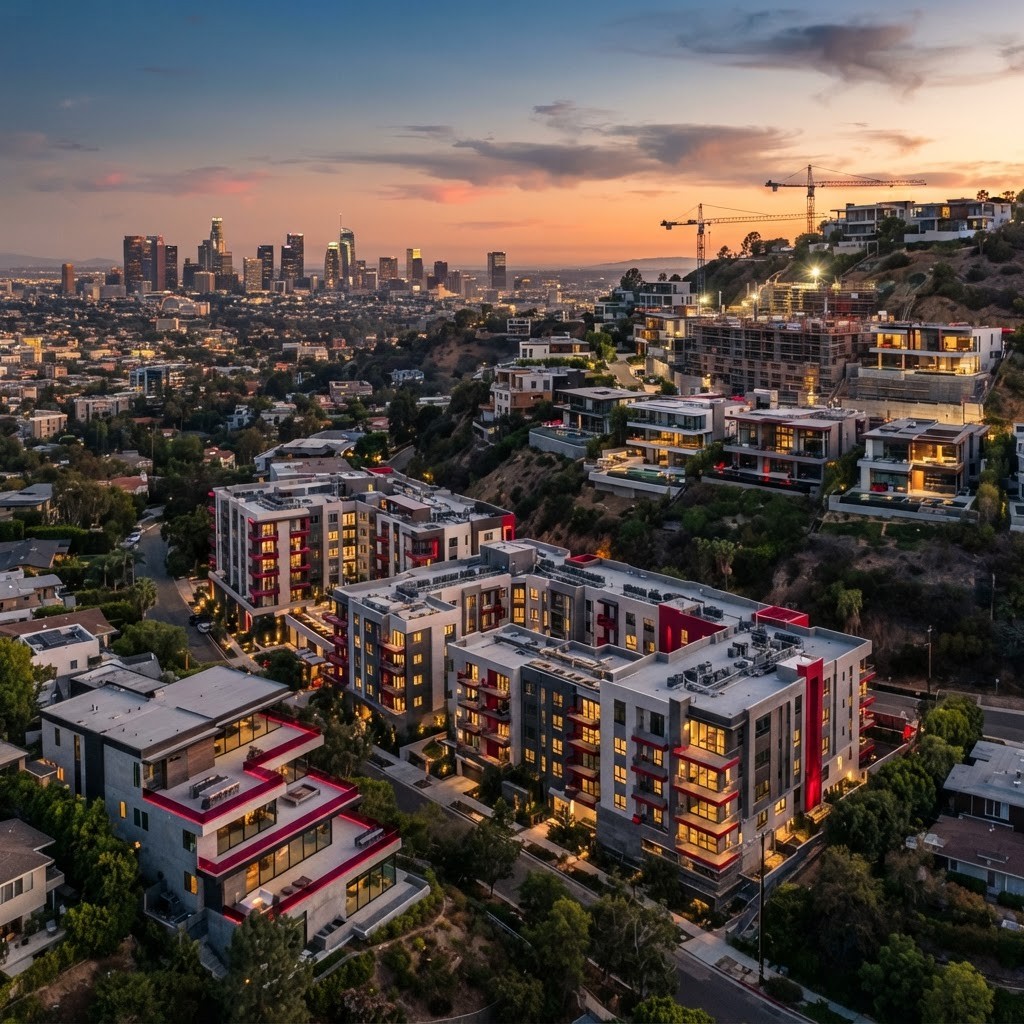
The Changing Face of Los Angeles Housing
Residential development in Los Angeles must respond to limited land, housing demand, complex approvals, wildfire resilience, water conservation, and a growing preference for walkable neighborhoods. Leading developers distinguish themselves through design quality, financial strength, community engagement, and the ability to complete ambitious projects. This list highlights companies with meaningful Los Angeles activity across luxury, multifamily, mixed-use, and master-planned housing.
1. Related California
Related California is a major force in market-rate and affordable housing across the state. In Los Angeles, the company is associated with large mixed-use communities that combine residences with retail, public spaces, and transportation access. Its strengths include long-term planning, complex financing, and experience coordinating projects with public agencies. Related’s approach is especially relevant as Los Angeles encourages denser housing near employment centers and transit.
2. CIM Group
CIM Group has deep roots in Los Angeles and invests in communities where real estate can support broader neighborhood growth. Its residential portfolio includes apartments and mixed-use properties in urban locations. The company often works across development, ownership, and operation, allowing decisions to reflect long-term performance rather than short-term delivery alone. This integrated model can contribute to consistent property management and carefully planned ground-floor uses.
3. Caruso
Caruso is widely recognized for highly curated environments that blend residences, retail, hospitality, landscaping, and public gathering spaces. Its projects emphasize polished architecture, service, security, and a strong sense of place. Although the company is best known for destination retail, its residential work applies the same attention to amenities and resident experience. Caruso appeals to buyers and renters seeking a luxury lifestyle supported by dining, shopping, and carefully maintained surroundings.
4. Brookfield Properties
Brookfield Properties brings global resources to major Los Angeles developments. Its local work includes large urban sites with residential, commercial, and public components. The company’s scale supports projects requiring substantial infrastructure, phased construction, and coordination among many stakeholders. For residents, mixed-use development can create convenient access to work, recreation, and daily services while reducing dependence on long commutes.
5. Trammell Crow Residential
Trammell Crow Residential is an established multifamily developer with communities across Southern California. The company develops apartment properties designed around modern floor plans, shared amenities, and professionally managed living. Its experience in site selection and construction enables it to serve varied submarkets. In Los Angeles, this kind of disciplined multifamily development helps expand rental supply in locations where homeownership may remain out of reach.
6. Cityview
Cityview focuses on urban multifamily and mixed-use housing in high-demand Western markets, including Los Angeles. Its projects frequently emphasize walkability, transit access, sustainability, and amenities suited to city living. The firm’s local knowledge helps it navigate infill sites where design must respond to surrounding buildings and neighborhood priorities. Cityview’s communities often target residents who want connectivity without sacrificing comfortable shared spaces.
7. Jamison Properties
Jamison Properties has played a notable role in the transformation of Koreatown, converting and developing properties in one of Los Angeles’s densest neighborhoods. Its residential projects add apartments near restaurants, services, and public transportation. The company’s activity illustrates how infill development can place more homes in already vibrant districts. Its experience with local parcels and approvals is a significant differentiator in a complicated development environment.
8. Century Housing
Century Housing advances affordable and supportive housing throughout Los Angeles County. Beyond development, the organization participates in financing and partnerships that help other housing providers move projects forward. Its mission-driven model addresses a critical regional need: stable homes for people and families underserved by the conventional market. Projects often require layered funding, service coordination, and close collaboration with community organizations.
9. Meta Housing Corporation
Meta Housing Corporation specializes in affordable apartment communities, including housing for families, seniors, and residents who benefit from supportive services. The company is known for incorporating thoughtful design, art, community rooms, and resident programming into income-restricted developments. This approach challenges the idea that affordable housing should compromise on quality. In Los Angeles, its work contributes both needed units and social infrastructure.
10. Thomas Safran & Associates
Thomas Safran & Associates is a prominent developer and manager of affordable housing in Southern California. Its communities serve seniors, families, and people with special needs, often pairing well-maintained residences with useful common areas and services. Long-term management is central to its model, which matters because successful affordable housing depends on sustained operations after construction ends. The company’s portfolio demonstrates extensive experience with public-private partnerships.
What Defines a Strong Residential Developer?
Prospective residents and investment partners should examine completed projects, construction quality, property management, financial capacity, and responsiveness to neighborhood concerns. Sustainability has become increasingly important in Los Angeles, where efficient systems, shade, durable landscaping, and reduced vehicle dependence can improve both resilience and operating costs. Developers should also demonstrate an ability to navigate entitlement and construction challenges without losing sight of design.
The strongest choice depends on the housing segment. Luxury residents may prioritize service and finishes, renters may focus on value and management, and public partners may value affordability expertise. Los Angeles needs all of these approaches. Together, these developers show how private investment, institutional scale, and mission-led housing can contribute to a more diverse residential landscape.
