
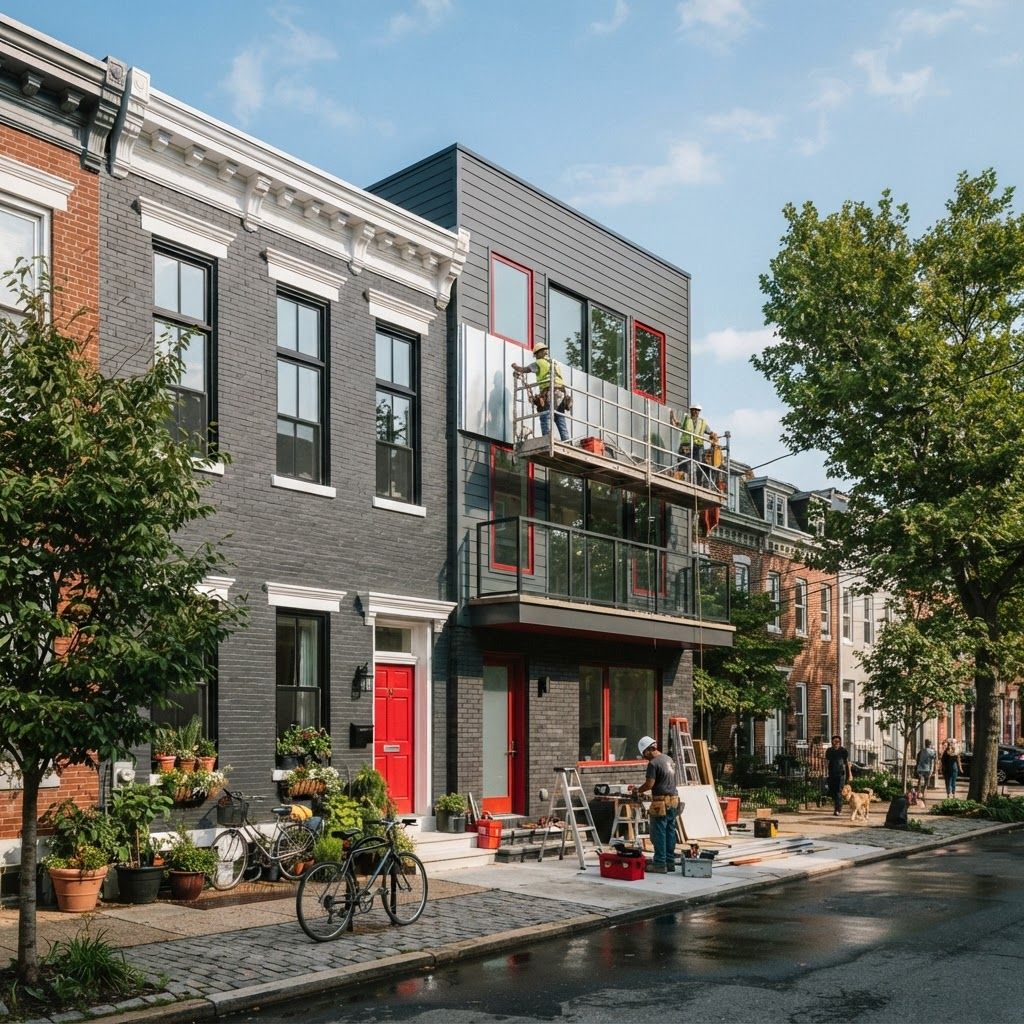
Philadelphia Residential Construction Is Its Own Discipline
Building or renovating a home in Philadelphia differs from working on a spacious suburban lot. Rowhomes may share structural walls and roof drainage, streets can restrict deliveries, and old buildings often conceal previous alterations. New multifamily construction adds complex requirements for life safety, acoustics, accessibility, envelope performance, and resident comfort.
Homeowners and developers should choose a company based on project type and scale. A meticulous renovation contractor may not have the systems for a large apartment building, while a major construction manager may not be suited to a single kitchen addition. These ten companies represent varied strengths in the Philadelphia residential market.
1. Buckminster Green
Buckminster Green is known for residential renovation, remodeling, and sustainable building practices. Its experience with Philadelphia homes is useful when projects combine historic character with modern comfort. High-performance improvements should consider the entire building: insulation, air sealing, moisture control, ventilation, and heating systems must work together.
2. Bellweather Design-Build
Bellweather Design-Build combines design and construction for residential renovations. An integrated model can reduce handoff gaps and allow budget feedback while plans are developing. It is especially attractive to homeowners who want one coordinated team, although the agreement should still define design deliverables, allowances, and decision milestones clearly.
3. Cherokee Construction
Cherokee Construction is associated with high-quality residential renovation and custom work in the Philadelphia area. Detail-oriented projects depend on strong carpentry, careful finish coordination, and realistic lead times for specialty materials. Homeowners should review built examples similar in scope rather than judging only broad portfolio images.
4. Harth Builders
Harth Builders serves the broader Philadelphia region with design-build remodeling and custom residential projects. Established processes for selections, estimating, and client communication can make a major renovation more manageable. A structured preconstruction phase helps families understand where they will live, how belongings will be protected, and when utilities may be interrupted.
5. Hanson General Contracting
Hanson General Contracting is a Philadelphia-area residential builder with experience in renovation and fine construction. Older homes frequently require custom solutions rather than standard details. Skilled contractors preserve important materials where practical while improving structure, systems, and long-term durability.
6. E. B. Mahoney Builders
E. B. Mahoney Builders is known regionally for custom homes, additions, and substantial residential work. Its relevance is strongest for owners seeking a highly tailored project with extensive architectural and finish coordination. Custom construction benefits from early decisions about windows, cabinetry, mechanical systems, stone, and fixtures because these items can shape both schedule and budget.
7. INTECH Construction
INTECH Construction has delivered significant multifamily and mixed-use residential projects in Philadelphia. At this scale, project success requires formal cost control, logistics, safety, and quality assurance. Developers should evaluate the proposed project team—not only the company name—because daily leadership has a direct effect on outcomes.
8. Clemens Construction Company
Clemens Construction Company has a substantial portfolio of urban residential and mixed-use construction. Philadelphia infill projects demand coordination with neighbors, utilities, streets, and adjacent structures. Experienced builders plan excavation, facade work, material movement, and temporary protection before those activities become schedule emergencies.
9. Shoemaker Construction
Shoemaker Construction is strongly associated with multifamily residential building in the region. Repetition creates opportunities for efficiency, but only if quality checkpoints prevent repeated errors. Developers should ask about envelope testing, unit mockups, firestopping inspections, acoustic assemblies, and turnover procedures.
10. Post Brothers
Post Brothers has reshaped numerous Philadelphia properties through multifamily development and adaptive reuse. The company’s projects demonstrate how existing industrial or commercial structures can become contemporary housing. Adaptive reuse can preserve neighborhood fabric and embodied materials, but it requires careful analysis of structure, windows, water management, and building systems.
Renovating a Philadelphia Rowhome
Begin with investigation. Sloped floors, cracked masonry, altered joists, wet basements, outdated wiring, and aging drains are common but vary greatly by property. A qualified architect or engineer should evaluate structural questions. Environmental testing may be appropriate before disturbing old paint, insulation, flooring, or pipe coverings.
Open-plan concepts require special care because masonry party walls and interior framing may carry loads. Removing walls without analysis can damage the home and adjacent properties. Roof decks, additions, underpinning, and basement lowering also demand professional design, permits, and experienced execution.
Evaluating Budget and Schedule
Ask for a scope that distinguishes fixed costs, allowances, alternates, and unknown conditions. Very low allowances make an initial total appear attractive but create later overruns when actual fixtures and finishes are selected. Keep an owner contingency appropriate to the uncertainty of the building and do not spend it on upgrades too early.
Material lead times, inspections, utility coordination, and homeowner decisions affect schedule. A realistic plan includes design and approvals rather than counting only active construction. Change requests should identify both cost and time before work proceeds.
Quality and Sustainability Priorities
Visible finishes matter, but water control, air sealing, insulation continuity, ventilation, flashing, and mechanical sizing have greater long-term impact. Philadelphia’s mixed-humid climate requires assemblies that manage rain and indoor moisture. Energy-efficient equipment cannot compensate for a poorly detailed envelope.
The best residential construction company aligns with the home, scope, budget, and desired working relationship. Compare references, verify coverage, inspect completed work, and insist on a clear contract. Thoughtful planning helps a Philadelphia home remain comfortable, durable, and valuable for decades.
