
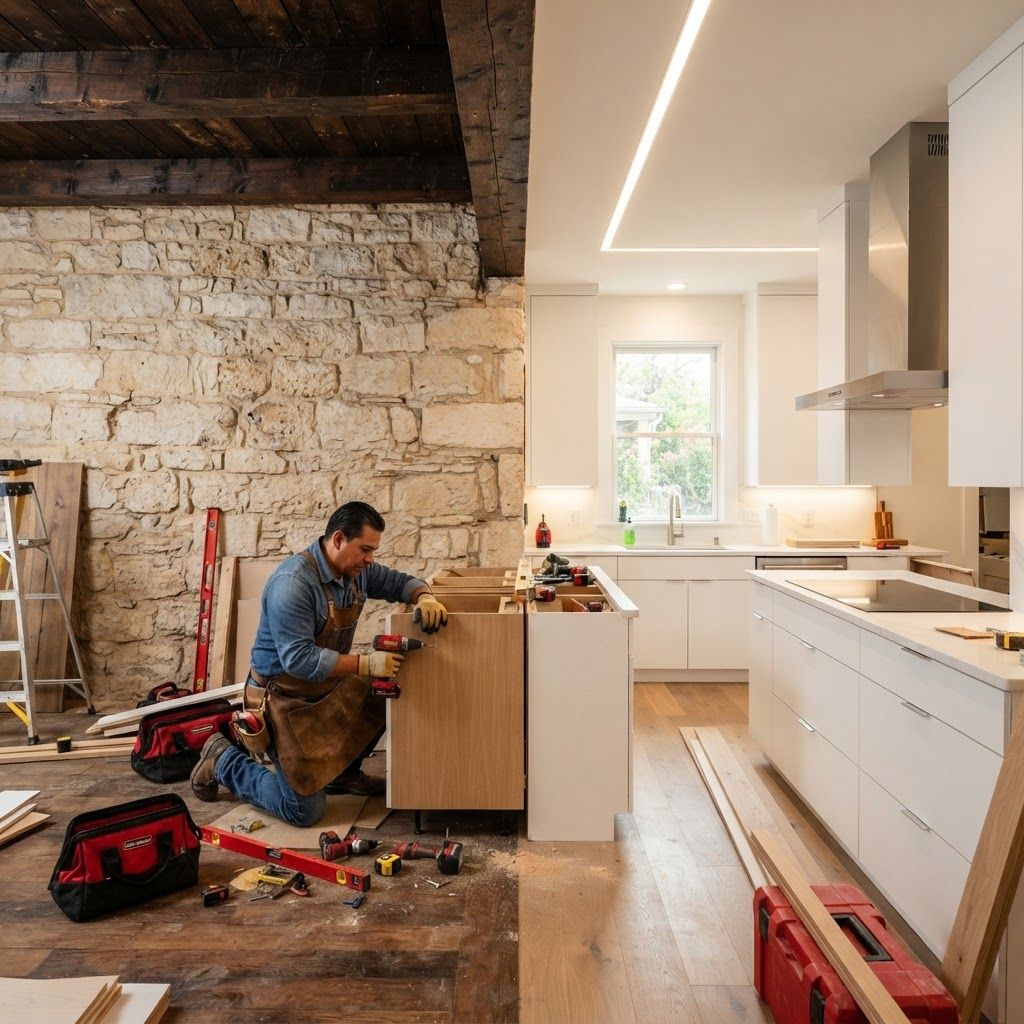
Renovating Homes Across San Antonio
San Antonio's housing ranges from historic bungalows and mid-century ranch homes to suburban properties and Hill Country residences. Each renovation presents different structural, moisture, mechanical, and design conditions. A capable contractor investigates before pricing, communicates allowances clearly, protects occupied areas, and coordinates licensed trades. The businesses below represent a range of remodeling and renovation approaches.
1. KM Builders
KM Builders is a longstanding San Antonio design-build remodeling company. Its integrated model brings design, estimating, selections, and construction into one process, which can reduce gaps between concept and execution. The firm is relevant for whole-home remodels, additions, kitchens, and projects requiring substantial planning.
2. Clear Choice Remodeling
Clear Choice Remodeling serves homeowners seeking interior and exterior improvements. A broad remodeling contractor can coordinate multiple scopes under one agreement, helping clients avoid managing separate trades. Homeowners should verify which work is self-performed and how specialty subcontractors are selected and supervised.
3. Legacy Bath and Kitchen
Legacy Bath and Kitchen focuses on two of the most technically dense residential spaces. Kitchen and bath renovations require careful sequencing of plumbing, electrical, cabinets, surfaces, waterproofing, ventilation, and finishes. A specialized process can make selections and scheduling more predictable.
4. BRAVI
BRAVI is associated with design-conscious remodeling and custom residential work in San Antonio. Clients seeking a cohesive architectural result may value a contractor comfortable collaborating on layouts, materials, and details. Design quality should be supported by sound documentation and field execution behind the finished surfaces.
5. Virtuoso Builders
Virtuoso Builders works in custom remodeling and renovation, including upscale interiors and whole-home transformations. Complex residential work benefits from detailed preconstruction and realistic allowances. Owners should ask how the firm handles procurement, dust control, temporary facilities, and long-lead fixtures.
6. CROSS
CROSS is a luxury remodeling and construction company serving the San Antonio area. High-end renovation often involves custom millwork, premium materials, integrated technology, and close coordination with designers. Mockups, samples, shop drawings, and documented approvals help protect quality.
7. Structure Builders
Structure Builders offers renovation and construction services for homeowners planning meaningful property improvements. Structural changes, additions, and exterior alterations require more investigation than cosmetic updates. Existing plans, surveys, foundation information, and selective demolition may be needed before final pricing.
8. Refresh Renovations San Antonio
Refresh Renovations follows a process-oriented model intended to guide clients from concept through completion. Homeowners who want a single point of coordination may appreciate this structure. As with any managed renovation, confirm who holds contracts, who supervises daily work, and how decisions and changes are documented.
9. SA Remodeling and Construction
Locally focused firms such as SA Remodeling and Construction can offer accessibility and familiarity with neighborhood housing types. They may be well suited to kitchens, bathrooms, flooring, interior reconfiguration, and general upgrades. Compare current workload and superintendent assignments to understand how often leadership will be on site.
10. Rhino Design Build
Rhino Design Build combines design and construction services for residential renovation projects. Design-build can support faster feedback between aesthetic goals and budget realities. Clients should still expect clear drawings, specifications, allowances, and a written scope before construction begins.
Planning Before Demolition
Start by defining priorities: more space, improved flow, accessibility, energy performance, resale value, or preservation. Establish a budget that includes design, permits, construction, temporary living costs, furnishings, and contingency. Existing buildings conceal conditions, so a renovation contingency is prudent even after thorough investigation.
San Antonio projects may need consideration of historic-district rules, homeowners association approvals, asbestos or lead testing, foundation movement, outdated wiring, cast-iron drains, drainage, and undersized heating and cooling systems. Contractors should not dismiss these risks or promise certainty without investigation.
Comparing Estimates and Contracts
Obtain detailed proposals based on the same documents. Compare quantities, brands, allowances, exclusions, permit responsibilities, cleanup, protection, supervision, and warranty. A low estimate may omit painting, patching, disposal, engineering, or finish items. Require written change orders that explain both cost and schedule impact before additional work proceeds.
Verify insurance, registrations where applicable, trade licenses, and recent references. Visit a completed project and, if possible, a project in progress. Active sites reveal how a contractor handles organization, protection, safety, and craftsmanship.
Living Through a Renovation
Discuss work hours, access, pets, children, security, utility interruptions, dust barriers, material storage, and weekly updates. Decide whether the home can remain occupied safely. Regular meetings and a shared decision log help prevent misunderstandings. Payments should follow the contract and documented progress rather than informal requests.
Creating Lasting Value
The best renovation contractor is a transparent problem solver who respects both the design and the realities of an existing building. Careful planning may feel slow at first, but it reduces disruption and costly rework. With the right San Antonio team, an older or outdated property can become safer, more efficient, and better suited to everyday life.
At completion, collect permits, inspection records, warranties, manuals, paint references, spare materials, photographs of concealed utilities, and final lien documents. Walk the project in daylight, test every fixture and appliance, and record punch-list items in one shared location. Organized closeout makes future maintenance easier and provides a valuable record for insurance or resale.
