
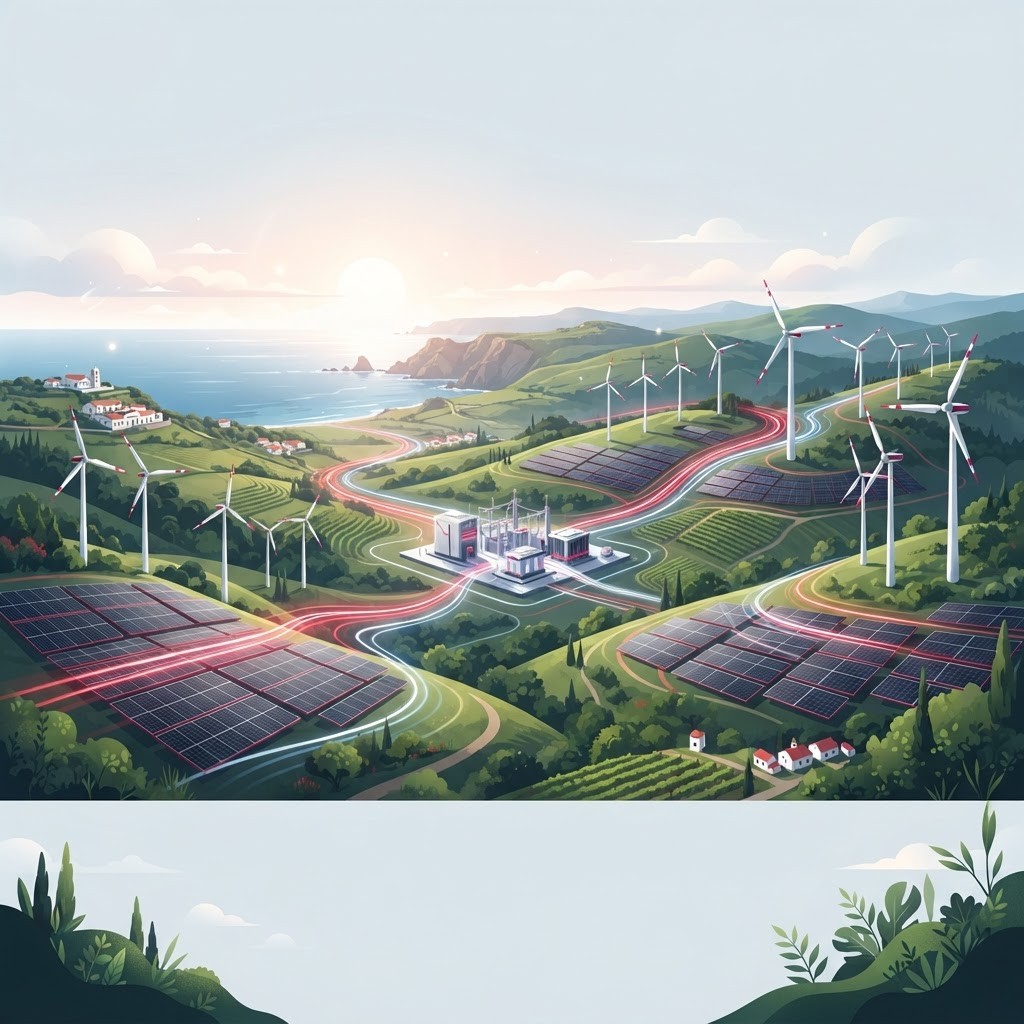
Portugal's Renewable Energy Leadership
Portugal has established itself as one of Europe's most ambitious renewable energy nations. On several occasions the country has run entirely on renewable electricity for days at a time, a testament to decades of investment in wind, solar, and hydropower. With abundant sunshine, strong Atlantic winds, and a supportive policy environment, Portugal is well positioned to achieve its goal of carbon neutrality.
The companies operating in this space are not only powering homes and businesses but also driving innovation, creating jobs, and attracting significant foreign investment. Their work is central to Portugal's contribution to European climate targets.
Why Renewable Energy Matters Here
Renewable energy reduces Portugal's dependence on imported fossil fuels, strengthens energy security, and lowers greenhouse gas emissions. It also stabilises energy costs over the long term and positions the country as an exporter of clean electricity to neighbouring markets. The sector has become a cornerstone of Portugal's economic and environmental strategy.
Leading Renewable Energy Companies
EDP Renováveis is the crown jewel of Portugal's renewable sector and one of the largest wind energy producers in the world, with operations spanning multiple continents. Galp has transformed from a traditional energy company into a major player in solar and green hydrogen, investing heavily in large-scale photovoltaic projects.
Iberdrola Portugal contributes significant wind and solar capacity, while Endesa Portugal advances clean generation and electric mobility solutions. Voltalia Portugal develops and operates diversified renewable assets, and Greenvolt has rapidly become a leader in distributed generation and biomass energy.
Finerge ranks among the country's largest independent renewable power producers, focusing on wind and solar. Generg operates a broad portfolio of wind farms and hydro plants, and Martifer Solar is renowned for engineering and constructing solar installations across the globe. Prio Energy rounds out the field with its commitment to biofuels and sustainable mobility solutions.
Services and Technologies
These companies deliver utility-scale wind and solar generation, hybrid power projects that combine multiple sources with storage, green hydrogen production, biomass and biogas energy, and increasingly, battery storage systems that balance the grid. Many also offer corporate power purchase agreements that allow businesses to source clean energy directly.
Trends Shaping the Sector
Green hydrogen is one of the most exciting frontiers, with Portugal aiming to become a European hub for its production and export. The Sines industrial region is central to these ambitions. Energy storage is another rapidly growing area, essential for managing the intermittency of wind and solar. Floating solar farms on reservoirs and offshore wind projects along the Atlantic coast represent further expansion opportunities.
Digitalisation and smart grid technology are helping operators optimise generation and distribution, while community energy projects are empowering citizens to participate directly in the transition. Portugal's regulatory framework continues to evolve to support these innovations.
Economic and Environmental Impact
The renewable sector supports thousands of skilled jobs and has attracted billions in investment. Beyond economics, it delivers cleaner air, reduced emissions, and greater resilience against volatile global energy markets. Rural regions in particular benefit from wind and solar developments that bring infrastructure and revenue to local communities.
Conclusion
Portugal's renewable energy companies are building a cleaner, more secure future for the nation and setting an example for the rest of Europe. Through bold investment, technological innovation, and steadfast commitment to sustainability, they are proving that a fully renewable energy system is not just possible but achievable. For businesses and consumers alike, these companies represent the vanguard of a greener tomorrow.
