
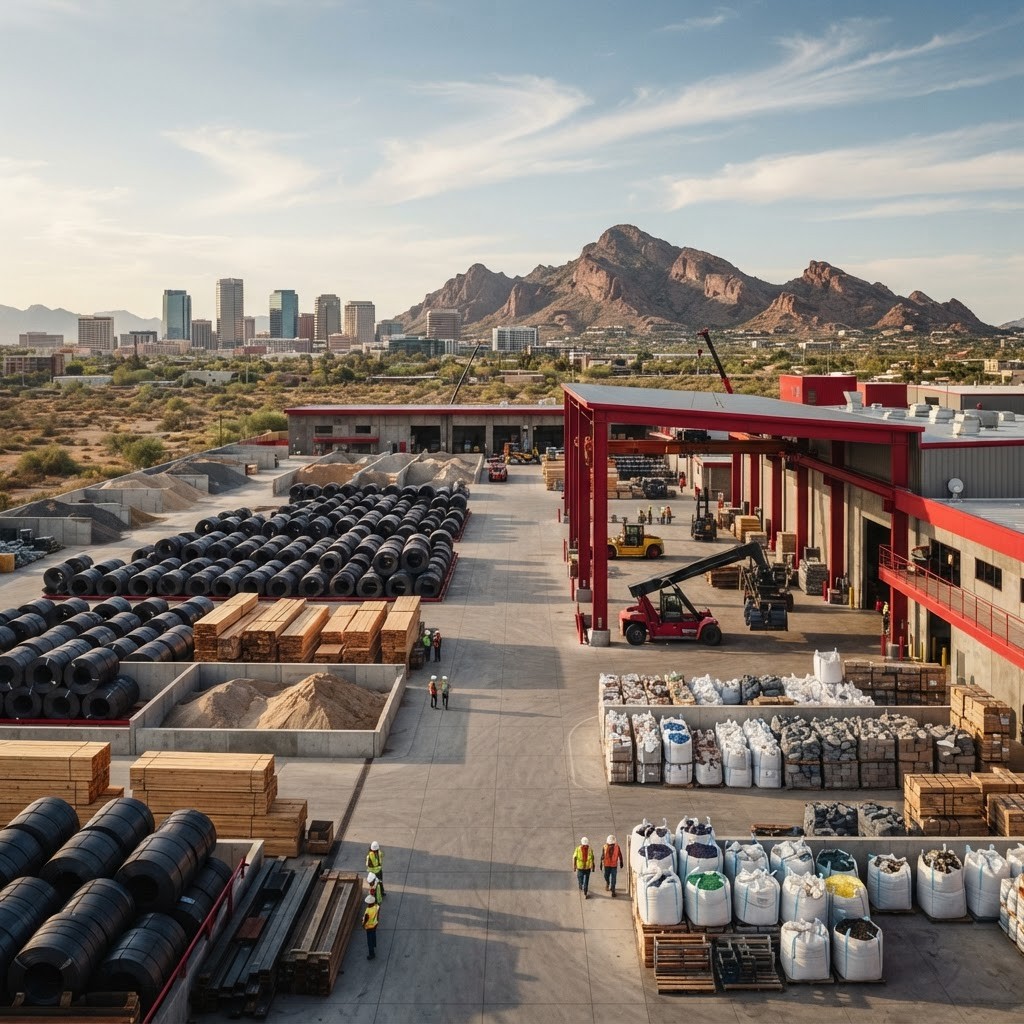
Raw Materials Behind Phoenix Growth
Every building, fabricated part, package, and production line begins with dependable materials. Metro Phoenix's expansion has strengthened distribution networks for steel, aluminum, plastics, lumber, aggregates, concrete, chemicals, and composites. Buyers must balance price with specification compliance, traceability, processing capability, delivery, and storage. Heat and ultraviolet exposure make handling discipline particularly important in Arizona.
1. Reliance Metalcenter
Reliance Metalcenter supplies carbon steel, stainless steel, aluminum, and other metals, often with value-added processing. Manufacturers can reduce internal labor by ordering material cut, sawed, sheared, or otherwise prepared closer to final requirements. Buyers should provide clear alloy, temper, finish, tolerance, and certification needs to avoid costly substitutions.
2. Industrial Metal Supply
Industrial Metal Supply serves fabricators, machine shops, contractors, and makers with metal shapes, sheet, plate, tube, and specialty products. Its broad selection and accessible quantities are useful for prototype, repair, and short-run work. Customers can often consolidate several metals and forms in one order rather than dealing directly with mills.
3. Arizona Iron Supply
Arizona Iron Supply offers steel and ornamental components for welding, construction, and custom fabrication. It is particularly practical for shops seeking common shapes alongside decorative pieces. Buyers should inspect surface condition and straightness when appearance or tight fabrication tolerances matter.
4. Davis Salvage
Davis Salvage supplies new and surplus metal while also handling recycling. Surplus inventory can create savings for noncritical applications, fixtures, prototypes, and creative work. However, buyers should verify dimensions, grade, condition, and documentation rather than assuming surplus material is interchangeable with certified mill stock.
5. Alro Steel
Alro Steel distributes metals and industrial plastics to manufacturing customers. Broad product access and processing services can help machine shops shorten lead times and reduce scrap. For repeat production, buyers should establish written specifications and approved alternates so purchasing flexibility does not introduce inconsistency.
6. Curbell Plastics
Curbell Plastics supplies plastic sheet, rod, tube, film, and engineered materials for industrial applications. Technical guidance is important because plastics vary widely in temperature resistance, ultraviolet stability, chemical compatibility, machinability, and impact strength. Phoenix outdoor applications should never assume a general-purpose plastic will tolerate prolonged sun and heat.
7. Laird Plastics
Laird Plastics distributes performance plastics, sign materials, and related substrates. Its range supports fabrication, display, construction, and manufacturing uses. Buyers should discuss expansion, fastening, edge finishing, and storage because large plastic sheets can distort if mishandled in high temperatures.
8. Rinker Materials
Rinker Materials supplies concrete pipe and infrastructure products used in drainage, utility, and civil projects. Infrastructure materials require compliance with engineering specifications and careful delivery coordination. Contractors should confirm submittals, testing, unloading responsibility, and site access before scheduling large products.
9. CalPortland
CalPortland supplies cement, ready-mix concrete, aggregates, and construction materials across the Southwest. Its products support commercial, residential, and infrastructure development. In Phoenix, concrete planning must account for hot-weather placement, haul time, mix design, curing, and crew readiness. Material quality cannot compensate for poor placement practices.
10. Weyerhaeuser Distribution
Weyerhaeuser's distribution operations provide lumber, panels, engineered wood, and building materials through professional channels. Builders value consistent grading, engineered products, and coordinated supply. Lumber should be protected from ground contact and uneven exposure, while engineered products must be handled according to manufacturer requirements.
How to Qualify a Raw Material Supplier
Begin with an exact specification: grade, standard, dimensions, tolerance, finish, test reports, packaging, and acceptable substitutions. Ask whether the supplier is stocking material or brokering it, and determine how lot traceability is preserved after cutting. For regulated or structural uses, certificates and chain of custody may be nonnegotiable.
Compare landed cost rather than quoted unit price. Processing, minimum quantities, freight, unloading, scrap, yield, payment terms, and lead-time risk all affect economics. Dual-source critical materials where practical, but qualify both suppliers before a disruption. Phoenix businesses should also assess covered storage, heat-sensitive product handling, and delivery windows. The best raw material partner combines accurate documentation, stable quality, useful processing, and transparent communication—helping customers convert inventory into reliable finished work.
