
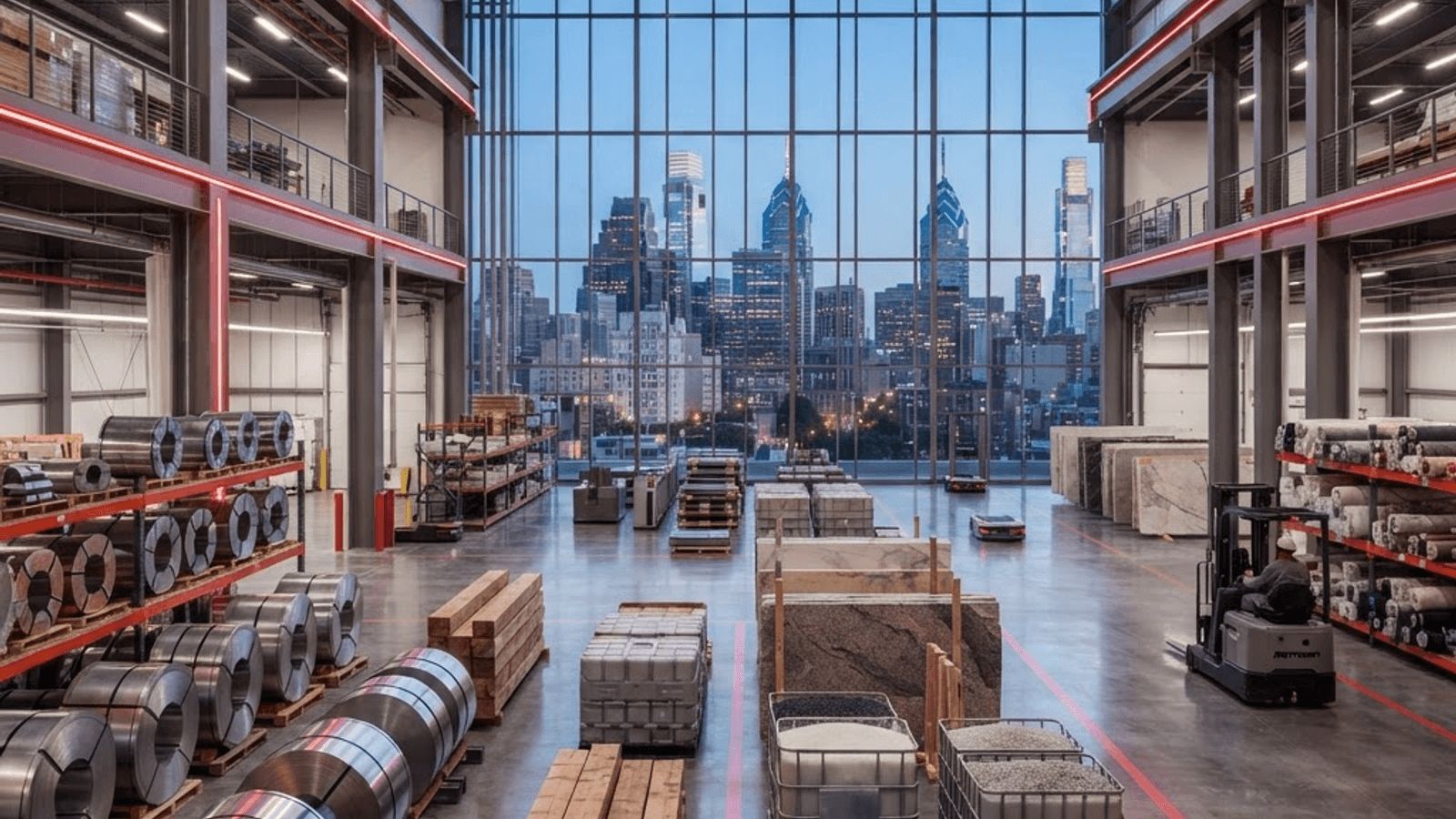
Raw Materials for a Diverse Industrial Economy
Greater Philadelphia combines advanced manufacturing, life sciences, construction, food production, printing, and specialty fabrication. These sectors need very different materials, but all depend on traceability, consistent specifications, safe handling, and reliable logistics. The following suppliers stand out in distinct categories and serve the region directly or through established distribution networks.
1. Ryerson
Ryerson is a major metals processor and distributor offering sheet, plate, bar, tube, and structural products. Its range of carbon steel, stainless steel, and aluminum supports fabricators and equipment manufacturers. Processing capabilities can reduce in-house cutting time and improve material utilization for Philadelphia-area operations.
2. Alro Steel
Alro Steel supplies metals and engineering plastics in a wide variety of forms. Broad inventory and value-added processing make it useful for machine shops, maintenance departments, and short-run manufacturers. Buyers should specify alloy, temper, tolerance, finish, and certification requirements clearly when requesting material.
3. Yarde Metals
Yarde Metals is recognized for aluminum, stainless, carbon steel, and specialty alloy products. Its service-center model supports customers needing repeatable dimensions and dependable documentation. Fabricators can evaluate cut-to-size programs when floor space and scrap reduction are priorities.
4. Kloeckner Metals
Kloeckner Metals combines national distribution with processing services for steel and aluminum. Digital inventory tools and supply programs can help larger manufacturers plan replenishment and reduce volatility. Contract terms, forecast sharing, and quality documentation are especially important for recurring production orders.
5. Curbell Plastics
Curbell Plastics supplies plastic sheet, rod, tube, film, and fabricated components. The company helps buyers compare materials for impact resistance, chemical compatibility, temperature, wear, and regulatory needs. Philadelphia's medical, laboratory, signage, and industrial sectors all benefit from application-focused plastics guidance.
6. Piedmont Plastics
Piedmont Plastics offers performance plastics and related services for industrial, display, transportation, and life-science uses. Material selection assistance can prevent costly failures because visually similar polymers may behave very differently. Cutting and fabrication options also support prototypes and lower-volume production.
7. Univar Solutions
Univar Solutions distributes chemicals and ingredients across industrial and specialty markets. Its value extends to regulatory documentation, packaging options, and supply-chain management. Customers handling chemicals must assess storage, employee training, compatibility, and waste obligations alongside purchase economics.
8. Brenntag
Brenntag supplies industrial and specialty chemicals, ingredients, and associated services. Broad market coverage is relevant to coatings, cleaning, food, pharmaceutical, and manufacturing customers. Quality systems and lot traceability are particularly important in regulated Philadelphia industries.
9. Lindenmeyr Munroe
Lindenmeyr Munroe distributes paper, packaging, and wide-format materials. Commercial printers, publishers, converters, and packaging operations can source numerous grades while receiving guidance on availability and press compatibility. Fiber characteristics, coatings, run performance, and sustainability certifications should be evaluated together.
10. H&K Group
H&K Group is a regional producer and supplier of construction aggregates, asphalt, and related materials. Local quarry and plant access matters because transportation can represent a substantial portion of delivered cost. Contractors should confirm gradation, testing, moisture assumptions, and site delivery constraints before ordering.
How to Qualify a Material Supplier
Begin with a written specification and define acceptable substitutions. Request certificates, safety documentation, country-of-origin information, and lot traceability where relevant. Evaluate minimum quantities, lead times, packaging, storage conditions, and claims procedures. A supplier's response to a nonconformance can be more revealing than its initial quote.
Philadelphia Supply-Chain Considerations
Port, rail, highway, and regional warehouse access give Philadelphia buyers multiple sourcing paths, but congestion and global disruptions still create risk. Dual sourcing, realistic safety stock, and shared forecasts improve resilience. Manufacturers are also seeking lower-carbon materials and more recyclable packaging, making transparent environmental data an increasingly meaningful differentiator.
