
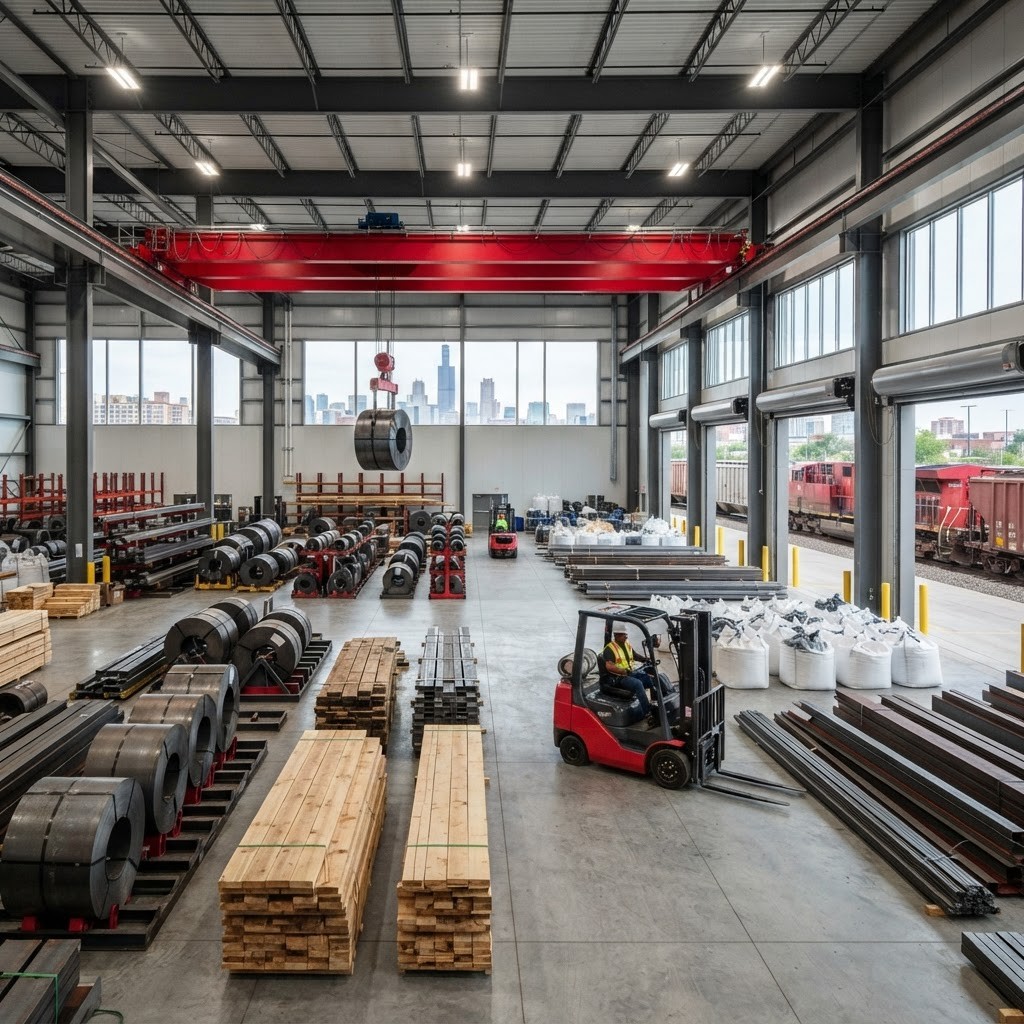
Raw Materials at the Center of Chicago Industry
Chicago’s central location, rail connections, interstate access, Great Lakes shipping, and diverse manufacturing base make it one of the country’s most important raw-material markets. Fabricators, food producers, packaging converters, builders, and product manufacturers can source a wide range of inputs locally or through nearby distribution hubs.
Choosing a supplier requires more than comparing price per pound or sheet. Buyers should review specifications, certifications, lot traceability, processing capabilities, minimum quantities, surcharges, freight, inventory commitments, and contingency plans. Material substitutions should be controlled through engineering and quality processes.
1. Ryerson
Chicago-based Ryerson is a leading processor and distributor of metals, including carbon steel, stainless steel, aluminum, nickel, and specialty products. Its value-added capabilities can include cutting, sawing, forming, and supply-chain services, helping fabricators reduce in-house handling.
2. Kloeckner Metals
Kloeckner Metals serves industrial customers with broad metal inventory and processing. Buyers may use its network for sheet, plate, tube, bar, and specialized services. Digital ordering and supply visibility reflect the metals industry’s move toward more connected procurement.
3. A. M. Castle & Co.
A. M. Castle & Co., historically associated with the Chicago area, supplies specialty metals and engineered materials. Aerospace, industrial, and high-performance applications benefit from suppliers experienced in documentation, exact specifications, and difficult-to-source alloys.
4. Central Steel & Wire
Central Steel & Wire has deep Chicago roots and distributes a wide selection of ferrous and nonferrous metals. Its processing and regional logistics are useful to manufacturers seeking dependable stock and delivery across common forms and grades.
5. McNaughton-McKay Electric Company
McNaughton-McKay supplies electrical and automation products used as essential production inputs by panel builders, equipment manufacturers, and facilities. Technical support around controls, connectivity, and power distribution can be as important as component availability.
6. Laird Plastics
Laird Plastics distributes plastic sheet, rod, tube, film, and related materials. Sign makers, fabricators, manufacturers, and construction businesses can benefit from broad polymer choices and guidance on properties such as impact resistance, chemical tolerance, machinability, and outdoor performance.
7. Piedmont Plastics
Piedmont Plastics offers performance plastic materials and application support through a national branch network. Buyers should discuss end-use requirements carefully because selecting the correct resin can improve part life, weight, compliance, and processing efficiency.
8. Midland
Midland supplies paper, packaging, and related substrates from its Chicago-area base. Printers, converters, and brands rely on distributors to manage mill relationships, availability, finish consistency, and responsible sourcing documentation.
9. Hood Distribution
Hood Distribution supplies hardwood lumber, plywood, panels, and specialty building products. Woodworkers and manufacturers should compare grade, moisture, species, yield, and chain-of-custody documentation rather than evaluating nominal dimensions alone.
10. Brenntag
Brenntag is a major chemical and ingredients distributor serving industrial and formulation markets. Customers require rigorous handling, safety data, regulatory support, and lot traceability. Chemical buyers must confirm site compatibility, storage requirements, and approved uses before ordering.
Build a Resilient Supply Strategy
Segment materials by operational risk. A low-cost commodity with many substitutes can be sourced differently from a certified alloy, food ingredient, or proprietary resin that can stop production. Use quality agreements for critical inputs, define inspection requirements, and keep approved alternates where engineering permits. Forecast sharing and blanket orders can help suppliers reserve inventory, but commitments should match realistic demand.
Chicago companies also need to account for winter transport disruption, metal and fuel surcharges, global tariff changes, and warehouse constraints. Track total landed cost, scrap yield, defects, late deliveries, and administrative effort. Suppliers that provide consistent certificates, responsive technical support, value-added processing, and transparent communication reduce risk well beyond the quoted unit price.
