
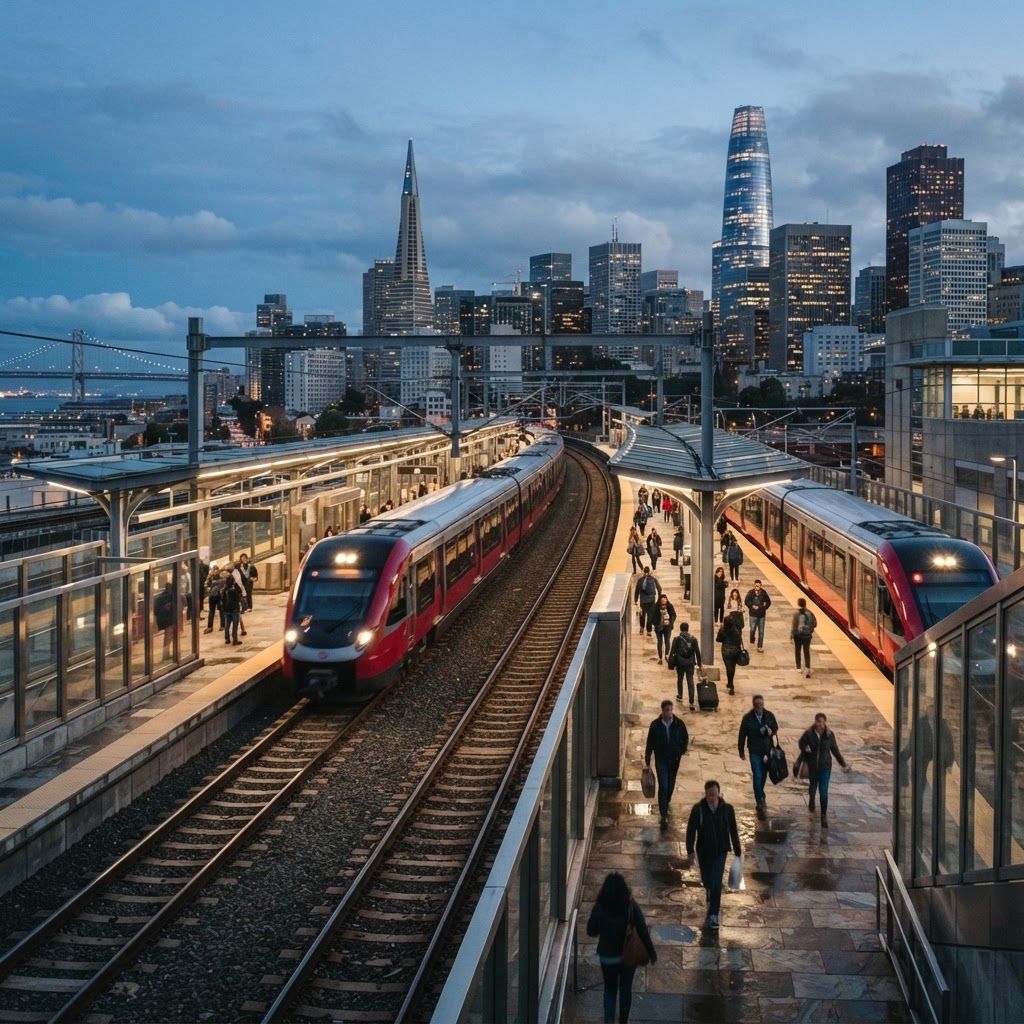
The Role of Rail in the Bay Area
Railways are a cornerstone of San Francisco's regional transportation ecosystem, linking the city to neighboring communities, employment centers, and destinations across California. Rail offers a fast, reliable, and environmentally friendly alternative to congested freeways, and it plays an increasingly important role as the region grapples with growth and sustainability goals. From heavy rail transit to commuter and intercity services, the Bay Area's rail operators serve millions of passengers each year.
Bay Area Rapid Transit
Bay Area Rapid Transit, universally known as BART, is the region's flagship rail system. Its high-speed trains connect San Francisco with the East Bay, the Peninsula, and San Francisco International Airport, running through the underwater Transbay Tube. BART is celebrated for its speed, frequency, and ability to move large volumes of commuters efficiently. Ongoing modernization efforts, including new train cars and expanded lines, continue to enhance its capacity and reliability.
Caltrain Commuter Rail
Caltrain provides essential commuter rail service along the Peninsula corridor, linking San Francisco with Silicon Valley cities such as Palo Alto, Mountain View, and San Jose. Long favored by tech workers, Caltrain has undergone a major electrification program that replaced diesel locomotives with cleaner, faster electric trains. This transformation has improved travel times, reduced emissions, and increased service frequency, reinforcing Caltrain's importance to the regional economy.
Muni Metro Light Rail
Within San Francisco itself, the Muni Metro light rail system operates a network of lines that traverse the city both above and below ground. Muni Metro connects downtown with neighborhoods like the Sunset, West Portal, and Bayview, complementing the bus and cable car network. Its integration with regional systems makes it a vital part of daily life for residents navigating the city's varied terrain.
Intercity and Long-Distance Rail
For travel beyond the Bay Area, Amtrak provides intercity rail connections, with the Capitol Corridor and San Joaquins routes linking the region to Sacramento, the Central Valley, and Southern California. Amtrak's motorcoach connections extend the reach of rail travel, offering a comfortable and scenic alternative to driving or flying. These services are especially valued by travelers seeking a relaxed journey with productive time onboard.
The Future of High-Speed Rail
California's ambitious high-speed rail project promises to reshape long-distance travel, with plans to eventually connect the Bay Area to Los Angeles at unprecedented speeds. While still under development, the project reflects a broader commitment to expanding rail infrastructure and reducing dependence on automobiles and short-haul flights. When complete, it will position San Francisco as a hub in a modern, statewide rail network.
Why Rail Matters
Rail operators offer significant advantages: they alleviate highway congestion, reduce greenhouse gas emissions, and provide dependable travel times unaffected by traffic. For commuters, rail translates into predictable schedules and productive travel. For the region, robust rail service supports economic growth, environmental goals, and equitable access to opportunity across diverse communities.
How to Compare Your Options
A useful comparison begins with the details of the journey or shipment rather than a headline price alone. Consider the starting point, destination, desired schedule, volume, accessibility needs, and any special handling requirements. Then examine each operator's service area, operating hours, cancellation terms, safety practices, and ability to provide dependable status updates. Established companies should communicate clearly about what is included, where extra fees may apply, and what customers can expect if weather, congestion, or another disruption affects the plan. Reviews can reveal recurring strengths, but recent feedback and patterns across several sources are more useful than a single enthusiastic or negative comment.
San Francisco-specific experience deserves extra weight. The city's hills, loading restrictions, crowded curb space, major events, microclimates, and connections across bridges or to airports can complicate even a routine trip. Providers familiar with neighborhood access rules and regional traffic patterns are better equipped to set realistic schedules. Sustainability may also matter: efficient routing, shared capacity, electric equipment, and transparent emissions initiatives can reduce environmental impact without sacrificing service quality. Before making a decision, request a clear description of the service, confirm insurance or passenger protections where relevant, and verify how support is handled before, during, and after the job.
Making the Most of the Service
Good preparation improves almost every transportation experience. Book early during conventions, holidays, summer travel periods, and major city events, when capacity can tighten quickly. Provide accurate dimensions, passenger counts, addresses, timing, and special requirements so the operator can assign suitable equipment. Keep essential confirmation details available, allow reasonable time for San Francisco traffic, and identify backup options for truly time-sensitive plans. For recurring business needs, track punctuality, condition, communication, and total cost over several jobs rather than judging performance by price alone. A provider that consistently prevents problems and responds well when conditions change often delivers the strongest long-term value.
Conclusion
San Francisco's railway operators, from the rapid reach of BART to the electrified efficiency of Caltrain and the connectivity of Amtrak, form an essential pillar of Bay Area mobility. As electrification advances and high-speed rail takes shape, the region's rail network is evolving into a faster, cleaner, and more integrated system. For residents and visitors alike, rail remains one of the smartest ways to move through and beyond the city.
