
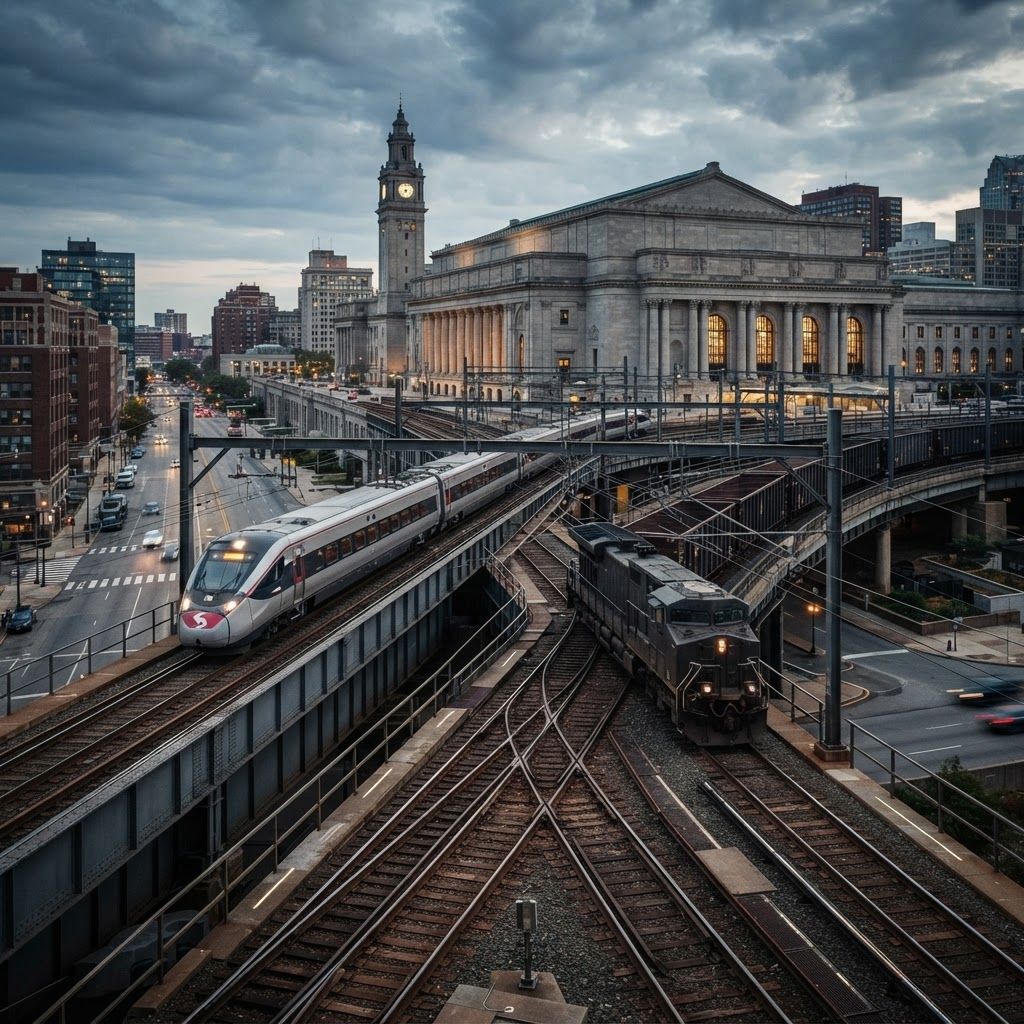
Rail Transportation in Philadelphia
Rail has shaped Philadelphia’s growth for generations. Today, the city remains a critical point on the Northeast Corridor and a center for regional commuting, urban rapid transit, freight interchange, and port-related cargo. Travelers can reach nearby suburbs or distant cities without driving, while businesses use the region’s rail network to move containers, raw materials, and finished products efficiently.
The word operator covers several distinct roles. Some organizations run passenger trains, some own or maintain infrastructure, and others haul freight. Comparing them requires attention to service purpose rather than a single ranking. The following ten names are among the most relevant to Philadelphia’s railway landscape.
1. SEPTA
SEPTA operates the city’s extensive Regional Rail system along with subway and trolley services. Regional Rail connects Center City with communities across Philadelphia, Bucks, Chester, Delaware, and Montgomery counties, as well as parts of New Jersey and Delaware. Its central-city tunnel allows through-running services across downtown, creating a highly connected commuter network. SEPTA’s integration of rail with buses and urban transit is its defining advantage.
2. Amtrak
Amtrak makes Philadelphia a major stop on the Northeast Corridor. From William H. Gray III 30th Street Station, passengers can travel toward New York, Boston, Baltimore, Washington, and numerous destinations beyond the corridor. High-frequency intercity options and premium high-speed services make rail competitive with both driving and flying for many regional trips. Philadelphia also benefits from long-distance routes that connect Pennsylvania with other parts of the country.
3. PATCO Speedline
PATCO provides rapid transit between Center City Philadelphia and communities in southern New Jersey. Its frequent service and direct downtown stations make it an essential cross-river commuting option. PATCO operates independently from SEPTA but connects with Philadelphia’s broader transit network. Around-the-clock operating periods and a focused route structure have made it particularly important for residents of Camden County and Philadelphia workers.
4. NJ Transit
NJ Transit serves Philadelphia through rail connections centered on 30th Street Station and nearby South Jersey transit points. Its Atlantic City Rail Line links Philadelphia with communities across southern New Jersey and the Atlantic City area. The operator also complements PATCO and connecting bus services. It is a valuable choice for leisure travelers, commuters, and visitors moving between Philadelphia and New Jersey destinations.
5. CSX Transportation
CSX is one of the major freight railroads serving the Philadelphia region. Its network moves intermodal containers, chemicals, building materials, food products, and other commodities across the eastern United States. Access to regional yards, industrial customers, and port facilities makes CSX important to local commerce. Rail freight can reduce highway congestion and offer efficient long-distance capacity for heavy or high-volume cargo.
6. Norfolk Southern
Norfolk Southern is another leading freight operator in the Philadelphia market. Its network connects the region with inland production centers, distribution hubs, and gateways throughout the East and Midwest. The company handles intermodal and carload traffic and works with local terminals and connecting railroads. For shippers, competition and connectivity between major rail networks expand routing options.
7. Conrail Shared Assets Operations
Conrail Shared Assets Operations performs switching and terminal functions in key markets, including southern New Jersey and the Philadelphia area. It provides neutral local access for major freight railroads and serves industrial customers through shared infrastructure. Though less visible to the public, this role is vital because final rail movements between trunk lines, yards, ports, and customer facilities require coordinated local operations.
8. Canadian Pacific Kansas City
Canadian Pacific Kansas City participates in the broader rail network serving Northeast markets through connections and commercial relationships. Its unique single-line reach across Canada, the United States, and Mexico is significant for companies evaluating continental supply chains. Philadelphia shippers can benefit indirectly from access to this network through interchanges and intermodal arrangements, particularly for cargo moving across North America.
9. Canadian National
Canadian National connects major Canadian markets and United States gateways, with service opportunities that reach the Philadelphia region through network partnerships and interchanges. The railroad is especially relevant for cross-border trade, forest products, automotive cargo, grain, and intermodal freight. Its broader North American reach gives regional shippers alternatives when designing resilient international routes.
10. East Penn Railroad
East Penn Railroad is a regional short-line operator serving parts of southeastern Pennsylvania. Short lines are essential because they connect local industries to large national railroads, often preserving service on lower-density branches. East Penn’s local operating knowledge and customer-focused switching help businesses use rail even when they are not directly located on a major main line.
Choosing Rail for Passenger or Freight Needs
Passenger decisions usually involve station convenience, frequency, transfers, fares, accessibility, and the effect of service disruptions. SEPTA excels at suburban and urban integration, Amtrak at intercity travel, PATCO at frequent cross-river service, and NJ Transit at specific New Jersey connections. Riders should review current timetables and allow extra time when changing systems.
Freight decisions are more technical. Shippers should consider rail access, commodity requirements, transit consistency, equipment availability, terminal proximity, and the economics of drayage at each end. Philadelphia’s mix of Class I railroads, shared assets, port terminals, and short-line connections makes it a powerful rail market. The most effective operator or combination of operators depends on the exact origin, destination, cargo, and service expectations.
