
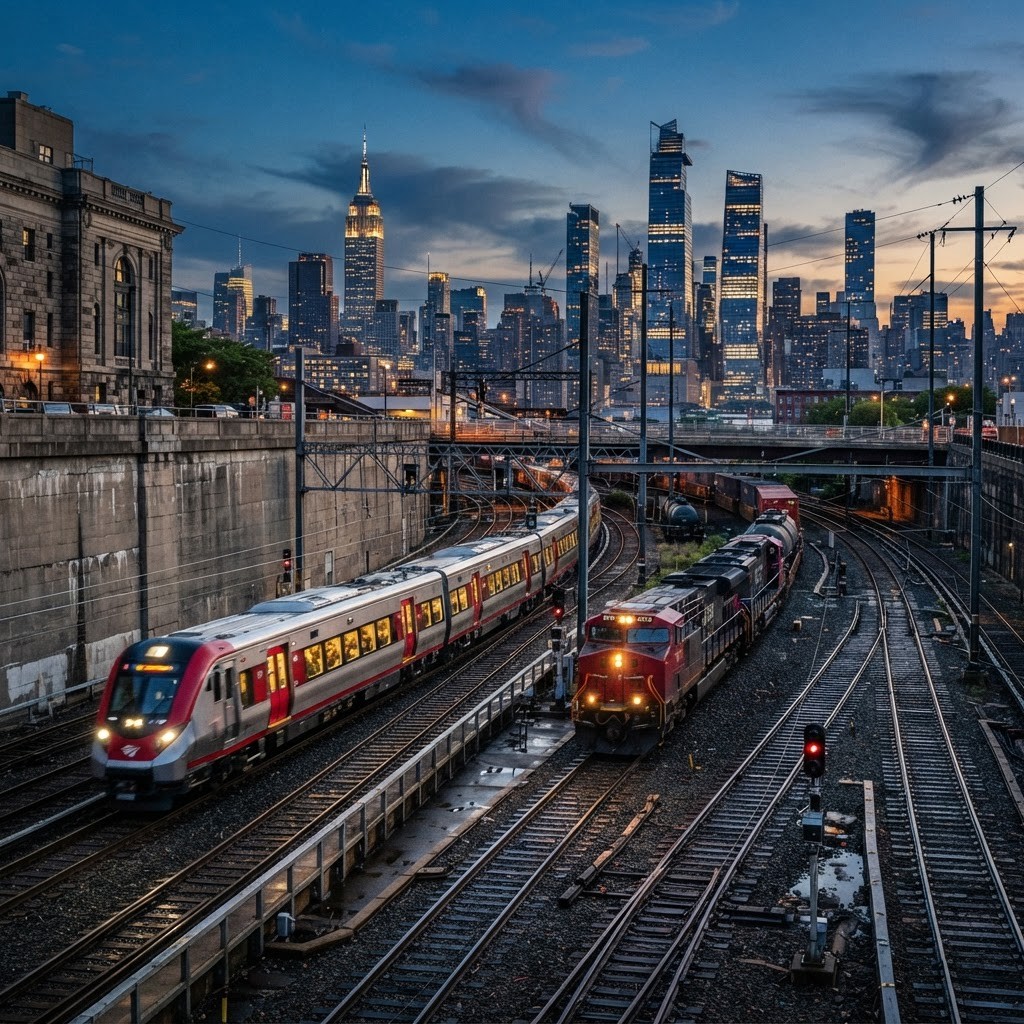
Understanding Rail Service in New York
Railways are fundamental to life and commerce in New York. The state includes the country’s largest urban transit system, heavily traveled commuter lines, intercity passenger corridors, and freight routes that connect ports, warehouses, farms, and manufacturers. Because these operators serve different purposes, the best option depends on whether a rider needs a subway, a suburban train, a long-distance journey, or a business needs freight transportation.
1. Metropolitan Transportation Authority New York City Transit
MTA New York City Transit operates the city’s subway system and is the most consequential rail operator for everyday movement within the five boroughs. Its extensive network runs around the clock and places stations near major business districts, neighborhoods, cultural attractions, and transport hubs. Recent priorities include station accessibility, upgraded signals, newer trains, contactless fares, and improved rider information.
2. Long Island Rail Road
The Long Island Rail Road links Manhattan and Brooklyn with Queens, Nassau County, and Suffolk County. It is a vital commuter operator and also serves leisure destinations across Long Island. Access to Grand Central Madison expanded route choices, while Penn Station remains a central hub. Frequent service on core branches and broad geographic coverage make it a practical alternative to driving on congested expressways.
3. Metro-North Railroad
Metro-North serves passengers traveling between New York City, the Hudson Valley, Connecticut, and selected points farther north. Grand Central Terminal provides an exceptionally central Manhattan arrival. The Hudson, Harlem, and New Haven lines support commuters and weekend travelers alike, with scenic routes, generally comfortable trains, and useful connections to towns that can be difficult to reach without a car.
4. Amtrak
Amtrak provides intercity rail from Moynihan Train Hall at Penn Station. The Northeast Regional connects New York with Boston, Philadelphia, Baltimore, and Washington, while Acela offers a premium, faster experience on the same corridor. Empire Service reaches Albany and other upstate cities, and long-distance trains extend beyond New York. Downtown-to-downtown convenience makes Amtrak competitive with flying on many regional trips.
5. NJ Transit Rail Operations
NJ Transit is based in New Jersey but plays an essential role in New York mobility by carrying riders into Penn Station and connecting with numerous suburban communities, Newark Liberty International Airport, and the Jersey Shore. It is particularly useful for interstate commuters and airport travelers. Riders should review schedules carefully because frequencies and transfer requirements vary by line and time of day.
6. PATH
Port Authority Trans-Hudson, commonly known as PATH, provides rapid rail between Manhattan and northern New Jersey. Stations in the Financial District and around Midtown connect with Jersey City, Hoboken, Harrison, and Newark. PATH is valued for frequent service and convenient links to major employment centers. It functions more like an urban subway than a conventional commuter railroad.
7. CSX Transportation
CSX is one of the principal freight railway operators serving New York State. Its network moves intermodal containers, building materials, food products, chemicals, automobiles, and other commodities. Freight rail can reduce highway congestion and emissions per ton-mile, making CSX an important partner for large-volume shippers. Service planning typically involves rail-accessible facilities or coordination with trucking for the first and final legs.
8. Norfolk Southern
Norfolk Southern participates in freight movement throughout the region through routes, terminals, and partnerships that connect New York with major eastern markets. Its services support intermodal and carload freight for industries requiring cost-efficient long-distance transport. Businesses should compare transit time, equipment availability, terminal access, and drayage costs when evaluating freight rail against all-truck shipping.
9. Canadian Pacific Kansas City
Canadian Pacific Kansas City gives New York freight customers access to a uniquely integrated network spanning Canada, the United States, and Mexico. This reach can benefit cross-border supply chains involving automotive, agricultural, industrial, and consumer products. Its role is especially relevant in upstate corridors and in connections that feed the wider metropolitan market.
10. New York & Atlantic Railway
New York & Atlantic Railway handles freight on Long Island, serving customers that might otherwise depend entirely on trucks. It transports products such as construction materials, food ingredients, and municipal commodities. By moving heavy loads by rail for much of the journey, the operator supports local industry while helping limit truck mileage on congested roads.
Selecting the Right Operator
Passenger decisions should account for origin, destination, service frequency, fare, transfers, accessibility, and late-night availability. Real-time service information is essential because construction and disruptions can alter routes. Travelers carrying luggage should also assess station elevators and the distance between connecting platforms.
Freight customers need a different analysis. Rail economics tend to improve with heavier volumes and longer distances, but terminal handling and drayage can affect the result. Ask about commodity experience, equipment, loading requirements, tracking, demurrage, and contingency planning. Together, New York’s railway operators form a layered system in which urban transit, commuter service, intercity travel, and freight rail each solve a distinct transportation need.
