
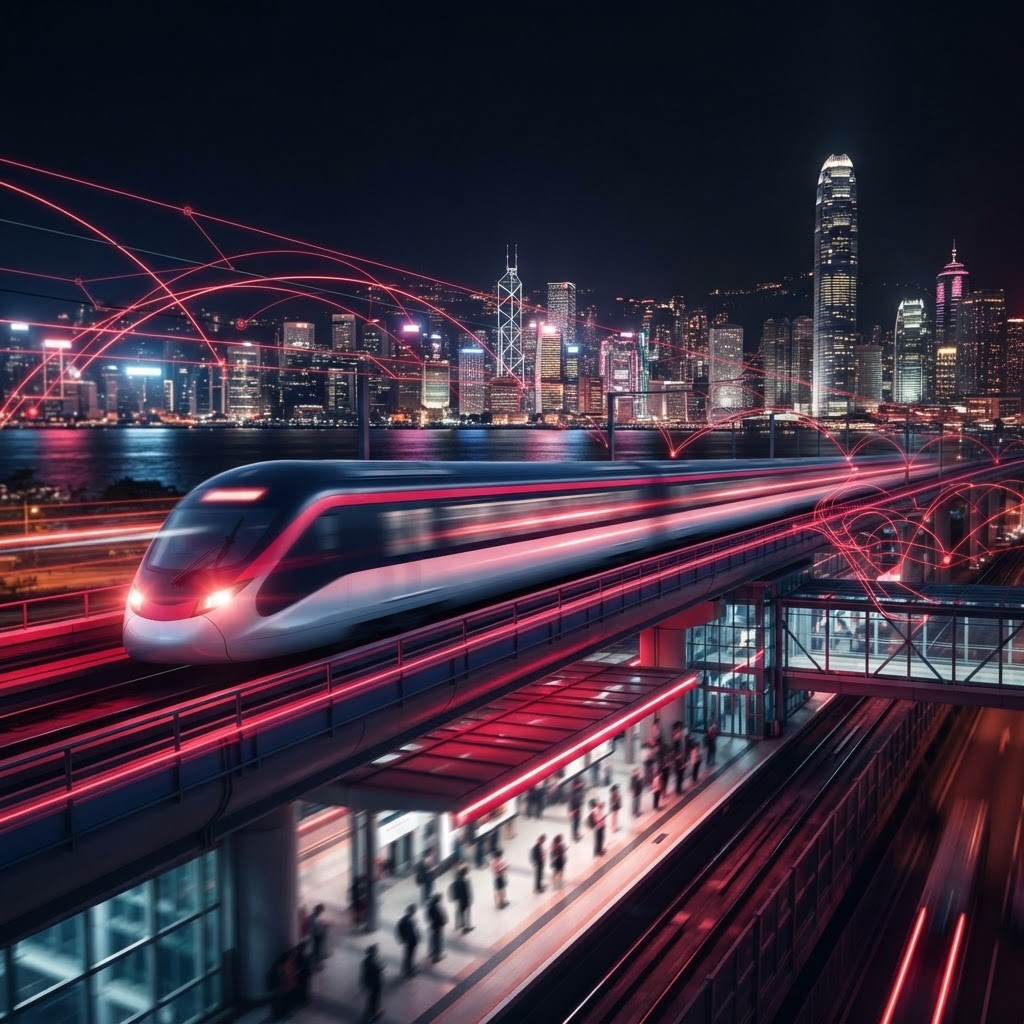
The Backbone of Hong Kong's Mobility
Few cities depend on rail transport as heavily as Hong Kong. With a dense population spread across islands, harbours, and mountainous terrain, an efficient railway system is not a luxury but a necessity. Hong Kong's rail network is celebrated globally for its punctuality, cleanliness, and remarkable capacity, moving millions of commuters every single day with impressive precision. Understanding the operators and services behind this network offers insight into how the city stays perpetually in motion.
Rail transport in Hong Kong is more than a means of travel; it is woven into the fabric of daily life. Stations double as retail and community hubs, and rail development often drives urban planning. The following overview highlights the top railway operators and services that define this world-class system.
Why Hong Kong's Railways Excel
The success of Hong Kong's rail system stems from meticulous planning, sustained investment, and a relentless focus on reliability. Trains run frequently, often just minutes apart during peak hours, and the network integrates seamlessly with buses, ferries, and other modes of transport. Advanced signalling technology, predictive maintenance, and rigorous safety standards ensure smooth operations even under heavy passenger loads.
The Top 10 Railway Operators and Services
MTR Corporation is the cornerstone of Hong Kong's rail network. Operating the vast majority of the city's rail lines, MTR is globally admired for its efficiency, achieving on-time performance rates that exceed 99 percent. Its integrated model combines transport with property development, funding sustainable growth.
Airport Express, operated by MTR, provides a swift and comfortable connection between the city centre and Hong Kong International Airport. It is a favourite among business travellers and tourists for its speed and convenience.
Tung Chung Line serves the western New Territories and Lantau Island, offering rapid access to residential and commercial developments along its route.
East Rail Line is a vital artery connecting Kowloon to the northern New Territories and the boundary with mainland China, playing a key role in cross-boundary travel.
West Rail Line links the northwestern New Territories to urban Kowloon, easing congestion and supporting growing communities.
Island Line runs along the northern shore of Hong Kong Island, serving the central business district and bustling commercial areas with high-frequency service.
Tsuen Wan Line is one of the oldest and busiest lines, connecting Kowloon to the northwestern suburbs and forming a crucial part of the daily commute.
Kwun Tong Line serves eastern Kowloon, supporting dense residential neighbourhoods and industrial districts with dependable service.
Light Rail, also operated by MTR, provides essential feeder services within the northwestern New Territories, complementing the heavy rail network.
High Speed Rail (Hong Kong Section) connects the city to the extensive mainland high-speed network, dramatically reducing travel times to major Chinese cities and reinforcing regional integration.
Innovation and Technology in Rail
Hong Kong's railway operators continually embrace innovation. Automatic train operation, real-time passenger information systems, and contactless payment through smart cards and mobile apps enhance the commuter experience. Stations are increasingly equipped with energy-efficient lighting, regenerative braking systems that recover energy, and accessibility features that serve passengers of all abilities.
Sustainability is a growing priority. Rail is inherently one of the greenest forms of mass transit, and operators are working to further reduce energy consumption and emissions. These efforts align with broader goals to make the city more environmentally responsible while maintaining exceptional service.
The Role of Rail in Urban Development
One of the defining features of Hong Kong's rail system is its integration with property and community development. Stations frequently sit beneath shopping malls, residential towers, and offices, creating vibrant, transit-oriented neighbourhoods. This model reduces car dependence, fosters walkable communities, and generates revenue that supports network expansion.
As the city continues to grow, rail development remains central to planning. New lines and extensions are regularly proposed to serve emerging districts, ensuring that residents enjoy convenient access to jobs, education, and leisure.
Conclusion
Hong Kong's railway operators represent a gold standard in urban transport. Through relentless focus on reliability, innovation, and integration, they keep one of the world's densest cities moving smoothly. Whether commuting to work, catching a flight, or travelling across the border, passengers can count on a rail system that is fast, clean, and remarkably dependable. As Hong Kong looks to the future, its railways will continue to anchor the city's mobility and prosperity.
