
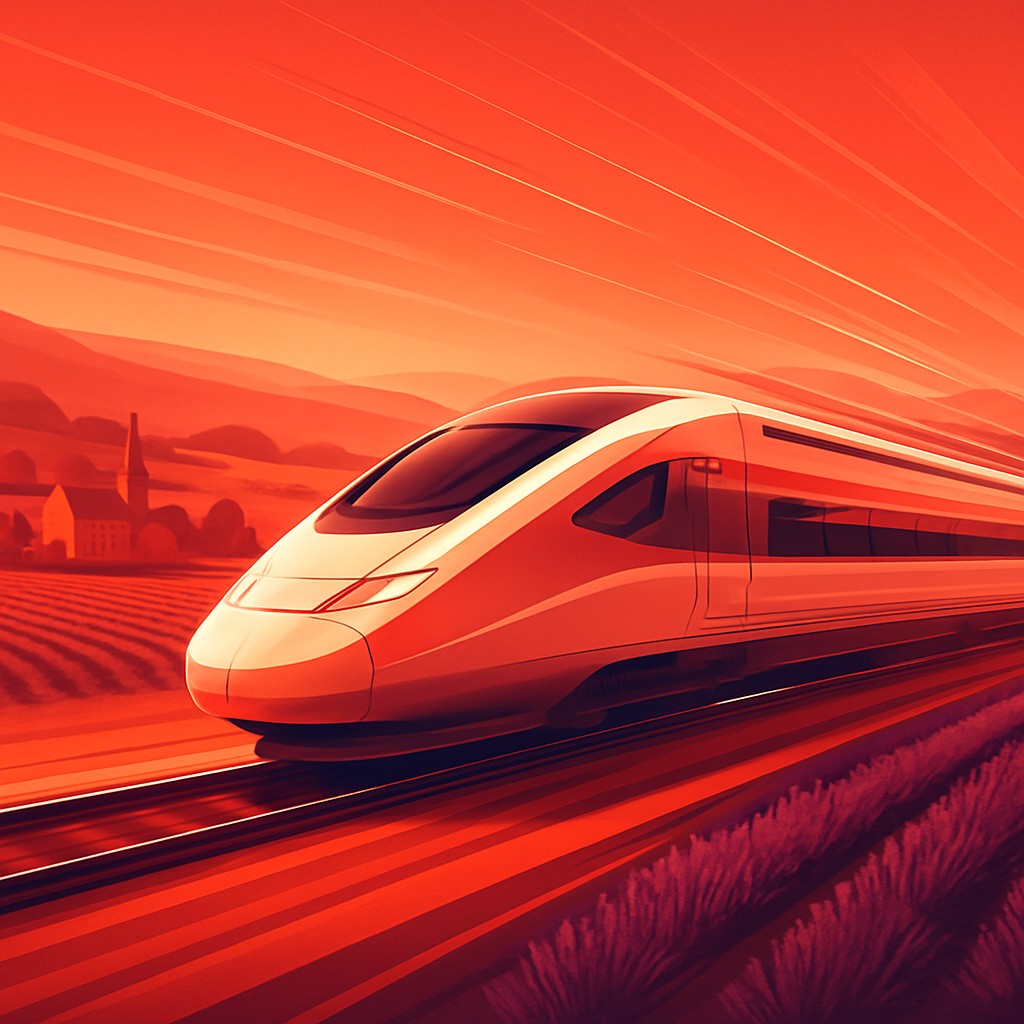
France's Iconic Railway Heritage
France has one of the most extensive and advanced rail networks in the world. With a tradition that stretches back to the 19th century, French railways have grown into a symbol of innovation, particularly with the launch of the high-speed TGV (Train à Grande Vitesse) in the 1980s. Today, France boasts thousands of kilometres of high-speed lines, dense regional networks, and an evolving freight rail sector that supports both domestic and European trade.
The opening of the French rail market to competition has introduced new operators and services, providing travellers with greater choice and competitive pricing. Whether commuting between major cities, visiting rural regions, or shipping cargo across Europe, French railway operators offer a remarkable variety of options.
1. SNCF Voyageurs
SNCF Voyageurs is the historic and dominant rail operator in France. Operating iconic services such as TGV INOUI, OUIGO, Intercités, and TER (regional trains), the company connects nearly every corner of France. Renowned for its high-speed network and continual investment in modern rolling stock, SNCF Voyageurs is the backbone of French passenger rail.
2. OUIGO
OUIGO is SNCF's low-cost high-speed rail brand, designed to make TGV-style travel affordable for families and budget travellers. With double-decker trains, simplified ticketing, and fares often well below traditional rail prices, OUIGO has become extremely popular for leisure travellers and weekend getaways.
3. Trenitalia France
Trenitalia, the Italian state railway operator, has expanded into the French market with its Frecciarossa high-speed service between Paris and Lyon, with extensions toward Milan. Bringing Italian-style comfort, sleek design, and competitive pricing, Trenitalia has introduced healthy competition to France's high-speed corridors.
4. Renfe France
Renfe, Spain's national rail operator, has also entered the French high-speed market, particularly along routes between France and Spain. With its Avlo low-cost brand and modern fleet, Renfe is helping reshape cross-border travel in southwestern Europe.
5. Eurostar
Eurostar connects Paris with London and other key cities through the Channel Tunnel. Following its merger with Thalys, the brand now also covers routes to Brussels, Amsterdam, and Cologne. Eurostar is known for premium service, business-class amenities, and seamless international travel.
6. Thello (Historic Operator)
Thello previously operated overnight services between France and Italy and played an important role in introducing private competition into French rail. While its services have evolved, its legacy as a pioneer of liberalised rail travel remains noteworthy.
7. Transilien
Transilien is the SNCF-operated commuter rail network serving the Île-de-France region around Paris. With dense connectivity to suburban towns and seamless integration with metros and RER lines, Transilien is essential to daily life for millions of commuters.
8. RER (RATP and SNCF)
The RER (Réseau Express Régional) is a hybrid commuter and regional rail network jointly operated by RATP and SNCF. Connecting Paris with its surrounding suburbs at high frequencies, the RER is one of the busiest commuter networks in Europe.
9. Fret SNCF
Fret SNCF is the freight rail division of SNCF, playing a vital role in moving heavy industrial goods, automotive products, chemicals, and intermodal containers across France and Europe. Its modernisation efforts focus on sustainability and shifting more freight from road to rail.
10. Europorte
Europorte, part of the Getlink Group, is one of the leading private freight rail operators in France. Specialising in tailor-made rail freight solutions, Europorte serves industries such as steel, chemicals, agriculture, and intermodal transport. The company is recognised for flexibility, reliability, and innovation.
Innovation in French Rail Travel
French rail operators are continuously innovating to stay competitive and sustainable. Modern TGV trains feature improved aerodynamics, energy-efficient propulsion, and enhanced passenger experiences such as Wi-Fi, ergonomic seating, and onboard catering. Investments in digital signalling, predictive maintenance, and AI-driven scheduling are improving punctuality and capacity.
Sustainability remains a major focus. Trains in France are predominantly electric, powered largely by low-carbon energy sources. Many operators are also developing hydrogen-powered regional trains to replace diesel services on non-electrified lines, reinforcing the position of rail as one of the greenest forms of transport.
Conclusion
France's railway industry is a global benchmark, blending tradition, technology, and innovation. From the lightning-fast TGV to regional commuter networks and specialised freight services, these top operators represent the diversity and excellence of French rail. As competition expands and technology advances, French railways are set to remain at the forefront of European mobility for decades to come.
