
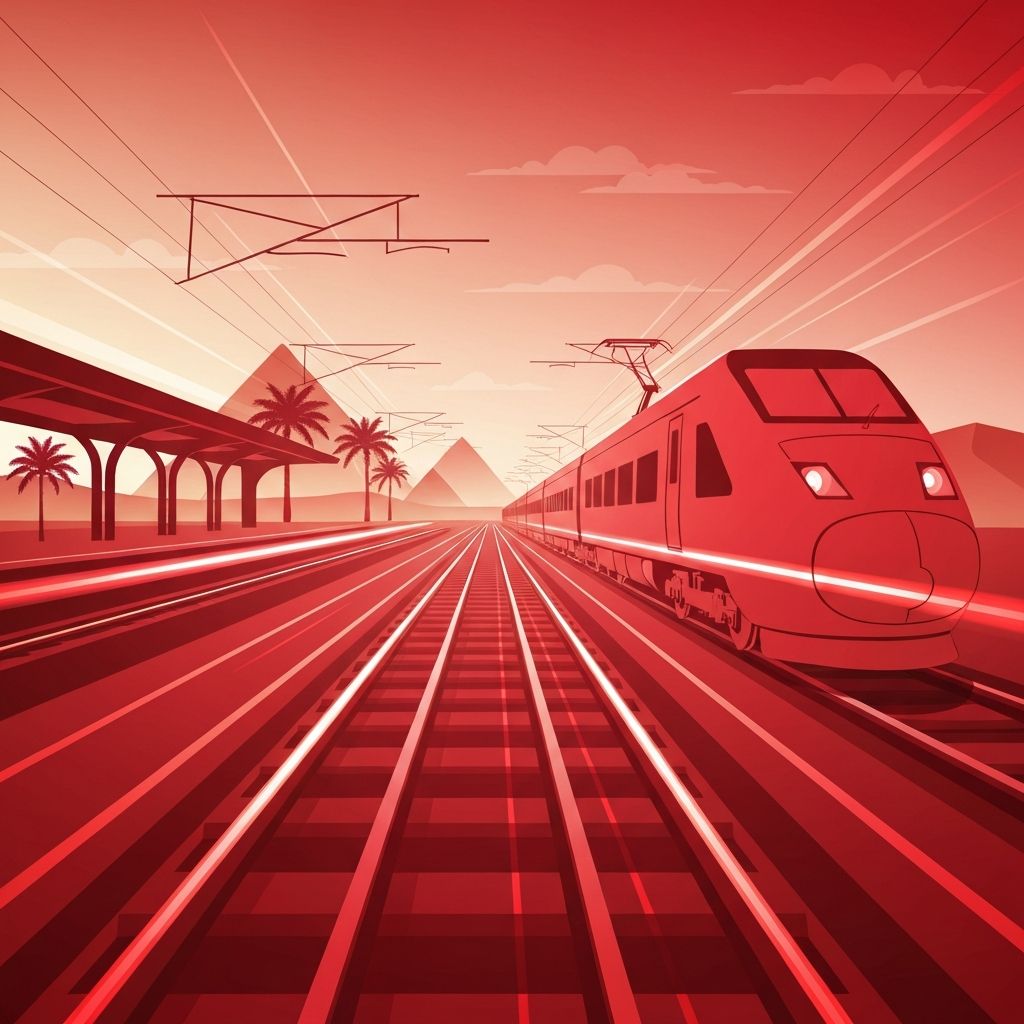
Introduction to Egypt's Railway Sector
Egypt boasts one of the oldest railway networks in Africa and the Middle East, with rail lines dating back to the mid-19th century. Today, the country is undergoing a major rail renaissance, with significant investments in high-speed lines, monorails, metro expansions, and freight corridors connecting industrial zones to ports and cities.
Why Rail Matters for Egypt
Rail transport offers a sustainable, efficient, and high-capacity solution for both passengers and freight. With Egypt's growing population and ambitious urban planning, modern railways are crucial for reducing congestion, lowering emissions, and supporting economic development across regions.
Top 10 Best Railway Operators in Egypt
1. Egyptian National Railways (ENR) is the backbone of the country's rail network, operating thousands of kilometers of track and serving major cities from Alexandria to Aswan.
2. Egyptian Company for Metro Management and Operation (ECM) runs the Cairo Metro, one of Africa's busiest urban rail systems, with multiple lines crisscrossing the capital.
3. RATP Dev Egypt is the international operator managing parts of the Cairo Metro and supporting modernization, training, and operational excellence.
4. Siemens Mobility Egypt plays a transformative role through its high-speed rail project, set to deliver one of the longest electrified rail systems in the world.
5. Orascom Construction partners on major rail infrastructure, including monorail and high-speed lines, leveraging decades of construction expertise.
6. The Arab Contractors contribute to track laying, tunneling, and station construction across several national rail projects.
7. Bombardier Transportation Egypt (now part of Alstom) supports the country's monorail program with advanced rolling stock and signaling systems.
8. Alstom Egypt is heavily involved in the New Administrative Capital monorail and other electrified transit projects, bringing global rail expertise to local needs.
9. National Authority for Tunnels (NAT) oversees metro expansions and tunneling projects, ensuring coordinated planning across Greater Cairo.
10. Hassan Allam Construction rounds out the list with significant contributions to rail-related civil works, stations, and depots.
Passenger Services
Egyptian National Railways operates a wide range of passenger services, including air-conditioned express trains, sleeper trains between Cairo and Upper Egypt, and standard regional services. The Cairo Metro carries millions of passengers daily and is steadily expanding with new lines and modernized stations.
High-Speed and Monorail Projects
Egypt's ambitious high-speed rail network aims to link the Red Sea, the Mediterranean, and the Nile Valley, dramatically reducing travel times between major cities. The Cairo monorail will connect the New Administrative Capital and 6th of October City to Greater Cairo, supporting new urban developments.
Freight on Rail
Rail freight in Egypt focuses on bulk commodities such as cement, fertilizers, grains, and petroleum products. Investments in dedicated freight corridors and dry ports are gradually shifting more cargo from road to rail, improving efficiency and reducing congestion.
Modernization and Technology
Modern signaling, electrification, and digital ticketing are central to Egypt's rail upgrades. Smart maintenance, automated train operations, and integrated mobility apps are increasingly part of the country's rail future.
Conclusion
Egypt's railway operators are at the heart of a historic transformation. By blending tradition with cutting-edge technology, they are building a network that supports millions of daily travelers, fuels industrial growth, and connects the country's diverse regions for generations to come.
