
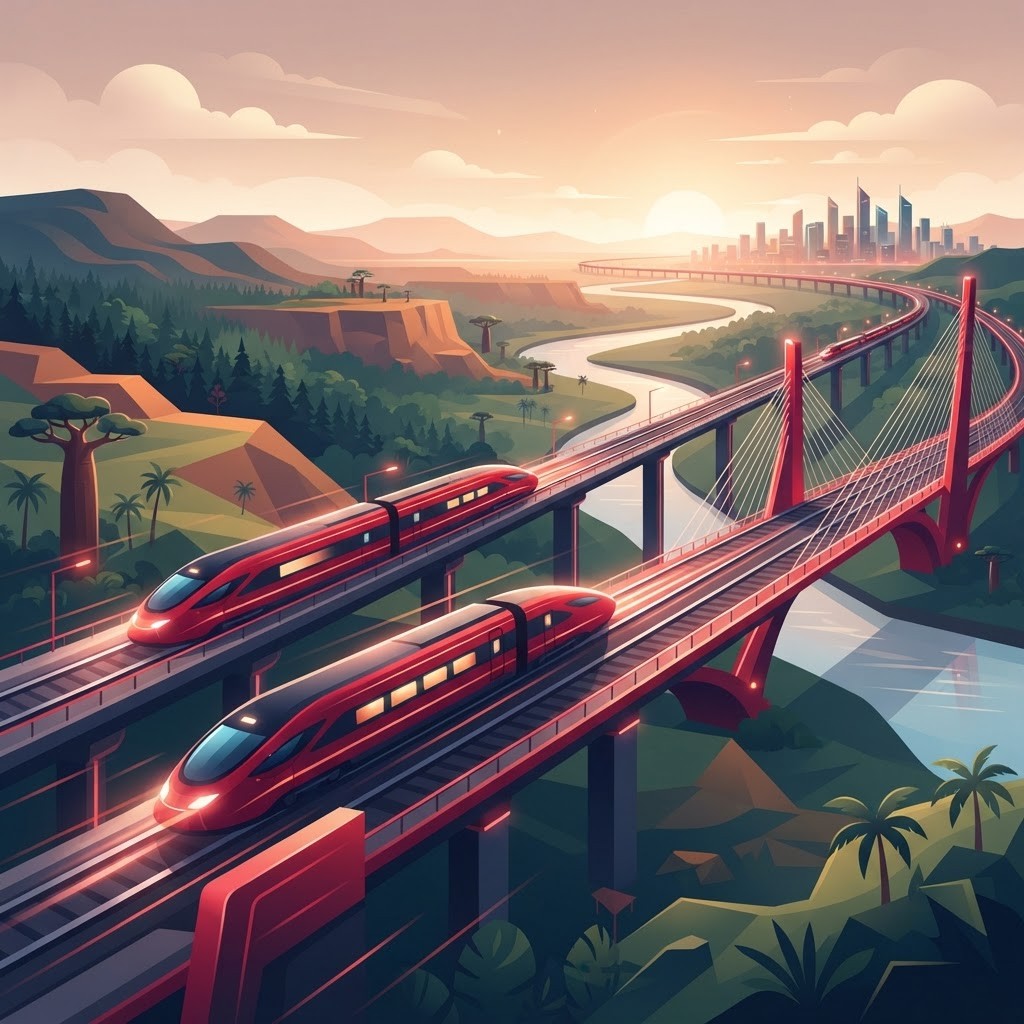
The Role of Railways in Congo's Development
Railways hold a special place in Congo's transport story, offering an efficient way to move heavy freight and passengers across vast and often difficult terrain. Where roads can be washed out by seasonal rains and river transport is limited by geography, rail lines provide a stable backbone for national and regional connectivity. The best railway operators are essential to unlocking the country's mineral wealth and agricultural potential.
Historically, rail played a central role in linking inland resource regions to ports and trade hubs. Today, revitalizing and modernizing these networks is a national priority, and the operators managing them are central to Congo's economic ambitions.
Why Rail Transport Matters
Rail offers distinct advantages over road transport for bulk cargo. It is more fuel-efficient, capable of carrying enormous loads over long distances, and less vulnerable to the congestion and wear that affect highways. For industries such as mining, cement, timber, and agriculture, rail can dramatically reduce transportation costs per ton.
Passenger rail also serves communities with limited alternatives, providing affordable long-distance travel. The most effective operators balance freight profitability with the social importance of keeping passenger services running safely and reliably.
Leading Railway Operators in Congo
The Société Nationale des Chemins de Fer du Congo (SNCC) is one of the most significant rail entities in the Democratic Republic of Congo, managing extensive networks that connect mining regions in the south to key transport corridors. SNCC's operations are crucial for moving copper, cobalt, and other minerals that anchor the national economy.
The Chemin de Fer Matadi-Kinshasa (CFMK) operates the historic line linking the port of Matadi to the capital, a vital corridor for imports and exports. This route remains strategically important for goods entering and leaving the country through the Atlantic coast.
In the Republic of Congo, the Chemin de Fer Congo-Océan (CFCO) is the flagship operator, running the essential line between Pointe-Noire and Brazzaville. This railway is a lifeline for freight and passengers alike, connecting the coastal port city with the inland capital across demanding landscapes.
Regional and industrial rail operators, including mining-linked concessions and private freight partners, complement these national systems by serving specific corridors and heavy-haul needs. Their specialized rolling stock and dedicated routes support the resource sector's demanding logistics.
Services and Capabilities
Top railway operators offer a mix of freight and passenger services tailored to Congo's needs. Freight services handle bulk commodities, containerized cargo, and specialized loads, often integrating with ports and inland terminals to create seamless supply chains. Passenger services range from long-distance intercity travel to regional connections that link smaller towns to major hubs.
Beyond transport itself, leading operators invest in track maintenance, locomotive overhaul, and terminal management to keep services dependable. Some are pursuing modernization programs that include upgraded signaling, refurbished rolling stock, and improved scheduling to boost reliability.
Challenges and Modernization Efforts
Congo's railways face real challenges, including aging infrastructure, funding constraints, and the sheer difficulty of maintaining track across remote regions. Decades of underinvestment left many lines in need of rehabilitation, and operators must balance limited resources against ambitious upgrade goals.
Encouragingly, modernization is gaining momentum. Partnerships with international investors, equipment renewal programs, and rehabilitation projects are gradually improving capacity and safety. As these efforts mature, rail is poised to reclaim a larger share of the freight market and offer more reliable passenger service.
Industry Trends and Opportunities
The future of rail in Congo is closely tied to resource exports and regional integration. As demand for minerals remains strong, operators that can guarantee consistent, high-capacity freight movement stand to benefit significantly. There is also growing interest in linking Congolese networks with neighboring countries to create broader trade corridors across Central and Southern Africa.
Technology adoption, from digital scheduling to predictive maintenance, is another area of opportunity. Operators embracing these tools can improve efficiency, reduce downtime, and offer clients greater reliability.
Conclusion
Railway operators are indispensable to Congo's economic engine, moving the minerals, goods, and people that keep the nation's commerce alive. Entities like SNCC, CFMK, and CFCO carry a heavy responsibility, and their ongoing modernization efforts will shape the country's transport future. For businesses and communities alike, a stronger, more reliable rail network promises lower costs, greater connectivity, and new opportunities for growth across the region.
