
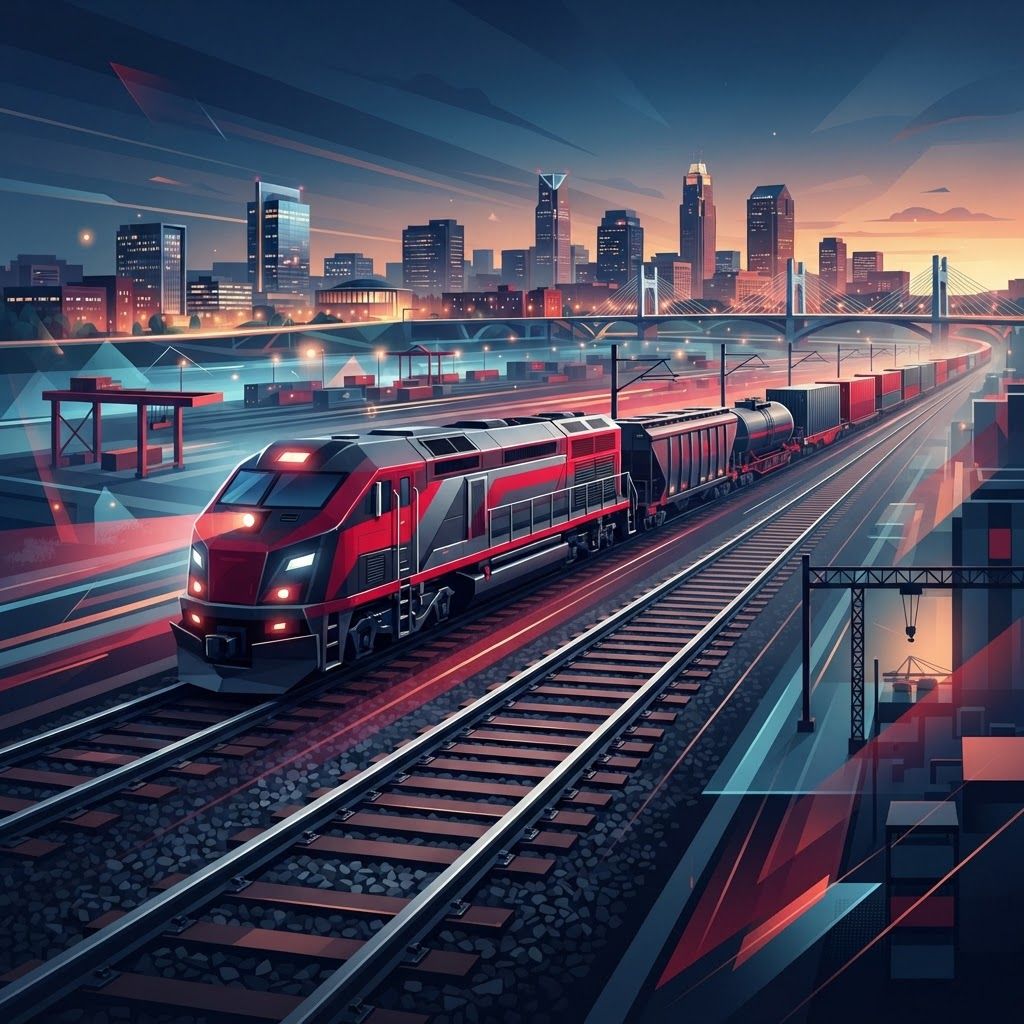
The Role of Rail in Columbus
Rail transportation has long been a cornerstone of commerce in Columbus and central Ohio. While passenger rail service in the region is limited, freight rail plays an indispensable role in the movement of goods, supporting manufacturing, agriculture, energy, and distribution industries. Railway operators provide efficient, high-capacity transportation that complements trucking and other modes, forming a vital part of the region's integrated logistics network.
The strategic importance of rail in Columbus reflects the city's broader role as a logistics and distribution hub. Rail lines connect the region to national and international markets, enabling the efficient transport of bulk commodities and containerized freight over long distances. For many industries, rail offers an economical and sustainable transportation solution.
Freight Rail and Its Importance
Freight rail is the backbone of railway operations in the Columbus region. Major railroads and regional operators move enormous volumes of goods, including raw materials, agricultural products, chemicals, automobiles, and consumer goods. Rail is particularly well suited for transporting heavy, bulky, or high-volume cargo over long distances, offering cost and efficiency advantages that other modes cannot match.
The efficiency of freight rail also delivers significant environmental benefits. Trains can move large quantities of freight with lower fuel consumption and emissions per ton-mile compared to trucks. This makes rail an increasingly attractive option as businesses and society prioritize sustainability. Railway operators in Columbus contribute to reducing highway congestion and environmental impact while supporting economic activity.
Class I Railroads and Regional Operators
The railway landscape in the Columbus area includes major Class I railroads that operate expansive national networks. Norfolk Southern and CSX Transportation are prominent Class I carriers with significant operations in the region, connecting Columbus to markets across the eastern United States and beyond. These railroads provide the long-haul capacity and connectivity that anchor the region's rail freight system.
Complementing the Class I railroads are regional and short-line operators that provide localized service, connecting industries and facilities to the broader rail network. These operators play a crucial role in first-mile and last-mile rail service, linking shippers to main lines and enabling efficient interchange of freight. Together, Class I railroads and short-line operators form a comprehensive rail ecosystem.
Intermodal Services
Intermodal transportation, which combines rail with trucking and other modes, has become increasingly important. Intermodal facilities allow containers and trailers to be transferred efficiently between rail and truck, combining the long-haul economy of rail with the flexibility and reach of trucking. This integration is especially valuable for the movement of containerized freight and consumer goods.
Columbus's logistics infrastructure includes intermodal capabilities that support the region's role as a distribution hub. By facilitating seamless transfers between transportation modes, intermodal services enhance efficiency, reduce costs, and expand the reach of rail freight. This integration exemplifies the modern, interconnected nature of freight transportation.
Supporting Industry and Commerce
Railway operators serve a diverse array of industries in the Columbus region. Manufacturers rely on rail to receive raw materials and ship finished products. Agricultural producers use rail to transport grain and other commodities to distant markets. Energy companies depend on rail for the movement of fuels and related products. Distribution and retail businesses benefit from rail's capacity for high-volume freight.
This broad industrial support underscores the essential role of rail in the regional economy. By providing reliable, high-capacity transportation, railway operators enable businesses to reach markets efficiently and competitively, contributing to economic growth and stability throughout central Ohio.
Infrastructure and Investment
The effectiveness of rail transportation depends on robust infrastructure. Rail lines, terminals, intermodal facilities, and equipment require ongoing investment and maintenance. Railroads continually invest in their networks to improve capacity, safety, and efficiency, ensuring that they can meet the demands of a growing economy.
Infrastructure investment also supports the region's competitiveness as a logistics hub. Well-maintained and modern rail infrastructure attracts businesses and facilitates economic development. Public and private investment in rail infrastructure reflects a recognition of its strategic importance to the region's future.
Industry Trends
The rail industry is evolving in response to technological advances and changing market conditions. Precision scheduled railroading and other operational improvements have enhanced efficiency and reliability. Technology adoption, including advanced tracking, automation, and data analytics, is improving operations and customer service. Sustainability continues to be a key theme, with rail's environmental advantages gaining recognition.
Growth in intermodal traffic and e-commerce-driven freight demand presents opportunities for the rail sector. At the same time, the industry must navigate challenges such as infrastructure needs, regulatory considerations, and competition from other modes. Successful operators adapt through investment, innovation, and operational excellence.
Final Thoughts
Railway operators are a vital component of Columbus's transportation and logistics infrastructure, providing efficient and sustainable freight transportation that supports the regional economy. Through the combined efforts of major Class I railroads, regional operators, and intermodal services, rail keeps goods moving across central Ohio and the nation. As the region continues to grow as a logistics hub, the importance of reliable and efficient rail transportation will only increase, reinforcing its role as an essential driver of commerce and economic prosperity.
