
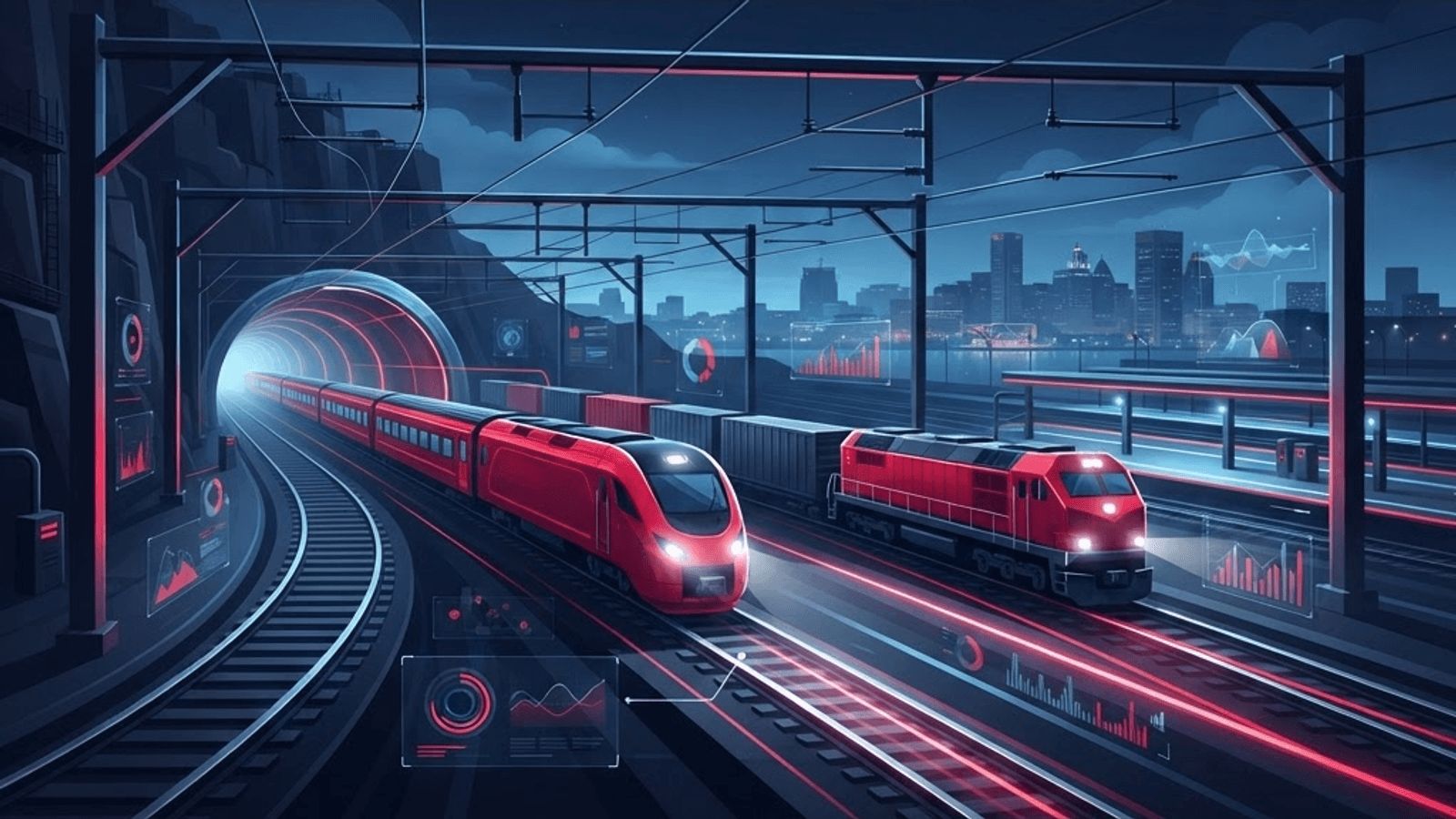
A City Built on Rails
American commercial railroading began in Baltimore. The nation's first common carrier railroad was chartered here in the 1820s, and the city has never stopped being a rail town. Tunnels bored beneath its neighborhoods, yards spread along its industrial corridors, and freight moving between the Northeast and the Midwest still passes through Baltimore every hour of every day.
For modern shippers, that heritage translates into practical advantage. Rail moves heavy, dense and long-haul freight at a fraction of the fuel consumption of over-the-road trucking, and Baltimore's dual Class I access means competitive routing options rather than a single captive carrier. Understanding who operates here, and what each operator does well, is the starting point for building rail into a supply chain.
Why Rail Matters More Than Ever
Intermodal service has narrowed the transit gap with trucking on many lanes while retaining a substantial cost and emissions advantage. A single intermodal train can remove hundreds of truckloads from the interstate, which matters both for corporate emissions reporting and for congestion on the I-95 corridor. Bulk shippers moving coal, aggregates, grain, chemicals and steel rely on rail because no other mode handles the tonnage economically. Meanwhile, passenger rail keeps the regional labor market functioning by linking Baltimore to Washington, Philadelphia and New York.
The Top 10 Railway Operators and Rail Organizations in Baltimore
1. CSX Transportation — CSX is the dominant freight railroad in Baltimore, operating extensive yard and terminal facilities and the historic tunnels that carry freight beneath the city. Its network reaches across the eastern United States, and its intermodal and merchandise services connect the port and local industry to inland markets. Shippers value CSX for network breadth, terminal density and the depth of its bulk and automotive expertise.
2. Norfolk Southern Railway — The second Class I carrier serving the region provides competitive routing to the Southeast, Midwest and Gulf. Norfolk Southern is well regarded for intermodal service design and for industrial development support, helping companies site facilities on rail-served land. Having two Class I options in one market gives Baltimore shippers genuine leverage on rates and service.
3. Amtrak — Operating the Northeast Corridor through Baltimore Penn Station, Amtrak is the backbone of intercity passenger rail in the region. Frequent service to Washington and the Northeast supports the professional workforce that regional businesses depend on. Ongoing corridor and tunnel modernization work is steadily improving reliability and journey times.
4. Maryland Area Regional Commuter Service — Known regionally as MARC, this commuter operator links Baltimore with Washington and communities along the Penn, Camden and Brunswick lines. Weekday commuters rely on it for predictable, affordable travel, and employers treat proximity to a MARC station as a meaningful recruiting asset.
5. Maryland Transit Administration Light Rail — The light rail line stitches together downtown Baltimore, the stadium district, Hunt Valley and the airport. While technically urban transit rather than mainline railroading, it is an essential rail service for daily mobility and for visitors arriving by air.
6. Canton Railroad Company — A compact terminal switching railroad serving the industrial waterfront, Canton Railroad connects marine terminals and manufacturers to the Class I network. Its value is precision switching: getting individual cars to and from private sidings reliably, which larger railroads are not structured to do.
7. Patapsco and Back Rivers Railroad — Historically tied to heavy industry in the Sparrows Point area, this short line represents the classic industrial switching model. Operators of this type excel at in-plant movements, car storage and interchange coordination for bulk and steel-related cargo.
8. Maryland and Delaware Railroad — Serving the broader Eastern Shore region and interchanging with the national network, this short line supports agriculture, building materials and food processing shippers. Short lines like this one are prized for personal service and flexibility on car spotting schedules.
9. Baltimore and Annapolis Rail Corridor Operations — Rail corridor management and trail conversion in this part of Maryland illustrates how legacy rights of way continue to serve mobility, whether through active freight service, transit planning or recreational trail use.
10. B and O Railroad Museum — Not a commercial operator, but indispensable to the story. The museum preserves the roundhouse and rolling stock that document the origins of American railroading, operates demonstration train rides and educates thousands of students annually. For a rail-heritage city, it is both a cultural anchor and a workforce pipeline that sparks interest in rail careers.
What Shippers Should Ask a Rail Partner
Start with access. Do you have a private siding, or will you rely on transloading between rail and truck? Transload facilities near the port let non-rail-served shippers still capture line-haul savings. Next, evaluate transit consistency rather than headline transit time, because a rail service that arrives predictably on day five beats one that arrives between day three and day seven. Ask about car supply commitments, demurrage terms, storage-in-transit options and electronic tracing tools.
Also consider commodity fit. Rail rewards volume, density and distance. Freight moving under roughly five hundred miles in small quantities usually stays on trucks; freight moving farther in carload or unit-train volumes almost always belongs on rail.
Trends to Watch
Three developments deserve attention. Clearance and tunnel modernization in and around Baltimore is expanding double-stack intermodal capability, which directly increases the port's inland reach. Precision scheduled railroading has changed how carriers design service, rewarding shippers who load and release cars on disciplined schedules. And decarbonization pressure is accelerating modal shift, with rail's lower emissions profile increasingly written into corporate sustainability targets and procurement scorecards.
Final Thoughts
Baltimore's rail network is not a museum piece; it is working infrastructure that gives local businesses cost, capacity and sustainability advantages competitors in other markets cannot easily match. Between two Class I railroads, a set of capable short lines, robust commuter and intercity passenger service and a heritage institution that keeps the story alive, the city offers a uniquely complete rail ecosystem. Choosing the right operator, or the right combination of operators, is one of the highest-leverage supply chain decisions a Baltimore company can make.
