
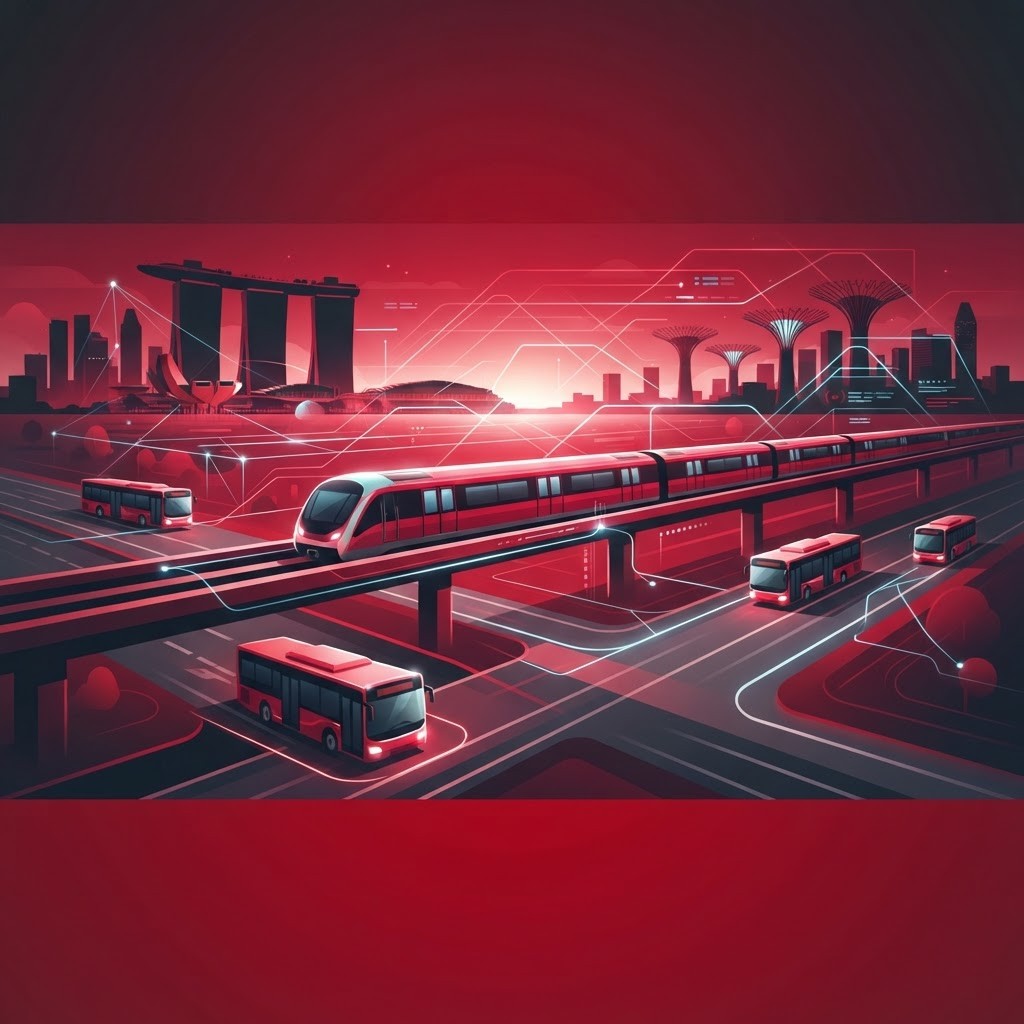
A World-Class Transit System
Singapore consistently ranks among the best cities globally for public transportation, and for good reason. A dense, well-integrated network of trains, buses, and complementary services moves millions of commuters daily with impressive reliability. The system is designed around convenience, affordability, and connectivity, allowing residents and visitors to reach almost any corner of the island without needing a private car.
Central to this success is a unified fare framework and contactless payment system that lets commuters tap seamlessly across different modes of transport, making multi-leg journeys effortless.
The Backbone: Rail and Bus
The Mass Rapid Transit network forms the spine of Singapore's transit, connecting residential heartlands, business districts, and attractions through an expanding web of lines. Complementing it, an extensive bus network reaches neighbourhoods and destinations not directly served by rail, ensuring comprehensive coverage across the island.
The Top 10 Public Transit Services and Operators
1. SMRT Trains — One of the main rail operators, SMRT runs several key MRT lines and is central to daily commuting, known for high ridership and continuous network upgrades.
2. SBS Transit — A major operator of both MRT lines and bus services, SBS Transit provides extensive coverage and plays a vital role in connecting communities across the island.
3. Mass Rapid Transit (MRT) — The rail network itself is the flagship of Singapore's transit system, offering fast, air-conditioned, and punctual travel across the city with frequent service.
4. Light Rail Transit (LRT) — Serving as feeder lines within residential towns, the LRT connects commuters from their neighbourhoods to nearby MRT stations efficiently.
5. Public Bus Network — With thousands of buses covering the island, the bus network offers affordable, wide-reaching service that complements the rail system perfectly.
6. Tower Transit — A bus operator contributing to the diversified public bus system, Tower Transit is recognised for reliable service on its assigned routes.
7. Go-Ahead Singapore — Another key bus operator, Go-Ahead serves eastern regions of the island, maintaining consistent schedules and quality service.
8. ComfortDelGro Taxi — As one of the largest taxi operators, ComfortDelGro extends public mobility with widely available cabs that fill gaps where scheduled transit does not reach.
9. Grab — The dominant ride-hailing platform, Grab complements public transit by offering on-demand rides, carpooling, and first-and-last-mile connectivity through a convenient app.
10. TransitLink — The organisation behind fare integration and the common ticketing system, TransitLink enables the seamless, unified payment experience that ties the entire network together.
Fares and Accessibility
Singapore's transit is celebrated for affordability, with distance-based fares that reward the use of public transport over private vehicles. Concession schemes support students, seniors, and lower-income commuters. Accessibility is a priority, with barrier-free stations, tactile guidance, priority seating, and lifts ensuring the system serves passengers of all abilities.
Technology and Innovation
Contactless bank card and mobile payment options have simplified fare collection, while real-time arrival information helps commuters plan journeys precisely. Ongoing investment in automation, energy-efficient trains, and network expansion reflects a long-term commitment to sustainable, future-ready mobility.
The Move Toward a Car-Lite Future
Singapore actively promotes a car-lite vision, encouraging public transport, cycling, and walking to reduce congestion and emissions. Continuous expansion of rail lines and integration with active mobility options aim to make public transit the natural first choice for the vast majority of journeys.
Conclusion
The strength of Singapore's public transit lies in its integration, reliability, and forward-thinking design. From the extensive MRT and bus networks to complementary services like taxis and ride-hailing, commuters enjoy a connected ecosystem that few cities can match. As the network continues to grow and innovate, getting around the island will only become more convenient and sustainable.
