
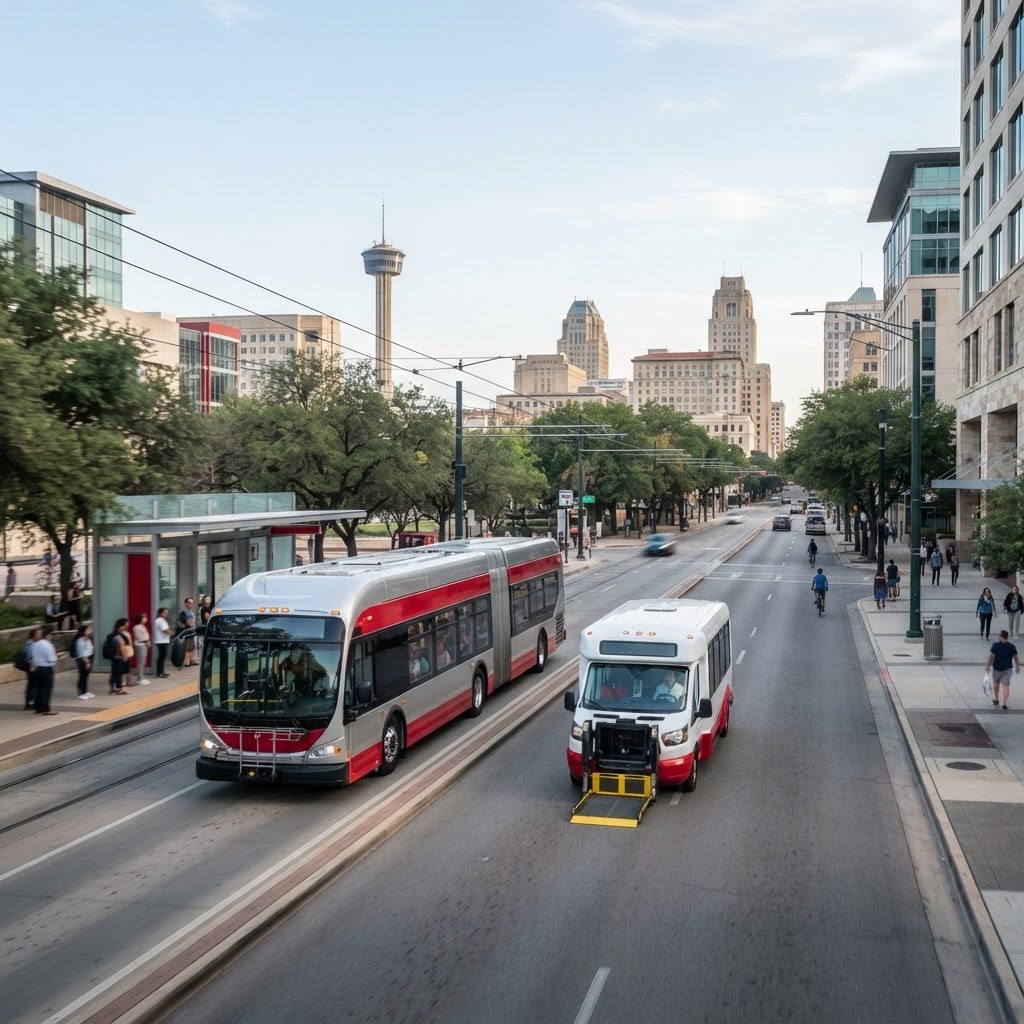
Getting Around San Antonio Without a Car
San Antonio covers a large area, and travel needs range from daily commuting to airport trips and regional journeys. VIA Metropolitan Transit anchors local public transportation, while complementary intercity, campus, and shared-mobility options expand the network. Riders should check current schedules and eligibility because routes and service plans can change.
1. VIA Metropolitan Transit
VIA Metropolitan Transit operates San Antonio’s primary bus network. It serves major employment, education, healthcare, shopping, and residential destinations across the service area. Regular riders benefit from planning around frequent corridors and transfer points, while occasional visitors can use the network to reach many central attractions.
2. VIA Primo
VIA Primo is an enhanced bus service designed for faster, more convenient travel on key corridors. Features may include distinctive stations, transit-priority elements, frequent service, and connections to major destinations. Primo is especially useful for riders whose origins and destinations align with its principal routes.
3. VIAtrans
VIAtrans provides complementary paratransit for eligible riders whose disabilities prevent them from using fixed-route service under qualifying conditions. Trips generally require advance scheduling and operate within defined areas and times. Eligibility and reservation rules help ensure the specialized service reaches those who need it.
4. VIA Link
VIA Link provides on-demand transit within designated zones. Instead of following only a fixed route, vehicles connect riders with destinations and transfer points inside the service area. This model can improve coverage in lower-density neighborhoods where conventional bus frequency is difficult to sustain.
5. VIA Park & Ride
VIA’s park-and-ride facilities allow commuters and event attendees to leave a vehicle and continue by transit. This can reduce downtown parking stress and simplify travel to large events. Facility usefulness depends on the rider’s route, service hours, and the event transportation plan in effect.
6. Greyhound
Greyhound provides intercity bus transportation connecting San Antonio with other Texas cities and destinations farther away. It complements local transit rather than replacing it. Travelers should account for the connection between the intercity station and their final local destination when planning total journey time.
7. FlixBus
FlixBus offers scheduled intercity coach service on selected routes. Its app-oriented booking model and competitive fares appeal to students, leisure travelers, and riders who prefer not to drive between cities. Pickup locations may differ from traditional terminals, so travelers should verify the exact stop.
8. Megabus
Megabus is another intercity coach option that periodically serves Texas city pairs based on current operations. Advance fares and direct links can make coach travel attractive for regional trips. Riders should compare schedules, baggage allowances, stop locations, and change policies.
9. Alamo Regional Transit
Alamo Regional Transit supports mobility in communities across the surrounding region. Rural and demand-response transportation is important for residents who need access to healthcare, services, and larger urban connections. Reservation windows and eligibility can vary by program and trip type.
10. University Transit and Campus Shuttles
San Antonio’s colleges and universities operate shuttle systems or transportation programs for students, employees, and visitors. Institutions such as the University of Texas at San Antonio may connect campuses, parking areas, and nearby destinations. These services reduce parking demand and can coordinate with VIA routes.
How to Plan a Better Transit Trip
Review the complete trip, including walking time, transfers, waiting, and the return schedule. Arrive early, especially when connecting to an intercity departure or appointment. Riders with mobility needs should examine stop accessibility, vehicle features, and paratransit eligibility in advance.
Fare products should match travel frequency. A pass may benefit frequent riders, while single fares may suit occasional trips. Real-time arrival tools can reduce uncertainty, but riders should still allow extra time for traffic, construction, weather, and major events.
The Future of San Antonio Transit
Population growth is increasing attention on frequent corridors, advanced rapid transit, on-demand service, accessible mobility, and safer connections for walking and cycling. Effective transit supports workforce access and gives households more transportation choices. San Antonio’s strongest services are those that connect reliably, communicate clearly, and respond to the distinct needs of a sprawling metropolitan region.
Before Making a Final Decision
Use this list as a researched starting point rather than a substitute for current due diligence. Services, staffing, availability, policies, service areas, and eligibility can change as San Antonio continues to grow. Contact the organization through its established business channels, explain the exact outcome you need, and request current written information before committing. Compare several suitable options on the same criteria instead of relying on a headline price or a single review. Ask who will perform the work, how progress is communicated, what is included, which circumstances create extra charges, and how problems are resolved. Recent feedback from customers with needs similar to yours can reveal details that broad ratings miss. Keep copies of estimates, schedules, policies, and other important records. A thoughtful comparison should balance quality, reliability, convenience, safety, local experience, and total cost. The strongest choice is ultimately the provider whose present capabilities and working approach fit your priorities, timeline, and circumstances.
