
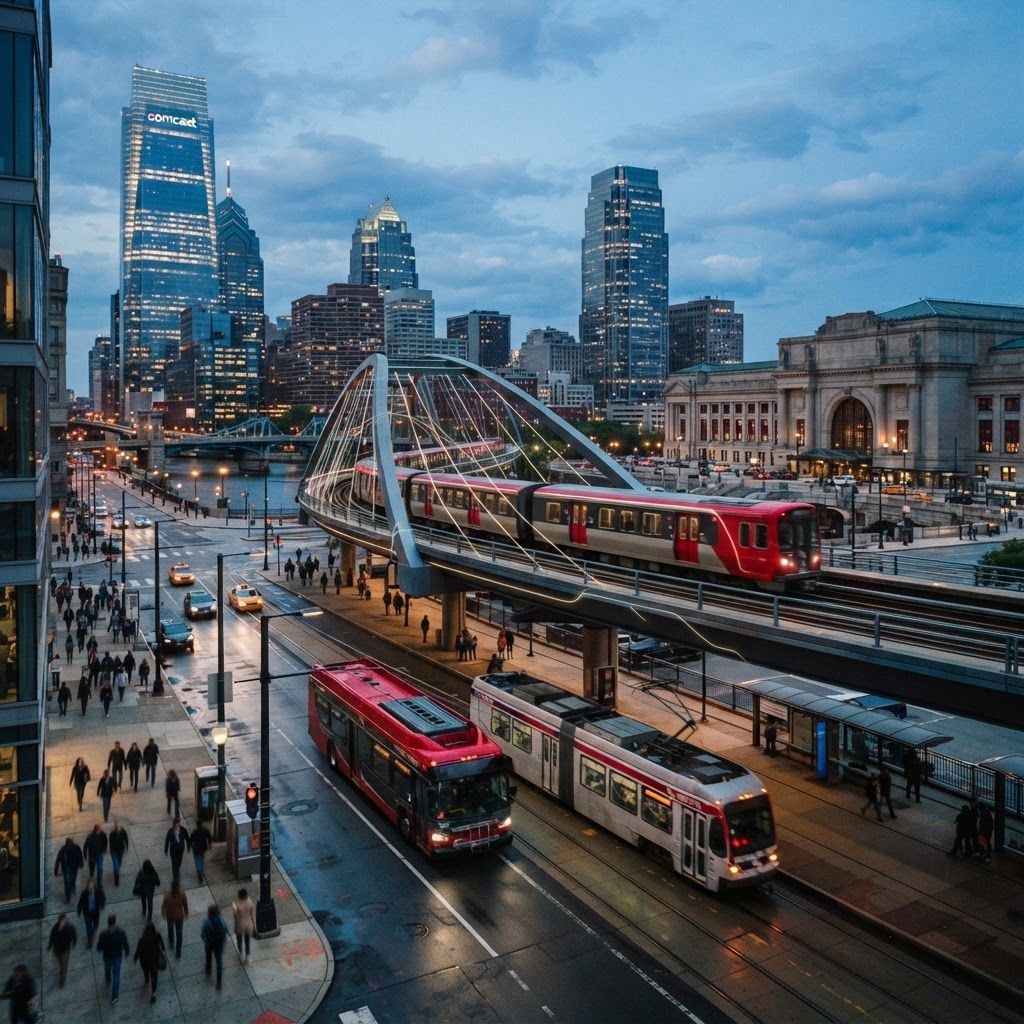
Getting Around Philadelphia Without a Car
Philadelphia is one of the most transit-friendly cities in the United States. Its compact Center City grid, walkable neighborhoods, commuter rail network, subway lines, and connections to New Jersey make car-free travel realistic for many residents and visitors. The system is not operated by a single provider; several agencies and services work together across city and state boundaries.
The best option depends on destination, time of day, accessibility needs, and tolerance for transfers. Current schedules and service alerts should always be checked before travel. These ten services cover the most important parts of the region’s public mobility network.
1. SEPTA Bus
SEPTA’s bus network reaches nearly every part of Philadelphia and extends into surrounding counties. It is the most geographically flexible transit option, connecting neighborhoods to employment centers, schools, hospitals, shopping districts, and rail stations. Frequent routes are useful for everyday travel, while transfers provide access to the wider SEPTA network. Traffic can affect reliability, so riders should allow extra time during rush hours.
2. SEPTA Regional Rail
Regional Rail connects Center City stations with suburbs across southeastern Pennsylvania and selected destinations in New Jersey and Delaware. It is particularly valuable for longer commutes and airport access. Trains avoid highway congestion and serve major employment and residential corridors. Frequency varies by line and time, making advance schedule review important for off-peak trips.
3. Broad Street Line
The Broad Street Line is Philadelphia’s primary north-south rapid transit route. It links South Philadelphia and the stadium complex with Center City, Temple University, North Philadelphia, and northern neighborhoods. Express patterns can make longer trips faster. The line is especially useful during sporting events, when driving and parking near the stadiums become difficult.
4. Market-Frankford Line
The Market-Frankford Line provides essential east-west rapid transit. It connects West Philadelphia, University City, Center City, Old City, and neighborhoods in the northeast. Its high capacity and frequent service make it one of the fastest ways to cross central Philadelphia. Connections with buses, trolleys, Regional Rail, and PATCO support trips across the broader region.
5. SEPTA Trolleys
Philadelphia’s trolley network combines street-running service with an underground Center City tunnel. Routes connect West Philadelphia neighborhoods with University City and downtown, while other trolley services operate in different parts of the region. Trolleys are a distinctive part of the city’s transportation identity and provide high-capacity service on important corridors.
6. PATCO Speedline
PATCO links Center City Philadelphia with Camden County communities in New Jersey. Downtown stations make it convenient for commuters, shoppers, students, and visitors traveling across the Delaware River. Service generally operates for extended hours, and the line connects with SEPTA rapid transit. PATCO is often faster and more predictable than driving during periods of bridge congestion.
7. NJ Transit Atlantic City Rail Line
The Atlantic City Rail Line serves Philadelphia’s 30th Street Station and travels through southern New Jersey toward Atlantic City. It supports both leisure trips and regional travel to intermediate communities. Riders can connect with Philadelphia transit at 30th Street and with other New Jersey services along the route.
8. RiverLink Ferry
RiverLink Ferry provides seasonal passenger service across the Delaware River between Philadelphia and Camden. The ride is both transportation and a scenic experience, offering access to waterfront attractions on both sides. It is particularly appealing during events and warmer months. Because service is seasonal and weather-dependent, travelers should confirm the operating calendar.
9. SEPTA Owl and Night Services
Late-night mobility is supported by selected SEPTA services, including overnight bus operations that substitute for or complement rail lines. These routes are important for shift workers, hospitality employees, travelers, and residents returning home after regular rail hours. Night riders should review exact stops and frequencies because service patterns differ from daytime operations.
10. SEPTA CCT Connect
CCT Connect provides complementary paratransit and shared-ride services for eligible customers. It helps people whose disabilities prevent them from using regular fixed-route transit and supports mobility for qualifying older adults. Advance registration and trip scheduling are generally required. The service is a critical part of making regional transportation more inclusive.
Tips for Using Philadelphia Transit
Plan around the mode that best matches the trip. Rapid transit is usually fastest through the urban core, Regional Rail works well for longer suburban journeys, and buses provide neighborhood coverage. A reloadable fare product can simplify transfers across SEPTA services. Visitors should note station names and direction of travel before entering paid areas.
Accessibility varies by station and vehicle, so riders needing elevators or step-free boarding should verify conditions and active alerts. Major events, construction, and weather can change service. Despite those variables, Philadelphia’s layered network offers substantial freedom from car ownership. Combining transit with walking or shared bicycles often provides the most efficient and enjoyable way to experience the city.
For recurring commutes, test more than one route and note reliable transfer points. Keeping a backup bus or rail option in mind can make disruptions easier to manage, while traveling slightly outside peak periods may provide a more comfortable ride.
