
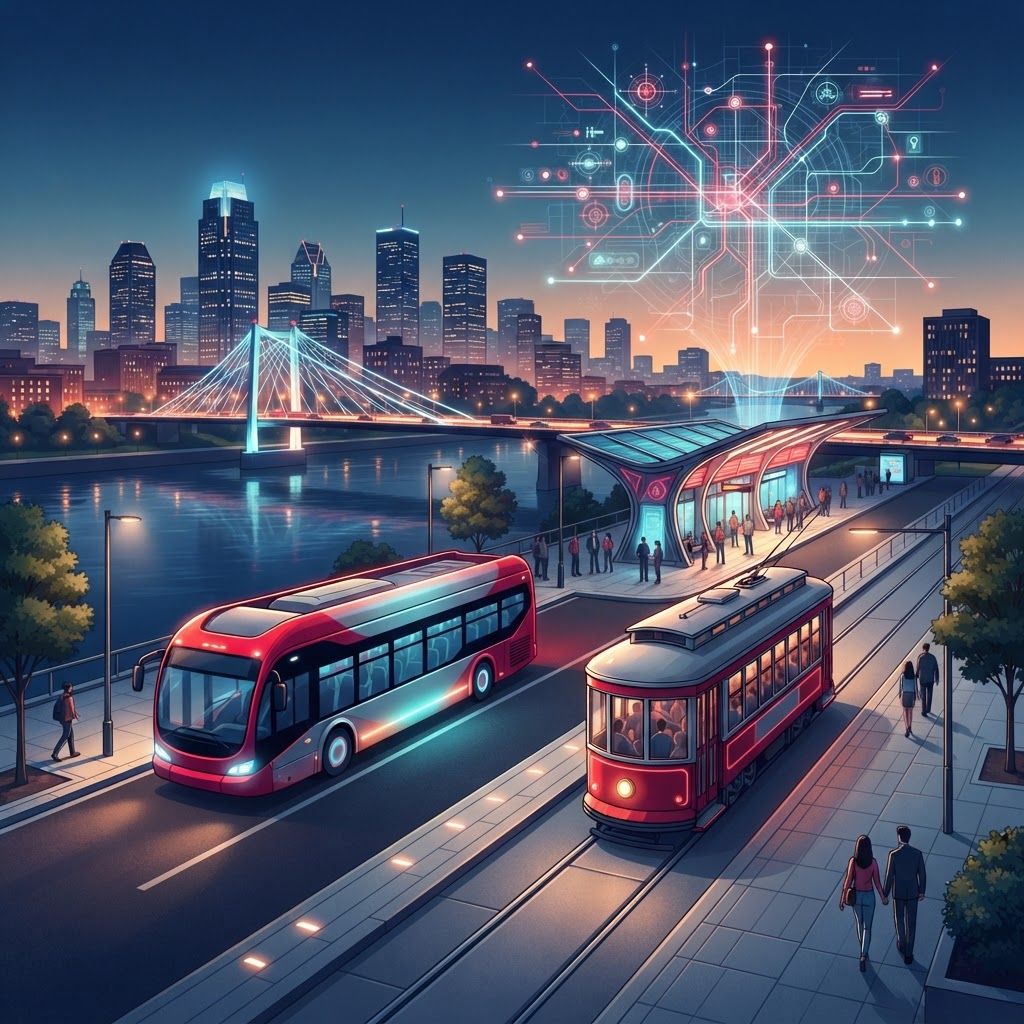
Getting Around Memphis Without a Car
Memphis grew up around the automobile, but the city's transit landscape has become considerably richer over the past decade. Downtown, the Medical District, the University District and the riverfront are all reasonably well served, and a combination of fixed-route buses, rail trolleys, on-demand shuttles and intercity carriers makes car-free travel realistic for many trips. For residents, transit reduces the significant expense of vehicle ownership. For visitors, it offers a more textured view of neighborhoods than a rideshare window provides.
Understanding the network requires knowing which service fits which trip. Long crosstown journeys behave differently from short downtown hops, and airport connections require their own planning. The options below cover the practical range.
The Top 10 Public Transit Services in Memphis
1. Memphis Area Transit Authority Bus Network
MATA operates the backbone of local transit, with fixed routes radiating from downtown transit centers across the city. Its buses serve major employment corridors, shopping districts, hospitals and colleges. Recent investments have focused on real-time arrival information, contactless fare payment and improved shelters, and the agency's network redesign work aims to concentrate frequency on the corridors with the highest ridership.
2. Main Street Trolley
The vintage rail trolleys running along Main Street are both a functional transit service and a genuine attraction. Restored historic cars connect the South Main Arts District, the central business district, the convention area and the Pinch District, making them ideal for visitors staying downtown and for residents commuting within the core. Low fares and frequent stops make short hops effortless.
3. MATAplus Paratransit
MATAplus provides origin-to-destination service for riders whose disabilities prevent them from using fixed-route buses. Trips are scheduled in advance and coordinated with certified drivers and accessible vehicles. The service is a vital independence tool, enabling medical appointments, employment and community participation for thousands of residents.
4. Groove On-Demand Microtransit
Microtransit fills the gaps that fixed routes cannot serve economically. Riders request a shared vehicle within a defined zone using an app or a phone call, and the system dynamically routes it. In Memphis this model has proven useful for first and last mile connections to trunk bus routes, for industrial areas with shift work, and for neighborhoods with dispersed destinations.
5. Amtrak City of New Orleans
Memphis Central Station sits on one of the most storied rail corridors in America. The City of New Orleans links Memphis with Chicago to the north and New Orleans to the south, with stops throughout the Mississippi Delta. For travelers who value comfort over speed, the train offers generous seating, checked baggage and a scenic route that highways cannot match.
6. Greyhound Intercity Bus
Greyhound provides the widest intercity bus coverage from Memphis, connecting the city to destinations across the South, Midwest and beyond. It remains the most affordable option for many regional trips and serves communities that no longer have air or rail access, making it an essential part of the mobility ecosystem.
7. FlixBus and Megabus
Curbside intercity operators have expanded rapidly in the region, offering low fares, reserved seating and onboard amenities on high-demand corridors such as Nashville, St. Louis, Little Rock and Dallas. Booking early yields the lowest prices, and the express nature of these routes often beats traditional bus timings.
8. Airport Ground Transportation Services
Memphis International Airport is connected by MATA bus service, shared-ride shuttles, hotel courtesy vehicles, taxis and rideshare pickup zones. For travelers with luggage and tight schedules, shared shuttles offer a middle path between the economy of the bus and the expense of a private car, and several operators serve suburban destinations directly.
9. University and Medical District Shuttles
Institutional shuttles form a quietly important layer of local mobility. University campuses operate circulators linking parking areas, residence halls and academic buildings, while medical center shuttles move staff, patients and visitors among hospitals, clinics and garages. Many of these services are open to the public or to broad categories of riders at no charge.
10. Bikeshare and Scooter Micromobility
Docked bikeshare stations and dockless electric scooters extend the reach of every other service in this list. A ten-minute scooter ride can convert an inconvenient transfer into a direct trip, and the growing network of protected lanes and greenways makes these modes safer than they once were. Combining micromobility with a bus trunk route is often the fastest way across the central city during peak hours.
Trends and Improvements to Watch
Transit in Memphis is in a period of deliberate reinvention. Agencies are prioritizing frequency over coverage on core corridors, recognizing that riders value short waits above all else. Fare modernization is replacing cash handling with mobile ticketing and reloadable cards, which speeds boarding. Transit signal priority and dedicated lanes are being studied for the busiest streets, and the redevelopment of key downtown mobility facilities aims to make transfers between modes far more comfortable.
Electrification is advancing as well, with battery-electric buses entering fleets and charging infrastructure being built at garages. Beyond emissions, quieter and smoother vehicles measurably improve the rider experience.
Tips for Riders
Plan trips with a journey planning application that shows real-time vehicle positions, and build a buffer into transfers. Keep a mobile fare product loaded to avoid fumbling for exact change. Learn the two or three highest-frequency routes that touch your regular destinations, since frequency matters more than route directness for total travel time. If your trip starts or ends outside a well-served corridor, consider pairing transit with bikeshare or microtransit rather than abandoning transit altogether.
Used thoughtfully, the Memphis network can carry residents to work, school, medical appointments and entertainment reliably, and it gives visitors an authentic route through one of America's most culturally significant cities.
