
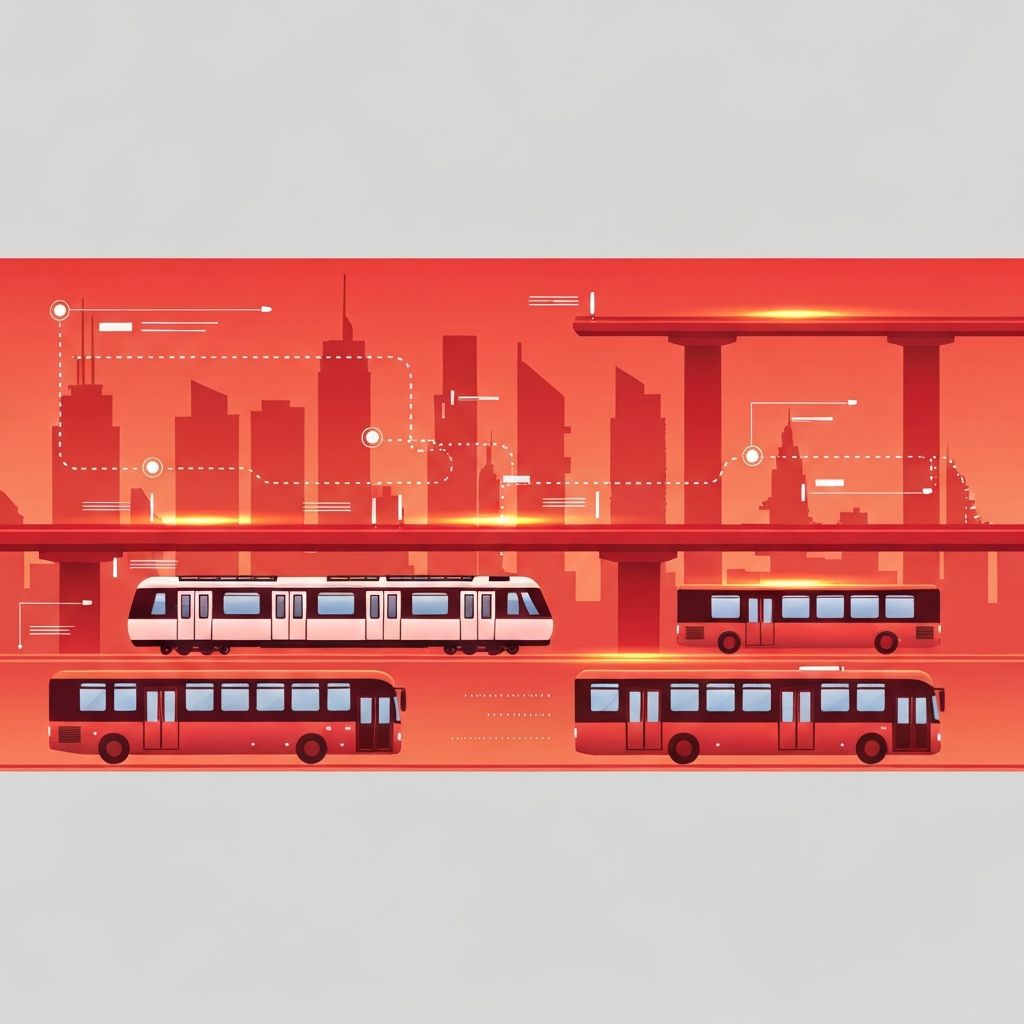
The Evolution of Public Transit in Indonesia
Public transit in Indonesia has undergone remarkable transformation over the past decade. With cities like Jakarta consistently ranking among the most congested in the world, the government and private sector have invested heavily in modern transportation infrastructure. From bus rapid transit corridors to elevated metros and integrated commuter rail, the country is steadily shifting toward sustainable, mass-transit-driven urban mobility.
Today, millions of Indonesians rely on these systems for daily commuting, while tourists increasingly use them to explore cities affordably. Below are ten of the most influential public transit services in Indonesia.
1. TransJakarta
TransJakarta operates the world's longest bus rapid transit network, with hundreds of kilometers of dedicated lanes spanning Jakarta and surrounding areas. Its extensive route coverage, electric bus fleet, and integration with feeder services make it the backbone of the capital's public transport system.
2. MRT Jakarta
MRT Jakarta launched the country's first modern metro line, connecting Lebak Bulus to Bundaran HI. Known for its punctuality, cleanliness, and modern stations, it has become a symbol of Indonesia's urban progress and continues to expand with new phases under construction.
3. LRT Jakarta
LRT Jakarta provides a sleek, elevated light rail experience connecting key districts in the capital. Operated by PT Jakarta Propertindo, it offers a comfortable alternative to road traffic and is gradually being expanded into a wider network.
4. KAI Commuter (KRL Jabodetabek)
KAI Commuter operates the iconic KRL electric commuter rail serving Greater Jakarta. With millions of daily passengers, it remains the most affordable and efficient way to travel between Jakarta, Bogor, Depok, Tangerang, and Bekasi.
5. Damri
Damri is a state-owned bus operator serving inter-city, airport, and tourist routes across Indonesia. From Soekarno-Hatta Airport shuttles to long-distance routes in Sumatra, Kalimantan, and Papua, Damri provides essential connectivity across the archipelago.
6. Trans Semarang
Trans Semarang is the bus rapid transit system serving the capital of Central Java. With multiple corridors and modern fleets, it offers convenient travel within Semarang and is a model for mid-sized Indonesian cities pursuing transit-oriented development.
7. Trans Jogja
Trans Jogja serves Yogyakarta and its surroundings, popular among students, residents, and tourists exploring temples and cultural landmarks. Its flat-fare system and growing route network make it a convenient option for both daily commuters and visitors.
8. Suroboyo Bus
Suroboyo Bus is Surabaya's environmentally conscious transit service, famously allowing passengers to pay with plastic bottles. It combines sustainability with affordability, encouraging recycling while reducing traffic congestion.
9. Trans Metro Bandung
Trans Metro Bandung operates BRT-style services in the West Java capital, helping ease congestion in one of Indonesia's most populous metropolitan regions. Its routes link key commercial districts, universities, and residential areas.
10. Trans Sarbagita Bali
Trans Sarbagita serves the greater Denpasar area, including Sanur, Nusa Dua, and Kuta. While Bali still relies heavily on private transport and tourism vehicles, Trans Sarbagita plays an important role in providing affordable transit for residents and budget travelers.
The Future of Public Transit in Indonesia
Indonesia's public transit landscape is set to grow further with planned MRT expansions, new LRT lines in cities like Bali and Bandung, and continued electrification of bus fleets. Integrated ticketing systems and smart payment solutions are also being rolled out to improve user experience.
By investing in mass transit, Indonesia is not only reducing congestion and air pollution but also reshaping urban living. Whether you are a daily commuter or a curious traveler, exploring these public transit services offers an authentic and efficient way to experience the country.
