
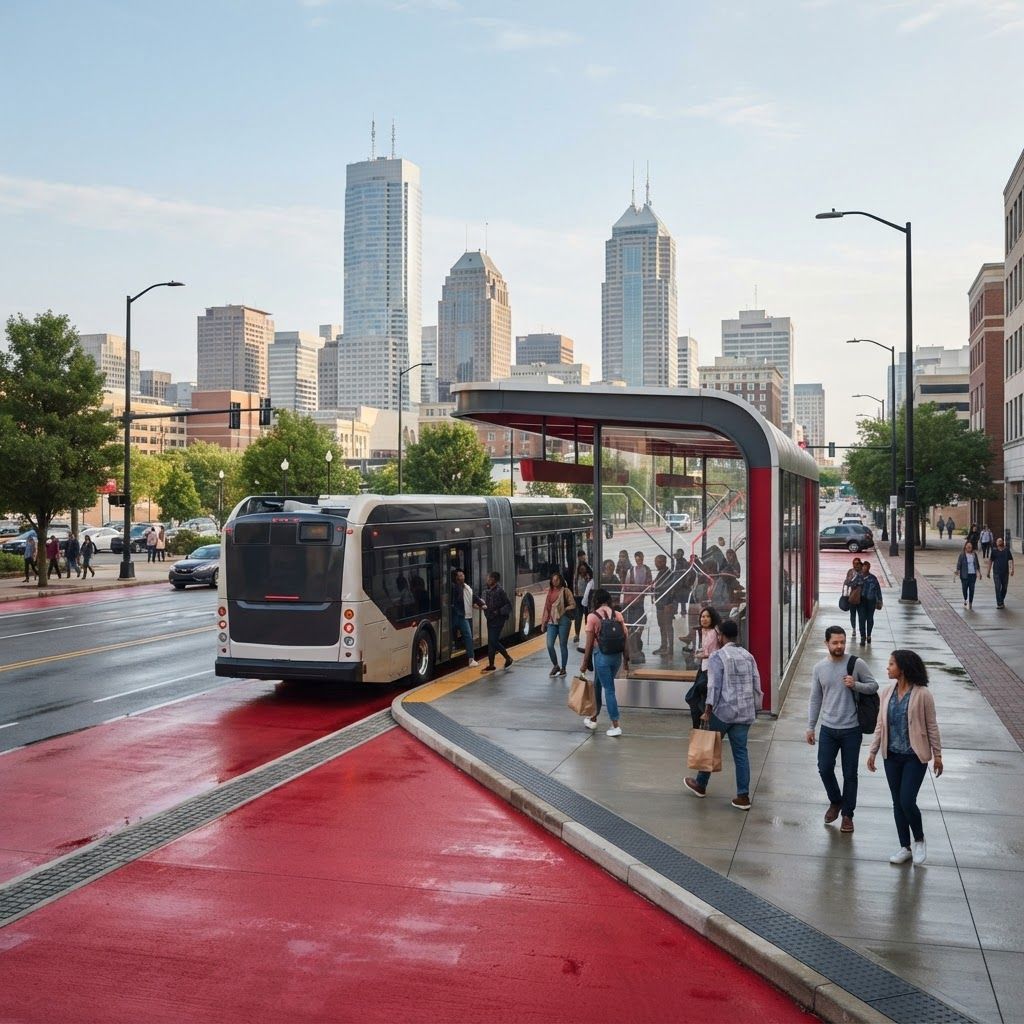
Public Transit in a Growing City
As Indianapolis continues to grow, public transit plays an increasingly important role in keeping the region connected and accessible. Reliable transit services help residents reach jobs, schools, healthcare, and cultural destinations without depending solely on personal vehicles. For many, public transportation is not just a convenience but an essential lifeline that supports economic opportunity and quality of life.
The city has made notable investments in modernizing its transit system, expanding routes, and improving service reliability. These efforts reflect a broader recognition that strong public transit is fundamental to a vibrant, equitable, and sustainable urban future.
The Backbone of Local Transit
IndyGo serves as the primary public transit agency for the Indianapolis area, operating an extensive network of bus routes that reach neighborhoods, employment centers, and key destinations across the city. Its fixed-route service forms the backbone of local mobility, carrying thousands of riders each day and connecting communities that might otherwise be isolated.
In recent years, IndyGo has introduced bus rapid transit lines that offer faster, more frequent service along major corridors. These dedicated routes feature modern vehicles, level boarding, and reduced travel times, representing a significant step forward in the quality of transit available to residents.
Accessible and Inclusive Options
Public transit in Indianapolis prioritizes accessibility for all riders. Paratransit services provide door-to-door transportation for people with disabilities who are unable to use fixed-route buses, ensuring that mobility remains available to everyone. Accessible vehicles, audible announcements, and trained operators further support inclusive service.
Fare programs and reduced-cost options help make transit affordable for students, seniors, and low-income riders. These initiatives reflect a commitment to ensuring that public transportation serves the whole community, not just those with means.
Connecting to the Broader Region
Beyond core bus service, the transit landscape includes commuter options and connections that link Indianapolis to surrounding communities. Efforts to expand regional transit aim to give suburban residents better access to the city center and reduce congestion on busy roadways. These connections support economic development by widening the pool of jobs and workers that can be matched across the region.
Technology and Rider Experience
Modern transit relies on technology to improve the rider experience. Real-time arrival information, mobile ticketing, and trip-planning apps make it easier than ever to use public transportation. These tools reduce uncertainty and help riders plan journeys with confidence, encouraging more people to choose transit over driving.
The Future of Mobility
Indianapolis continues to invest in the future of public transit, with plans to expand rapid transit corridors, improve frequency, and adopt cleaner vehicles. Electric buses and sustainability initiatives align transit growth with environmental goals, reducing emissions and improving air quality. As the city evolves, robust public transit will remain central to its mobility strategy.
Getting the Most from Transit
For residents and visitors alike, taking advantage of public transit means less time searching for parking, lower transportation costs, and a smaller environmental footprint. By understanding the routes, tools, and services available, riders can navigate Indianapolis efficiently and contribute to a more connected, sustainable city.
Ten Transit Options and Services to Know
Useful names in the broader Indianapolis mobility network include IndyGo fixed-route buses, IndyGo Red Line, IndyGo Purple Line, IndyGo paratransit, CIRTA commuter programs, Plainfield Connector, Whitestown Connector, Access Johnson County, Boone Area Transit System, and Miller Transportation. These are not interchangeable: some are urban routes, some support commuters or eligible riders, and others connect Indianapolis with communities beyond the core. Service boundaries, fares, eligibility, and schedules should always be checked before travel. Together, however, they illustrate the range of public and shared transportation resources available around central Indiana.
Planning a Better Transit Trip
Start by identifying the nearest safe boarding point and checking both the outbound and return schedule. Real-time information is helpful, but riders should allow extra time for transfers, weather, and major events. Confirm fare payment before boarding and note whether a connection requires a separate ticket. Riders using mobility devices, traveling with a bicycle, or needing paratransit should review the relevant reservation and boarding procedures in advance.
Frequent riders can improve reliability by learning one backup route and keeping service-alert notifications enabled. Visitors often find rapid transit corridors and downtown routes the easiest entry point, while commuters should compare total door-to-door time rather than in-vehicle time alone. Employers can support transit use through flexible shifts, pass benefits, and clear information about nearby stops. These practical steps help Indianapolis residents gain more value from existing service while continued investment expands the network's usefulness.
Transit quality also depends on the walking environment around each stop. Safe crossings, sidewalks, lighting, shelters, and clear wayfinding determine whether a route is genuinely accessible. Riders can report maintenance or safety concerns through the responsible agency, while neighborhoods and employers can advocate for better first-and-last-mile connections. Coordinating buses with bikeshare and secure bicycle parking gives more Indianapolis residents a practical option even when their origin is not directly beside a route.
