
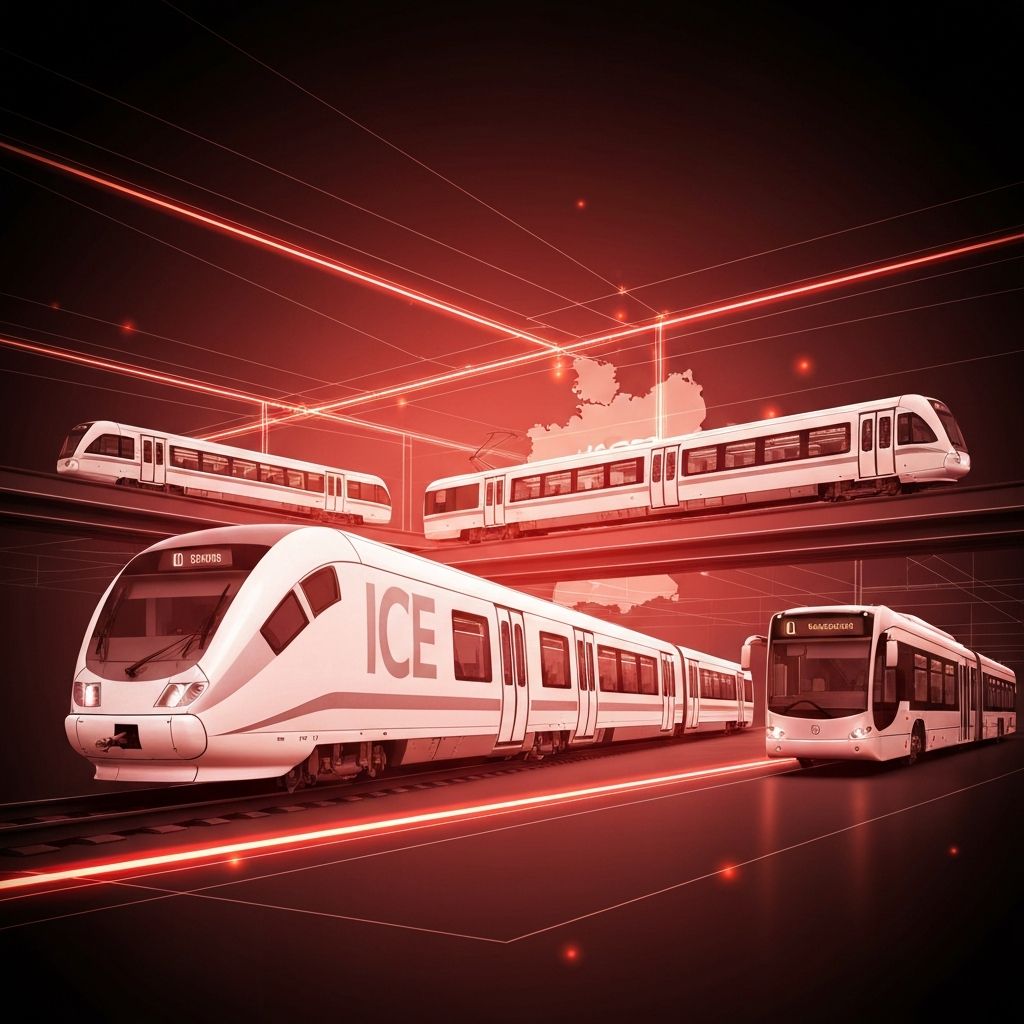
The Backbone of German Mobility
Public transit is deeply woven into daily life in Germany. With dense networks of trains, trams, buses, and subways, residents and visitors can travel comfortably without owning a car. The introduction of the nationwide Deutschland-Ticket has further boosted ridership, making affordable, integrated travel a reality across all federal states.
Why German Transit Stands Out
Punctuality, frequency, cleanliness, and seamless intermodal connections define the best transit operators in Germany. Many providers are investing heavily in electric buses, hydrogen trains, and real-time digital ticketing to modernize the passenger experience.
1. Deutsche Bahn (DB)
Deutsche Bahn is the cornerstone of German rail travel. Its ICE high-speed trains connect major cities at speeds up to 300 km/h, while regional services link smaller towns. DB also operates extensive freight and international routes.
2. BVG (Berlin)
The Berliner Verkehrsbetriebe operates U-Bahn, trams, buses, and ferries in the capital. With around-the-clock weekend service on some lines, BVG is one of Europe's most extensive city transit networks.
3. MVG (Munich)
Munich's Münchner Verkehrsgesellschaft runs the U-Bahn, trams, and city buses with high frequency and reliability, complementing the regional S-Bahn to serve Bavaria's capital efficiently.
4. HVV (Hamburg)
The Hamburger Verkehrsverbund integrates U-Bahn, S-Bahn, buses, and even harbor ferries under a single ticket system, offering one of Germany's most user-friendly multimodal experiences.
5. VRR (Rhine-Ruhr)
Verkehrsverbund Rhein-Ruhr coordinates transport across one of Europe's largest metropolitan regions, including Düsseldorf, Essen, and Dortmund, with a vast network of trains, trams, and buses.
6. RMV (Rhine-Main)
The Rhein-Main-Verkehrsverbund covers Frankfurt and surrounding cities, providing smooth connections between airports, business districts, and residential areas across the financial heartland.
7. VBB (Berlin-Brandenburg)
VBB extends transit coordination across Berlin and the surrounding state of Brandenburg, ensuring residents can travel easily between the capital and its hinterland on a single ticket.
8. VVS (Stuttgart)
Verkehrs- und Tarifverbund Stuttgart unites trains, trams, and buses in the Stuttgart region, with strong investment in modern rolling stock and digital passenger information.
9. KVB (Cologne)
Kölner Verkehrs-Betriebe operates Cologne's trams and buses, serving millions of passengers each year with frequent connections to nearby Bonn and the broader region.
10. FlixBus & FlixTrain
While not a traditional transit authority, Flix has reshaped intercity travel in Germany with affordable coach and rail services connecting hundreds of destinations across the country and beyond.
Choosing How to Travel
From regional buses to international high-speed trains, Germany offers transit options for every journey. The integrated ticketing landscape and ongoing electrification make public transport a smart, sustainable choice nationwide.
