
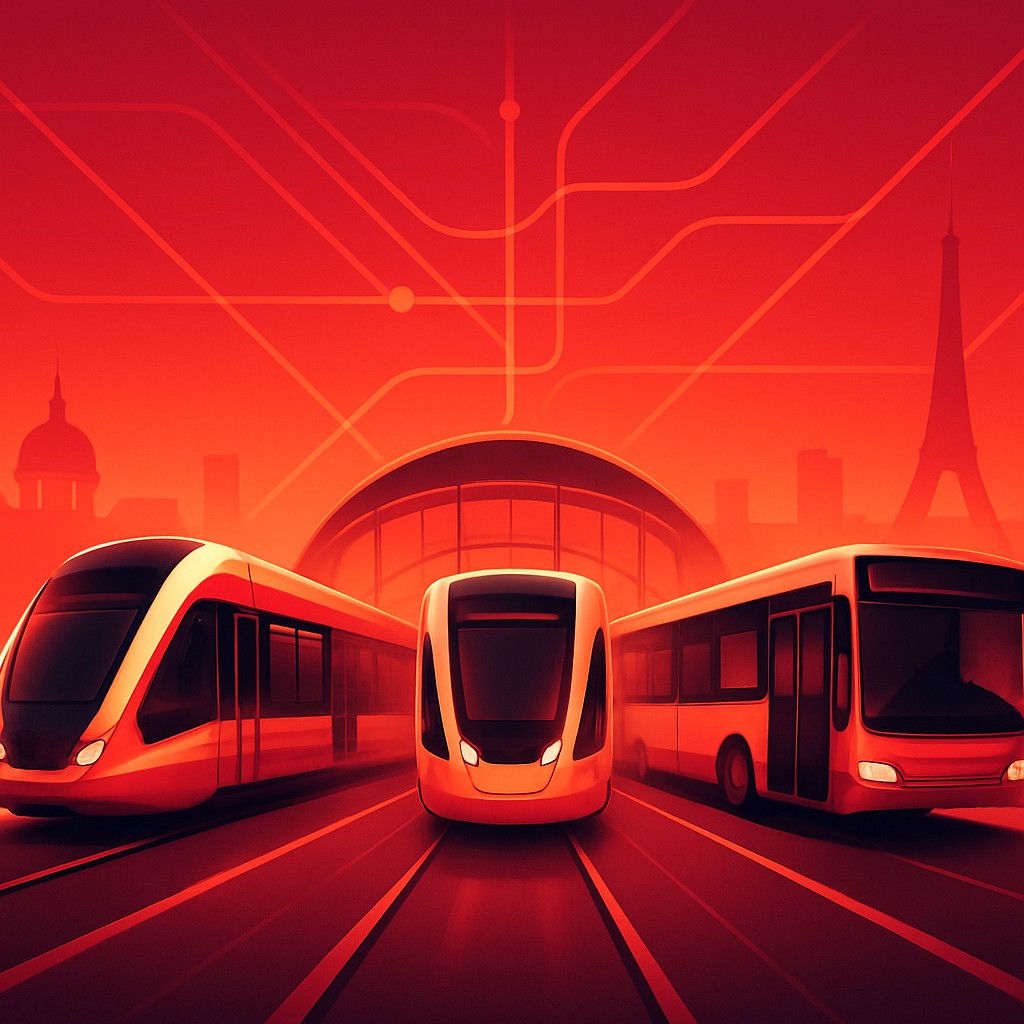
Public Transit at the Heart of French Cities
France is renowned for its high-quality public transit, ranging from the historic Paris Métro to modern tramways in cities such as Bordeaux, Strasbourg, and Nantes. Public transport in France is highly integrated, multimodal, and increasingly sustainable, allowing residents and tourists to navigate urban areas with ease while reducing reliance on private cars. Buses, trams, metros, suburban trains, and bicycle-sharing systems all combine to form efficient mobility ecosystems.
French public transit is operated through partnerships between local authorities and major transport operators. These partnerships ensure consistent service quality, smart ticketing systems, and continuous investment in modernisation. As cities pursue ambitious climate and mobility goals, public transit plays a central role in shaping the urban future.
1. RATP Group
RATP is the iconic operator of public transit in the Paris region, managing the Métro, RER lines (jointly with SNCF), buses, trams, and Montmartre's funicular. Serving millions of passengers daily, RATP is one of the largest urban transport operators in the world. Its network is essential to Parisian life and a symbol of the French capital.
2. SNCF Transilien
SNCF Transilien provides the suburban rail network around Paris, complementing RATP's metro and RER lines. Connecting cities and towns across the Île-de-France region, Transilien is a key part of daily commutes for millions of residents.
3. Keolis
Keolis is one of the largest urban and regional transport operators in France, managing public transit networks in cities such as Lyon, Lille, Bordeaux, Rennes, and many more. Known for innovation in intermodality, smart ticketing, and electric mobility, Keolis is a major force in modern French public transport.
4. Transdev
Transdev operates urban transit networks, intercity buses, and on-demand mobility services in numerous French cities. With strong expertise in autonomous shuttles and digital mobility solutions, the company is a pioneer in the future of public transit.
5. TCL Lyon
TCL is the public transit network of the Lyon metropolitan area, operated under Keolis. With metros, trams, funiculars, trolleybuses, and conventional buses, TCL is one of the most comprehensive urban networks in France outside of Paris.
6. CTS Strasbourg
CTS operates the renowned tram and bus network of Strasbourg, often cited as a benchmark for modern, sustainable urban mobility in Europe. Strasbourg's tram lines stretch into neighbouring Germany, making it a unique cross-border transit system.
7. TBM Bordeaux
TBM (Transports Bordeaux Métropole), operated by Keolis, runs the buses, trams, and river shuttles of the Bordeaux region. Known for its sleek tramways and modern fleet, TBM has helped transform Bordeaux into one of France's most pedestrian- and transit-friendly cities.
8. RTM Marseille
RTM is the public transit operator for Marseille, managing the metro, trams, and an extensive bus network. The company is investing heavily in fleet modernisation and digital ticketing to meet the needs of a growing metropolitan area.
9. Tisséo Toulouse
Tisséo manages public transport in Toulouse and its metropolitan area, including the metro, trams, buses, and shared mobility services. With Toulouse's growing population and strong aerospace industry, Tisséo continually expands its offerings to meet rising demand.
10. TAN Nantes
TAN is the public transit network of Nantes, operated by Semitan. Nantes is recognised as a smart mobility leader in France, with extensive tram lines, busway BRT systems, and a strong commitment to electric and clean transport.
Innovation in French Public Transit
French public transit is highly innovative, with operators investing in electric and hybrid buses, hydrogen-powered fleets, autonomous shuttles, and intelligent transport systems. Many cities now use Mobility-as-a-Service (MaaS) platforms that allow passengers to plan, book, and pay for journeys across multiple modes through a single app.
Smart contactless ticketing has become widespread, with passengers using bank cards, mobile wallets, or unified transit passes. Real-time information, accessibility improvements, and enhanced safety measures are also constant priorities for French transport authorities.
Sustainability and the Future
Sustainability is at the core of French public transit. Cities are accelerating efforts to electrify bus fleets, expand tram lines, and integrate active mobility such as cycling and walking with traditional public transport. With ambitious climate goals at both national and EU levels, French operators are driving the transition toward cleaner, healthier urban environments.
Conclusion
France's public transit landscape is one of the most advanced in Europe, blending iconic networks like the Paris Métro with cutting-edge tram systems, smart mobility platforms, and sustainable innovations. The operators highlighted here represent the very best of French urban mobility, providing millions of passengers each day with safe, reliable, and forward-looking transit services.
