
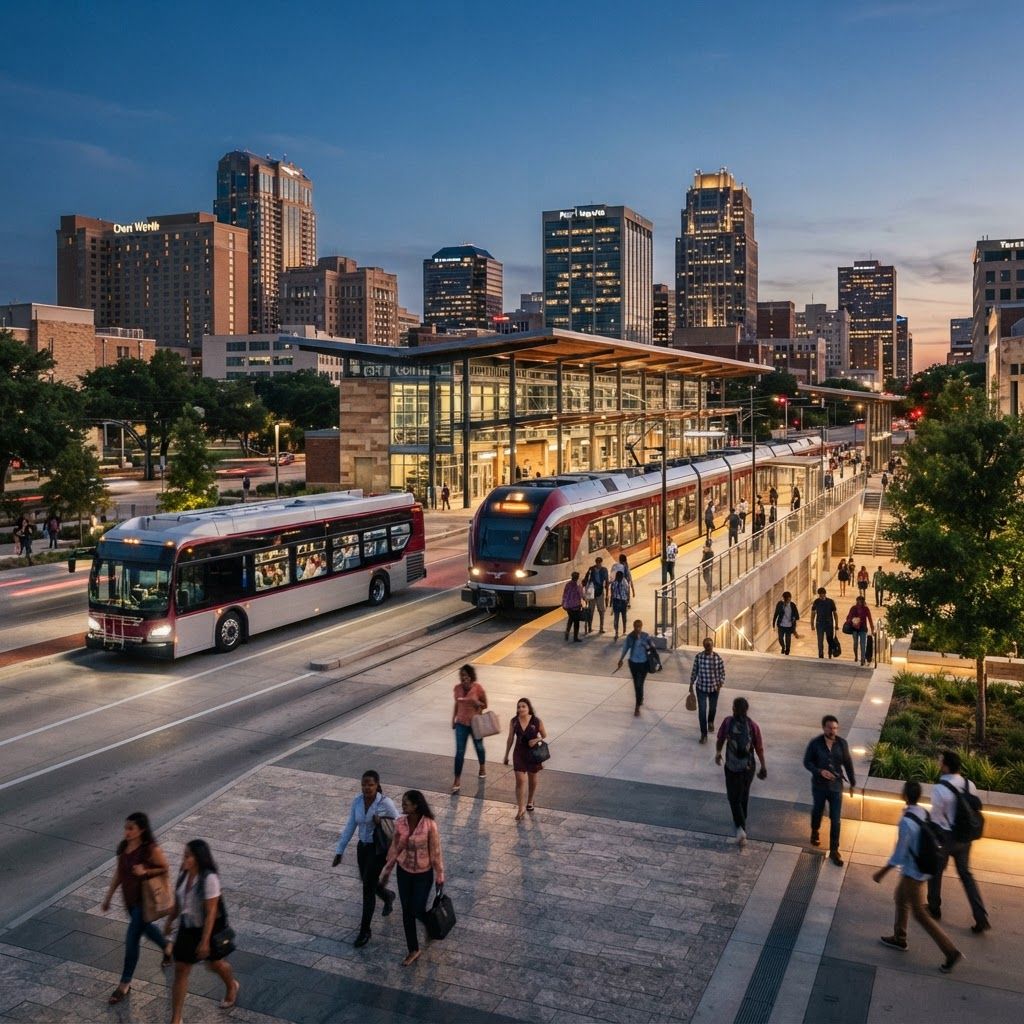
Understanding Fort Worth Public Transportation
Fort Worth is a car-oriented city, but its transit network has become increasingly useful for commuters, students, visitors, and airport travelers. Trinity Metro forms the backbone, while regional connections extend into Dallas and surrounding communities. Successful trip planning often involves combining a local bus or on-demand ride with rail.
The entries below include distinct routes and service types rather than ten separate agencies. Schedules, fares, and service zones change, so riders should check current information before traveling. Accessibility, bicycle rules, late-night frequency, and transfer timing are particularly important for planning.
1. Trinity Metro Bus
Trinity Metro's fixed-route buses cover central Fort Worth and many surrounding destinations. The network serves downtown, employment areas, schools, medical facilities, and transfer centers. Buses are a practical everyday option where routes run frequently enough for the rider's schedule. Real-time arrival tools and contactless fare options can make trips easier, while weekend and evening service may differ from weekday frequency.
2. TEXRail
TEXRail is one of Fort Worth's most valuable regional connections. The commuter rail line links downtown Fort Worth with North Richland Hills, Grapevine, and Dallas Fort Worth International Airport. It is especially useful for airport trips because riders avoid parking and highway uncertainty. Stations offer connections to other services, although travelers should leave adequate time for transfers and terminal access.
3. Trinity Railway Express
The Trinity Railway Express connects downtown Fort Worth and downtown Dallas, with intermediate stops serving several Mid-Cities destinations and an airport connection through a shuttle transfer. TRE is a strong choice for weekday commuters, event travel, and downtown-to-downtown trips. Riders should pay close attention to weekend schedules and the distinction between peak and off-peak frequency.
4. Trinity Metro On-Demand
Trinity Metro On-Demand provides app- or phone-booked shared rides within designated service zones. It helps bridge gaps where fixed-route buses may not be convenient and can connect riders to rail stations or other destinations within a zone. Because rides are shared and service boundaries apply, passengers should allow extra time and verify pickup instructions.
5. ZIPZONE
ZIPZONE is Trinity Metro's established on-demand microtransit concept, with service in selected Fort Worth-area zones. It offers flexible pickup and drop-off within defined boundaries rather than requiring riders to walk to a traditional bus stop. The service can support first-mile and last-mile travel, local errands, and connections to transit hubs, depending on the active zone.
6. Molly the Trolley
Molly the Trolley is a recognizable downtown Fort Worth circulator. It is particularly useful for visitors moving among hotels, restaurants, convention activity, and downtown attractions. The route offers a simple way to reduce short car trips and parking changes. Riders should confirm operating days and hours, especially during events or service adjustments.
7. DART Rail Connections
Dallas Area Rapid Transit does not operate Fort Worth's local system, but it becomes relevant once riders connect eastward through TRE or travel to DFW Airport. DART rail expands access to Dallas neighborhoods, employment centers, entertainment districts, and other cities in its service area. Regional riders should understand fare boundaries and allow time between independently scheduled services.
8. DART Orange Line at DFW Airport
The DART Orange Line provides a direct rail link between DFW Airport and destinations in Irving and Dallas. Fort Worth residents may use it as part of a regional trip that begins on TEXRail or when moving between the airport and the Dallas side of the metroplex. Terminal transfer logistics should be included in the travel plan.
9. Amtrak Texas Eagle
Amtrak's Texas Eagle serves Fort Worth Central Station and offers intercity rather than local transit. It connects Fort Worth with cities including Dallas, Austin, San Antonio, and destinations farther north, with long-distance connections beyond Texas. It can be a comfortable alternative for travelers whose schedule fits the timetable, though longer-distance rail requires more advance planning than local service.
10. ACCESS Paratransit
Trinity Metro ACCESS provides complementary paratransit for eligible riders whose disabilities prevent them from using fixed-route service under applicable guidelines. Trips generally require eligibility determination and advance scheduling. For riders who qualify, the service is essential transportation for work, healthcare, education, and daily activities. Users should review reservation windows and rider policies carefully.
Tips for Riding Transit in Fort Worth
Plan the entire trip, not just the longest segment. Check the walk to the first stop, transfer waiting time, station layout, and the final connection. Arrive early for rail and airport journeys, and keep a backup option for the last trip of the evening. In summer, carry water and use shaded waiting areas when possible.
Fort Worth's transit future increasingly centers on coordination: commuter rail, bus redesign, microtransit, pedestrian access, and regional fare technology must work together. Riders can already benefit from a multimodal mindset. For a downtown event, rail may eliminate parking stress; for a work commute, an on-demand connection may make TEXRail practical; and for a cross-region trip, TRE and DART can replace a difficult drive. The best service is the one that reliably completes the whole journey.
