
Why Public Transit Matters in Denmark
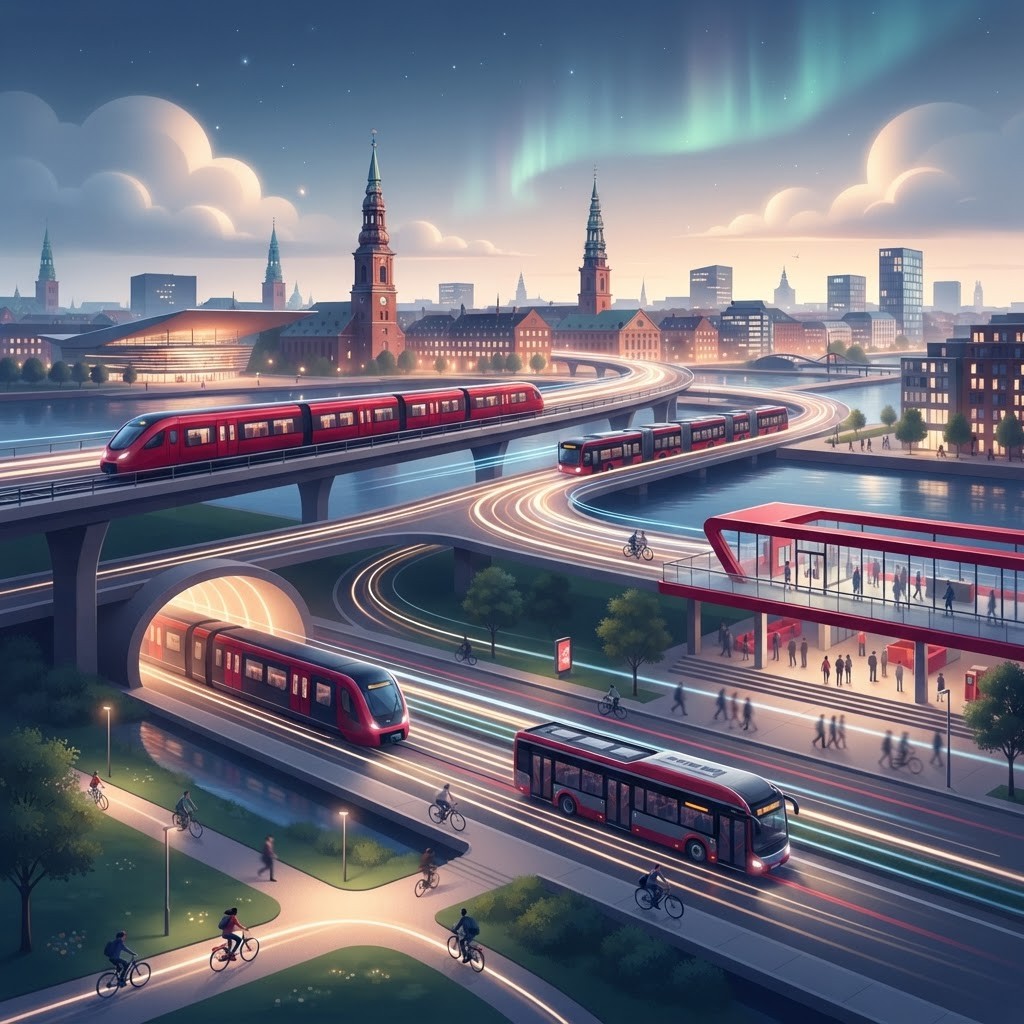
Denmark has built a global reputation for smart, sustainable mobility. With ambitious climate goals and dense urban centers like Copenhagen, Aarhus, and Odense, the country relies heavily on an integrated public transit system that blends trains, metros, buses, and ferries into a seamless experience. For residents and visitors alike, moving around Denmark rarely requires a private car, thanks to punctual schedules, unified ticketing, and a strong culture of shared mobility.
The Danish approach to transit is defined by integration. A single travel card or app can move a commuter from a regional train into a city metro and onto a local bus without friction. This coordination, combined with a national push toward electrification, makes Denmark a benchmark for how public transport can support both quality of life and environmental responsibility.
The Leading Public Transit Services
The following operators and networks stand out for reliability, coverage, innovation, and passenger experience across the country.
1. DSB (Danske Statsbaner)
DSB is the national railway operator and the backbone of long-distance travel in Denmark. Connecting major cities and reaching into regional towns, DSB is known for comfortable intercity trains, frequent departures, and steady investment in modern rolling stock. Its focus on punctuality and passenger comfort makes it the default choice for travel between urban hubs.
2. Metroselskabet (Copenhagen Metro)
The Copenhagen Metro is one of the most celebrated driverless transit systems in Europe. Operating around the clock, its automated trains deliver exceptional frequency and reliability. The City Ring line transformed how the capital moves, linking key neighborhoods, the central station, and the airport corridor with minimal wait times.
3. Movia
Movia is the largest public transport authority in Denmark, coordinating bus and local rail services across Zealand and the surrounding islands. Rather than operating a single fleet, Movia orchestrates a vast network of routes, increasingly powered by electric buses that support the region's decarbonization targets.
4. Midttrafik
Serving the Central Denmark Region, Midttrafik manages buses and regional connections around Aarhus and beyond. It is closely tied to the Aarhus Letbane light rail, creating an efficient multimodal experience for one of the country's fastest-growing metropolitan areas.
5. Aarhus Letbane
The Aarhus light rail brought modern tram service back to Denmark's second-largest city. Blending street-level tram operation with regional rail extensions, it has become a symbol of urban renewal and a practical option for commuters traveling between the city center and outlying communities.
6. Nordjyllands Trafikselskab (NT)
Covering the North Jutland region around Aalborg, NT delivers coordinated bus and local train services. It has embraced flexible transit solutions for rural areas, ensuring that smaller communities remain connected to regional centers and employment hubs.
7. Sydtrafik
Sydtrafik operates across the southern Jutland region, linking towns, schools, and workplaces with a dependable bus network. Its emphasis on serving both commuters and students highlights the social role public transit plays in less densely populated areas.
8. FynBus
Based on the island of Funen and centered on Odense, FynBus provides city and regional bus services with a strong focus on accessibility and integration with the local light rail. It plays a vital role in supporting Odense's transformation into a more pedestrian and transit-friendly city.
9. Arriva Danmark
Arriva is a major private operator contracted to run trains and buses across several Danish regions. Known for operational efficiency, Arriva complements the public authorities by delivering regional rail and bus services under performance-based agreements, adding capacity and competition to the market.
10. Molslinjen
Ferries remain an essential part of Danish mobility, and Molslinjen is the country's leading ferry operator. Connecting the mainland with islands and speeding travel across the Kattegat strait, its fast and conventional ferries integrate with road and rail travel to keep the archipelago nation connected.
Trends Shaping Danish Transit
Several trends define the future of public transport in Denmark. Electrification is accelerating, with electric buses becoming standard in urban fleets and operators phasing out diesel. Digital ticketing through the Rejsekort card and mobile apps has simplified travel and improved data-driven planning. There is also a growing emphasis on multimodal integration, where cycling, transit, and shared mobility combine into unified journeys.
Sustainability sits at the heart of these developments. Denmark's national climate ambitions push operators to reduce emissions, expand green energy use, and encourage a shift away from private cars. This alignment between policy and service delivery is what makes the Danish system so effective.
Choosing the Right Service
For travelers, the best service often depends on the journey. DSB and Arriva dominate long-distance rail, the Copenhagen Metro and Aarhus Letbane excel within cities, and regional authorities like Movia, Midttrafik, and FynBus knit everything together locally. Ferries such as those run by Molslinjen handle island connections. Because ticketing is largely unified, passengers can mix and match operators with ease.
Conclusion
Denmark's public transit landscape is a model of coordination, sustainability, and reliability. The ten services highlighted here each contribute to a network that reduces congestion, lowers emissions, and keeps daily life moving smoothly. Whether commuting across Copenhagen, traveling between regions, or hopping between islands, riders benefit from a system designed with efficiency and the environment in mind. As electrification and digital innovation continue, Danish public transit is set to remain among the finest in the world.
