
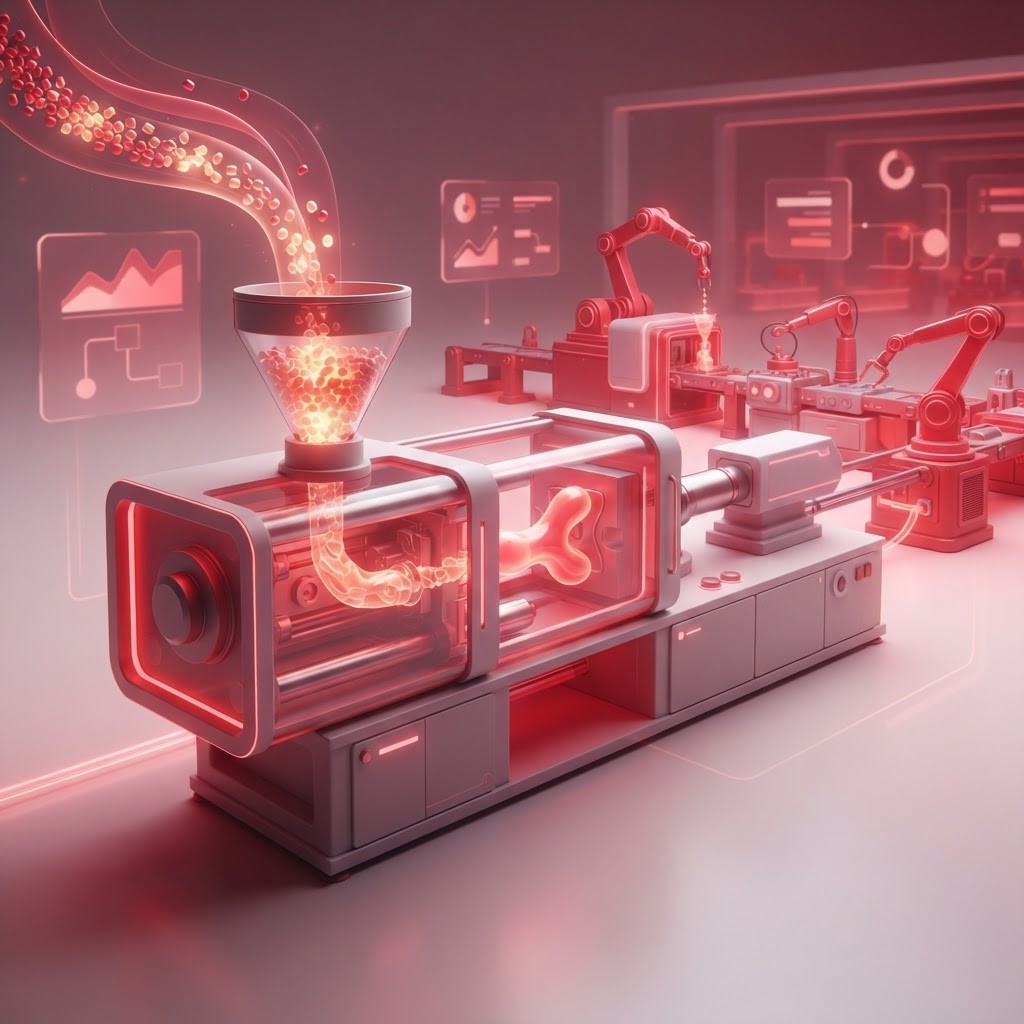
Hungary's Growing Plastics Industry
Plastics manufacturing is one of Hungary's most dynamic industrial sectors, closely tied to the country's powerful automotive and packaging industries. Hungarian plastics processors serve global supply chains, producing injection-moulded components, extruded profiles, films, and technical parts that meet demanding international standards. The sector benefits from strong engineering education, a strategic position within European logistics networks, and significant foreign direct investment that has modernised production facilities across the country.
Today the industry ranges from large multinational-scale operations to specialised family-owned processors. This mix supports both high-volume series production and precision tooling for niche applications, giving customers considerable choice when sourcing plastic parts and products.
Core Segments and Capabilities
Hungarian plastics firms typically operate across several segments: injection moulding for automotive and electronics, blow moulding and thermoforming for packaging, extrusion for pipes and profiles, and increasingly, recycling and compounding. Many companies offer in-house tool design and mould making, which shortens development cycles and improves quality control. Advanced capabilities such as multi-component moulding, overmoulding, and clean-room production are available among the top players.
Leading Plastic Manufacturers to Know
Pannunion is a well-established name in flexible and rigid packaging, supplying the food and consumer goods industries with high-quality films and containers designed for shelf appeal and product protection.
Jász-Plasztik is one of the country's largest plastics processors, active in packaging, battery components, and technical parts, with a reputation for scale and reliability across diverse markets.
Kromberg & Schubert-linked processors and automotive tier suppliers produce precision moulded components for wiring systems and interior parts, reflecting Hungary's central role in the European automotive value chain.
Contitech Hungary manufactures technical plastic and rubber components for industrial and mobility applications, combining material science expertise with high-volume production.
Flextronics-related moulding operations serve the electronics sector with tight-tolerance enclosures and components for consumer and industrial devices.
Premiumplast processors near Győr specialise in automotive interior and exterior parts, offering surface finishing and assembly services alongside moulding.
Karsai Holding is a respected Hungarian-owned group producing injection-moulded parts for automotive and household applications, known for its integrated toolmaking capability.
Rondo-linked packaging specialists deliver protective and transport packaging that blends plastics with other materials for logistics-heavy industries.
Extruda profile makers focus on extruded plastic profiles, pipes, and building-related products, serving construction and infrastructure projects.
Regional recycling and compounding firms complete the landscape, transforming post-industrial and post-consumer plastics into reusable pellets, an increasingly vital part of the circular economy.
Innovation and Sustainability
Sustainability has become the defining challenge and opportunity for Hungarian plastics manufacturers. In response to European regulation and customer demand, firms are investing in recycled-content products, bio-based polymers, and lightweighting techniques that reduce material use. Recycling capacity is expanding rapidly, and compounding specialists are developing formulations that maintain performance while incorporating recyclate.
Automation and digitalisation are equally transformative. Robotic handling, real-time process monitoring, and predictive maintenance improve consistency and reduce scrap. These technologies help Hungarian processors maintain competitiveness against lower-cost regions by delivering superior quality and reliability.
Why Hungary Attracts Plastics Investment
Several structural advantages underpin the sector's success: a skilled technical workforce, proximity to major automotive assembly plants, robust road and rail links to Western Europe, and a supportive investment climate. These factors make Hungary a natural hub for just-in-time supply of plastic components to demanding industries.
The Automotive Connection
No discussion of Hungarian plastics is complete without acknowledging the automotive sector's central influence. With major vehicle assembly plants operating in the country, demand for interior trim, under-hood components, lighting parts, and structural plastics is substantial and consistent. This relationship has raised the bar for quality and delivery performance, as automotive customers require zero-defect standards, full traceability, and just-in-time supply. Plastics processors serving this sector have developed sophisticated quality-management systems and lean logistics that also benefit their non-automotive customers.
The shift toward electric vehicles is creating new opportunities, as EVs use specialised plastic components for battery housings, thermal management, and lightweight body parts. Hungarian processors positioned to serve this transition stand to benefit from long-term growth.
Material Expertise and Technical Support
Leading Hungarian plastics manufacturers differentiate themselves through material expertise. They guide customers in selecting the right polymers, whether standard commodity resins, engineering plastics, or high-performance materials, balancing cost, performance, and processability. Many offer design-for-manufacturing support, helping customers optimise part geometry to reduce weight, improve strength, and lower production costs. This consultative approach adds significant value beyond simple part production.
Selecting a Plastics Manufacturing Partner
Buyers evaluating Hungarian plastics manufacturers should consider technical certifications such as IATF 16949 for automotive work and ISO standards for quality and environmental management. Tooling capability, material expertise, capacity, and a demonstrated commitment to sustainability are key differentiators. Reviewing sample parts and validating process documentation ensures a manufacturer can meet both quality and compliance requirements.
With its combination of engineering depth, modern facilities, and growing environmental focus, Hungary offers plastics buyers a compelling blend of quality, capacity, and innovation that positions the industry strongly for the future.
