
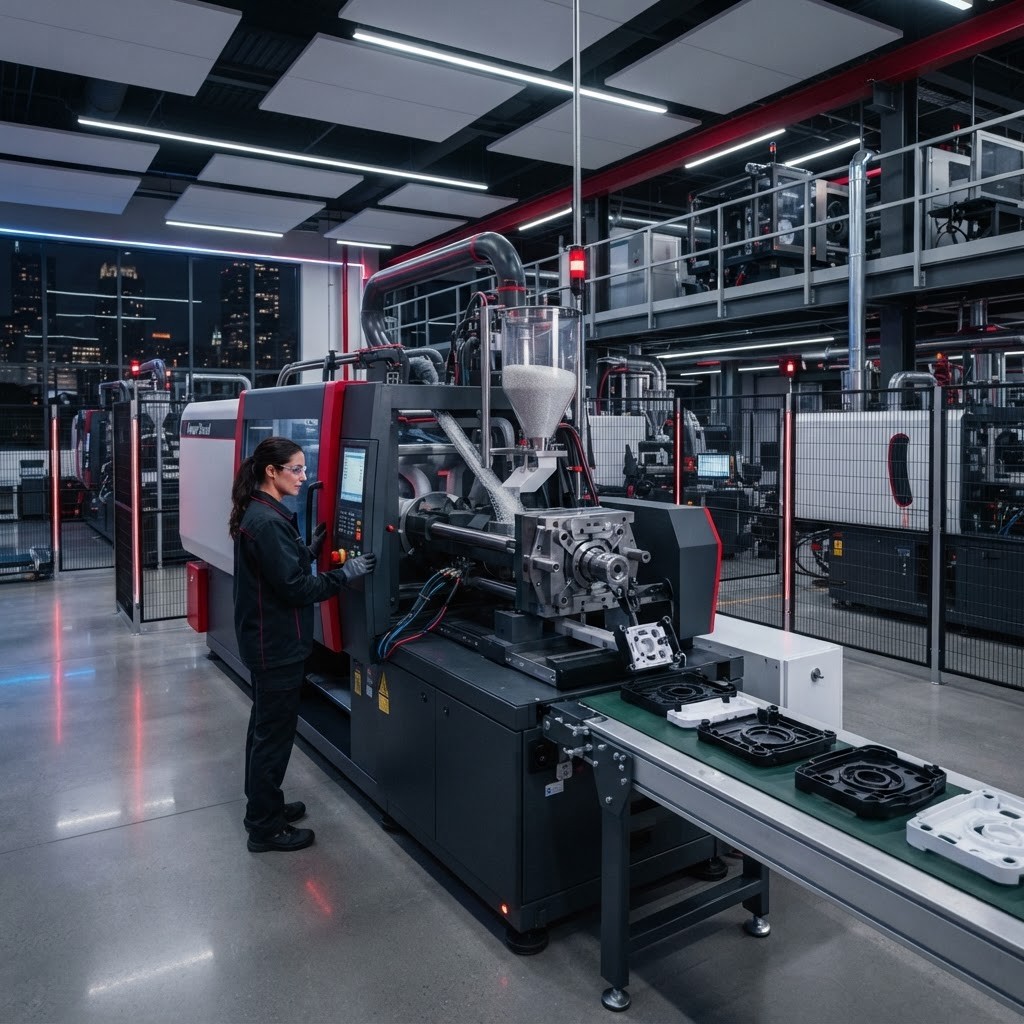
A Major Market for Engineered Plastics
Metropolitan Chicago has long been a strategic location for plastics manufacturing. The region's central freight access, broad industrial customer base, toolmaking talent, and network of resin and equipment suppliers support both high-volume production and specialized custom work. Local capabilities include injection molding, profile and sheet extrusion, thermoforming, blow molding, rotational molding, machining, decorating, and assembly.
The right supplier depends on geometry, resin, annual volume, tolerances, regulatory requirements, and the desired level of engineering support. Buyers should examine tooling ownership, process validation, material traceability, quality systems, secondary operations, and capacity planning. Sustainability is increasingly important, but decisions should consider functional life, recycled content, manufacturing scrap, transport efficiency, and end-of-life options together.
1. Pactiv Evergreen
Pactiv Evergreen has deep Chicago-area roots and is a major producer of food and beverage packaging. Its broad capabilities cover containers, trays, cups, and related products used by restaurants, retailers, and food processors. Scale is a central differentiator: large customers can access established production, quality, and distribution systems. The company is also important to conversations about material efficiency and packaging circularity because of the substantial markets it serves.
2. Placon
Placon operates in the region and produces thermoformed packaging for food, retail, and medical applications. Thermoforming can deliver clear product visibility, lightweight structures, and efficient high-volume output. Placon is known for design and material capabilities, including solutions that incorporate recycled content. Buyers can benefit from a supplier that considers package protection, merchandising, sealing, automation compatibility, and material use as one system.
3. M. Holland Company
Northbrook-based M. Holland is a major resin distributor rather than a finished-parts molder, but it is central to Chicago's plastics ecosystem. The company connects processors with commodity and engineering resins while providing technical and supply-chain support. Resin selection influences strength, appearance, chemical resistance, processing stability, compliance, and cost. M. Holland's breadth helps manufacturers compare materials and manage availability across changing market conditions.
4. United Plastics Corporation
United Plastics Corporation serves custom molding and fabrication needs in the Chicago area. Companies of this type are valuable when a project requires close collaboration, responsive changes, or multiple secondary steps. A capable custom processor can assist with design-for-manufacturing reviews, mold strategy, material selection, inserts, assembly, and packaging. Buyers should explore the company's experience with parts similar in size, tolerance, and end-use environment.
5. Matrix Plastic Products
Matrix Plastic Products is a specialist in precision injection molding and tooling in the Chicago region. Precision molders focus heavily on process control, dimensional repeatability, tool maintenance, and scientific molding practices. These strengths are particularly relevant to medical, electronics, and engineered industrial parts. Matrix's integration of moldmaking and molding can shorten feedback loops when complex tools require refinement or maintenance.
6. PolyScience
Niles-based PolyScience manufactures temperature-control equipment that incorporates engineered plastic and metal components, demonstrating the region's ability to integrate materials into finished technical products. Its laboratory and culinary systems operate where temperature accuracy and reliability matter. Although the business is best known for equipment rather than contract plastics, it illustrates how Chicago manufacturers apply plastics to housings, fluid systems, insulation, and human-centered product design.
7. Tuthill Plastics Group
Tuthill Plastics Group is recognized for rotational molding capabilities in the broader Midwest market serving Chicago customers. Rotomolding is well suited to large hollow parts, durable enclosures, tanks, and products with complex contours. It can allow lower tooling costs than some alternative processes, especially at moderate volumes. Customers should consider wall consistency, inserts, resin choices, finishing, and dimensional expectations when evaluating this method.
8. C+K Plastics
C+K Plastics provides custom thermoforming for transportation, medical, industrial, and other markets accessible from Chicago. Heavy-gauge thermoforming can produce sizable panels and enclosures with attractive surfaces and comparatively economical tooling. The process is often an effective replacement for fiberglass or fabricated sheet structures. Engineering support is important to manage draw ratios, corner details, trimming, attachment points, and appearance.
9. Formed Plastics
Formed Plastics offers molding and fabrication expertise for custom plastic products, including demanding shapes and specialized applications. Its value lies in matching a process to the customer's performance and volume needs rather than forcing every project into one method. Buyers developing large components should ask about prototypes, tooling revisions, finishing standards, testing, and shipping fixtures early in the program.
10. Plastic Products Company
Plastic Products Company serves original equipment manufacturers with custom injection molding and associated operations. Established molders often provide automation, insert molding, assembly, and quality documentation in addition to presses. This broader service model can reduce handoffs and simplify accountability. For Chicago buyers, a geographically accessible production partner may also improve communication during launches and reduce freight complexity.
Choosing a Plastics Manufacturing Process
Injection molding is typically effective for repeatable, detailed parts at sufficient volume, while thermoforming suits shells, trays, and larger surfaces. Extrusion produces continuous profiles or sheet, blow molding creates hollow packaging, and rotational molding handles large durable forms. Machining may be best for prototypes or low quantities. A trustworthy manufacturer should explain process tradeoffs honestly and identify design changes that reduce risk before tooling begins.
Request a documented quotation that separates tooling, piece price, material assumptions, secondary work, packaging, and freight. Confirm whether regrind or recycled resin is appropriate and how its use is controlled. Ask about preventive mold maintenance, backup equipment, inspection methods, and resin disruption plans. Chicago's dense plastics network gives buyers many options, but the best long-term results come from aligning product design, process capability, material behavior, and commercial expectations from the start.
