
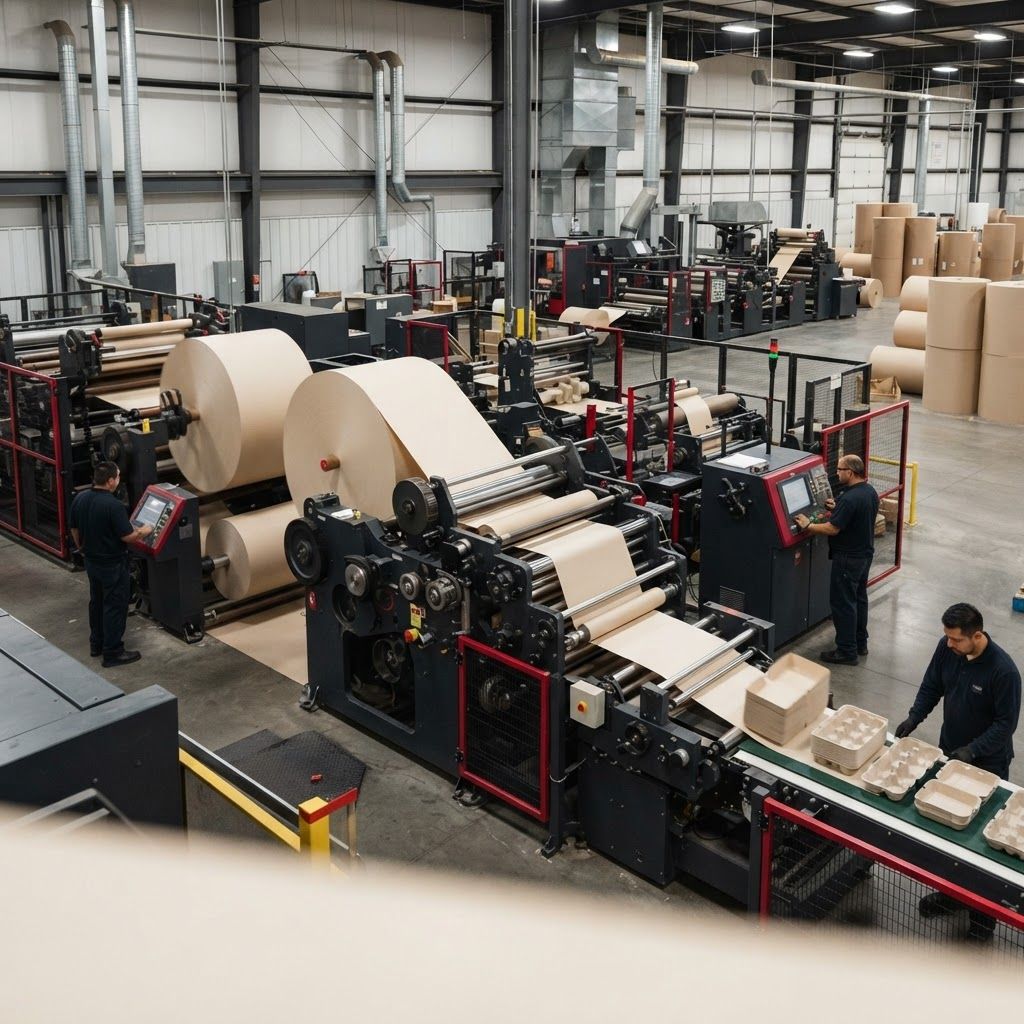
Paper Goods and the Fort Worth Economy
Population growth, e-commerce, food service, manufacturing, and logistics create steady demand for paper goods across Fort Worth. Corrugated boxes protect shipments moving through regional distribution centers; folding cartons present consumer products; paperboard supports food packaging; and tissue, towels, labels, and office products keep daily operations moving. North Texas's transportation infrastructure makes the region attractive for converting plants and packaging distribution.
Paper products can look interchangeable, but fiber composition, board grade, moisture resistance, print quality, converting accuracy, and supply reliability significantly influence performance. The companies below represent major manufacturers and packaging organizations serving Fort Worth and surrounding markets.
1. International Paper
International Paper is a major producer of fiber-based packaging and pulp products. Its corrugated packaging capabilities serve industrial, agricultural, food, and e-commerce customers across Texas. Scale, design resources, testing, and a broad manufacturing network are key strengths. Buyers should work with packaging engineers to reduce damage and avoid unnecessary board weight.
2. WestRock
WestRock, now part of Smurfit Westrock, provides corrugated packaging, folding cartons, displays, paperboard, and automation solutions. The company's breadth makes it relevant to Fort Worth brands seeking both protective and retail-ready packaging. Structural design, graphics, machinery integration, and supply-chain reach differentiate the business. Customers should assess line speed and packing labor alongside material price.
3. Packaging Corporation of America
Packaging Corporation of America produces containerboard and corrugated packaging for a wide range of shipping applications. Its focus on corrugated products and customer-specific box design makes it a strong comparison point for manufacturers and distributors. Consistency, compression performance, print requirements, and delivery schedules are central considerations when qualifying supply.
4. Georgia-Pacific
Georgia-Pacific manufactures tissue, towels, napkins, paperboard, and packaging products used in homes and commercial facilities. Fort Worth businesses encounter its brands and professional products in offices, restaurants, healthcare, and manufacturing. Broad product availability and experience with high-volume paper goods are important advantages. Facility buyers should compare dispenser compatibility and consumption per use.
5. Pratt Industries
Pratt Industries is known for corrugated packaging made with recycled paper and operates an integrated production network. Its sustainability positioning and packaging design capabilities appeal to companies seeking recycled content and supply efficiency. Fort Worth shippers should validate box performance under stacking, humidity, vibration, and parcel-handling conditions rather than relying only on nominal dimensions.
6. Green Bay Packaging
Green Bay Packaging manufactures corrugated shipping containers, folding cartons, labels, and coated products. Its ability to combine structural packaging and graphics can help brands coordinate protection and presentation. Buyers should evaluate print process, color control, order quantities, inventory programs, and the supplier's ability to support seasonal peaks.
7. Graphic Packaging International
Graphic Packaging International specializes in paperboard packaging for food, beverage, household, and consumer products. Its focus on carton design and machinery systems is relevant to Fort Worth food producers and packaged-goods companies. Material efficiency, barrier needs, food-contact compliance, and run performance should be addressed during development.
8. Sonoco
Sonoco manufactures paper-based tubes, cores, protective packaging, and consumer packaging alongside products in other materials. Industrial customers use tubes and cores in film, textiles, labels, construction, and shipping. The company's multi-material engineering perspective can be valuable for protective systems. Customers should specify crush strength, dimensions, moisture exposure, and winding requirements.
9. Hood Container
Hood Container provides corrugated packaging and related services for industrial and consumer markets. Regional box manufacturers can offer responsive delivery, custom design, and managed inventory to Fort Worth operations. Buyers should discuss forecast variability, minimum runs, printing, die-cut complexity, and emergency order policies before selecting a program.
10. Local Independent Converters
Independent Fort Worth-area converters produce short-run boxes, partitions, pads, labels, bags, wraps, and custom retail packaging. They may excel when customers need quick prototypes or flexible quantities. Close collaboration helps resolve awkward product geometry and packing problems. Prospective customers should request samples made with production materials and confirm tooling ownership.
How to Compare Paper Goods Suppliers
Start with the purpose of the product and measurable requirements. For shipping boxes, document contents, weight, stacking, pallet pattern, environment, and distribution hazards. For printed cartons, define artwork, color tolerance, coatings, barcodes, and packing-line conditions. Facility paper requires attention to dispensing, absorbency, storage, and consumption. Review fiber certification or recycled-content evidence when sustainability claims matter.
The strongest trend is optimization: using enough material to perform without creating excess weight or waste. Right-sizing, fiber recovery, water-based printing, and packaging automation can improve environmental and financial outcomes together. Fort Worth businesses should compare total delivered cost, damage reduction, packing efficiency, inventory, and recyclability. A capable manufacturer will test assumptions and help turn a basic paper product into a reliable part of the operating system. Before full launch, conduct packing trials with actual products and observe how employees erect, fill, close, label, stack, and open the package. Small design changes can reduce tape, labor, empty space, and repetitive motion. Businesses should also confirm how moisture and summer warehouse temperatures affect paper strength, adhesive performance, and long-term storage.
