
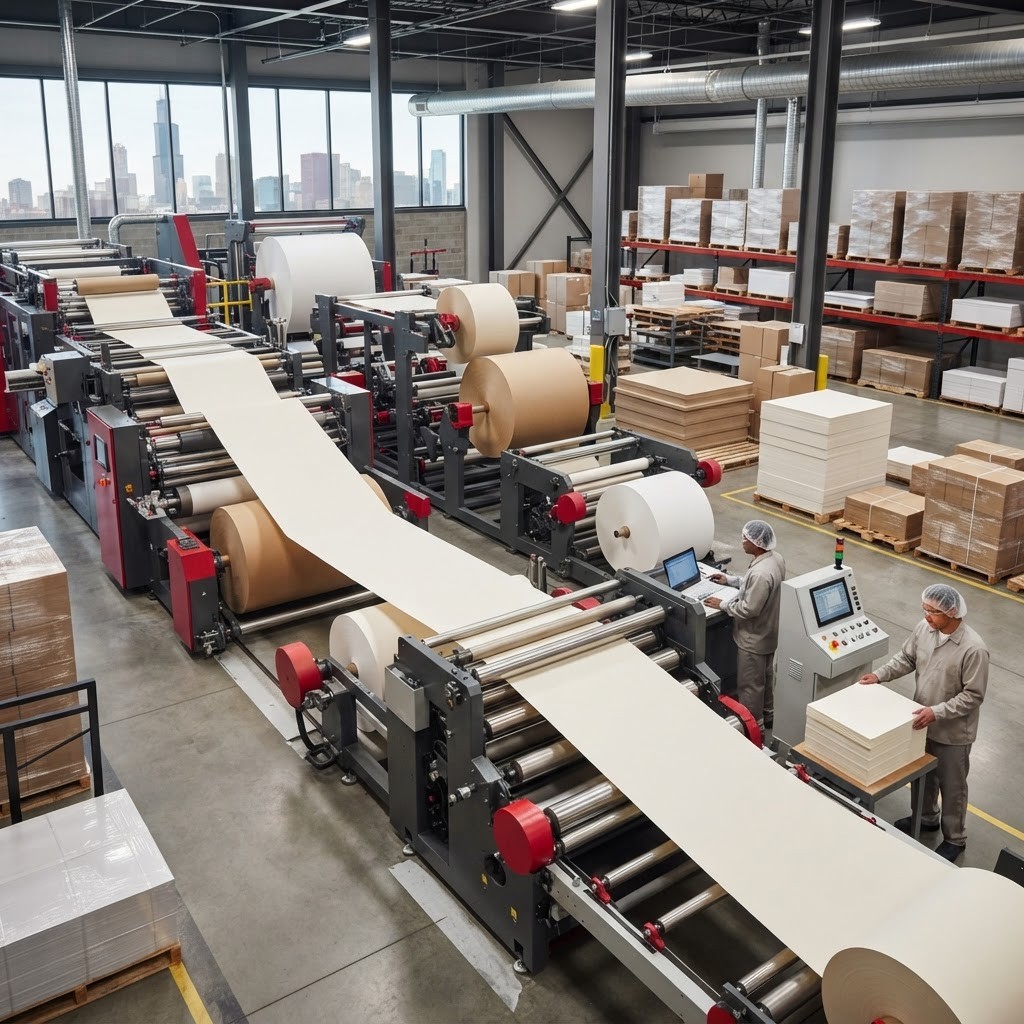
Paper Manufacturing and Converting in Chicago
Chicago's position as a national transportation hub and center for food, retail, and consumer brands has supported a strong paper converting industry. Regional plants transform paperboard, tissue, kraft paper, and corrugated sheets into packaging, displays, foodservice products, labels, and industrial supplies. Many companies also provide structural design, printing, coating, die cutting, folding, gluing, kitting, and fulfillment.
Paper is often selected for printability, familiar recycling streams, renewable fiber potential, and efficient shipping. Still, successful products require careful choices about grade, caliper, strength, moisture resistance, barrier coatings, inks, and construction. The following businesses represent important capabilities available in and around Chicago. Buyers should always confirm that a supplier's plant, certifications, and equipment match the intended application.
1. WestRock
WestRock maintains a meaningful presence in the Chicago market and provides corrugated packaging, paperboard cartons, and retail display solutions. Its scale supports national brands that need coordinated design and consistent output across locations. The company can approach packaging as a complete system involving protection, material efficiency, printing, palletization, and retail presentation. This breadth is useful for complex launches and distribution networks.
2. Graphic Packaging International
Graphic Packaging International serves food, beverage, and consumer markets with paperboard packaging technologies. Folding cartons and carrier systems must run reliably on high-speed filling lines while presenting graphics accurately at retail. The company's engineering resources and market experience make it a strong candidate for large programs. Customers increasingly look to paperboard formats as they evaluate alternatives to more material-intensive packages.
3. Packaging Corporation of America
Lake Forest-based Packaging Corporation of America is one of the country's major containerboard and corrugated packaging producers. Its Chicago-area roots and integrated network provide local businesses with access to shipping containers, protective designs, and supply support. Corrugated performance depends on board combination, flute, box geometry, printing, and distribution hazards. PCA's scale is particularly relevant for customers needing dependable volume and repeatable specifications.
4. Huhtamaki
Huhtamaki supplies paper-based foodservice and consumer packaging to the Chicago market. Cups, containers, and related products must balance food safety, insulation, leak resistance, stackability, and efficient service. The company's global perspective and manufacturing expertise support customers in restaurants, convenience retail, and packaged food. It is also involved in the industry's ongoing shift toward responsibly sourced fiber and improved package recovery.
5. Menasha Packaging
Menasha Packaging serves Chicago brands and retailers with corrugated packaging, displays, and merchandising solutions. Its capabilities are valuable when a package must protect products through distribution and then convert into an effective retail presentation. Structural designers consider assembly labor, shelf dimensions, product visibility, replenishment, and disposal. Menasha's retail focus helps connect these operational needs with shopper experience.
6. Welch Packaging
Welch Packaging operates in the Chicago region and produces custom corrugated packaging for industrial and commercial customers. Its customer-focused model suits businesses seeking responsive local service and tailored box designs. Beyond standard cartons, corrugated solutions may include partitions, pads, die cuts, heavy-duty structures, and printed packaging. A regional converter can often collaborate quickly on samples and adapt to changing demand.
7. Chicago Mailing Tube
Chicago Mailing Tube specializes in spiral-wound paper tubes and cores. These products support shipping, displays, textiles, labels, films, construction, and industrial winding applications. Though visually simple, tubes require accurate diameter, wall thickness, strength, and end finishing. A focused manufacturer offers value by matching fiber construction and adhesives to compression, winding, storage, and shipping requirements.
8. Berlin Packaging
Chicago-based Berlin Packaging is primarily a packaging supplier and services company, with access to paper-based options alongside containers made from other materials. Its role is useful for brands that need to compare formats, source components, coordinate decoration, and manage inventory. The company's packaging expertise can help customers evaluate how cartons, inserts, labels, and primary containers work together as one commercial system.
9. Paper Source
Founded in Chicago, Paper Source is best known as a retailer, but its private-label stationery, gift wrap, cards, and paper craft products reflect the city's creative paper-goods tradition. The brand demonstrates the importance of color, tactile quality, seasonal design, and coordinated collections in consumer paper products. It remains relevant for readers interested in the intersection of paper manufacturing, design, and retail merchandising.
10. JohnsByrne
Niles-based JohnsByrne produces premium folding cartons and specialty packaging for beauty, spirits, entertainment, and consumer brands. Its strengths include structural engineering, high-quality printing, decorative effects, and careful finishing. Premium packaging must deliver visual impact without sacrificing production consistency or assembly performance. JohnsByrne is a notable choice when brand presentation and tactile detail are major parts of the product experience.
Evaluating Paper Goods Suppliers
Provide prospective suppliers with product weight, dimensions, distribution method, storage conditions, expected quantity, printing needs, and sustainability goals. Ask for prototypes and, for shipping packaging, consider tests that simulate compression, vibration, drops, and humidity. Food-contact applications require appropriate materials and documentation. Printed projects also benefit from agreed color standards, proofs, and inspection criteria.
Major industry trends include lightweighting, right-sized shipping boxes, water-based coatings, responsibly sourced fiber, digital printing, and designs that make sorting easier. The most sustainable option is usually the one that protects the product with the least practical material and reaches a functioning recovery stream. Chicago's combination of integrated producers, custom converters, premium printers, and packaging specialists gives businesses a rich set of partners for developing paper goods that perform in transit, on shelves, and in customers' hands.
