
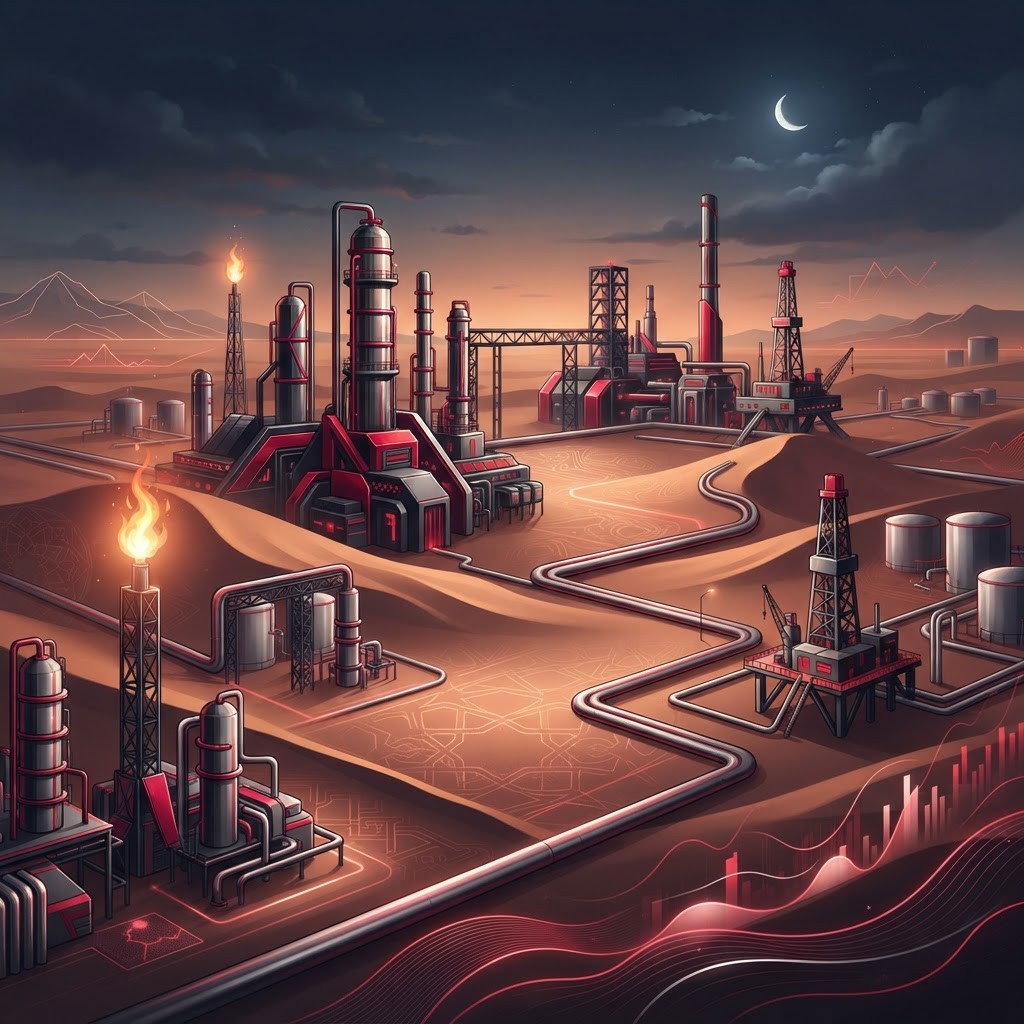
The Backbone of Turkmenistan's Economy
Turkmenistan holds some of the largest natural gas reserves in the world, making the oil and gas industry the cornerstone of its economy. The sector drives exports, supports government revenue, and underpins broader development across the country. From the vast gas fields of the interior to processing and transportation infrastructure, the industry involves a wide range of companies and specialized operations that keep the nation's hydrocarbon wealth flowing.
The scale and importance of oil and gas in Turkmenistan mean that the leading companies play a central role in national life. These organizations manage exploration, production, processing, and distribution, and they increasingly focus on modernization and efficiency. Understanding the key players offers insight into how the country manages and benefits from its remarkable natural resources.
The Significance of Oil and Gas
Natural gas is Turkmenistan's most valuable resource, and its production and export are vital to the economy. The country's reserves position it as a significant player in regional energy markets, with pipelines carrying gas to neighboring nations and beyond. Oil production, while smaller in scale, also contributes to the energy sector and provides feedstock for refining and petrochemicals.
The industry supports numerous related activities, including engineering, construction, logistics, and services. It generates employment and drives investment in infrastructure, making it a powerful engine of economic activity. As global energy dynamics evolve, the sector continues to adapt while remaining central to the country's prosperity.
Leading Oil and Gas Companies
Turkmengaz is the state-owned enterprise responsible for the exploration, production, and export of natural gas. As the principal player in the sector, it oversees major gas fields and infrastructure, playing a defining role in the national economy.
Turkmennebit manages the country's oil operations, including exploration, extraction, and refining. The organization is central to developing petroleum resources and supplying refined products.
Turkmengeologiya focuses on geological surveys and exploration, identifying new reserves and supporting the expansion of production. Its work provides the foundation for future development.
Turkmenbashi Complex of Oil Refineries operates significant refining capacity, converting crude oil into fuels and petrochemical products. The complex is a key part of the downstream sector.
Ashgabat Petroleum Services provides technical and support services to production operations, offering expertise in engineering, maintenance, and field services.
Caspian Energy Operations concentrates on activities in the offshore and coastal areas of the Caspian region, supporting exploration and production in these promising zones.
Merv Gas Solutions specializes in gas processing and treatment, helping ensure that natural gas meets the standards required for domestic use and export.
Garagum Drilling Company delivers drilling services for exploration and production wells, contributing the technical capabilities needed to access reserves efficiently.
Amul Pipeline Services focuses on the construction and maintenance of pipeline infrastructure, which is essential for transporting gas and oil across long distances.
Balkan Oilfield Services rounds out the list with a range of oilfield support services in the western regions, assisting production operations with specialized expertise.
Operations and Expertise
The oil and gas companies in Turkmenistan cover the full spectrum of industry activities. Upstream operations involve exploration and production, where geological expertise and drilling technology are used to locate and extract hydrocarbons. Midstream activities include processing, treatment, and transportation through extensive pipeline networks.
Downstream operations focus on refining crude oil into usable products and manufacturing petrochemicals. Supporting all of these are specialized service companies that provide engineering, maintenance, logistics, and technical support. Together, these organizations form an integrated ecosystem that manages the country's hydrocarbon resources from the ground to the market.
Industry Trends and Modernization
The oil and gas sector in Turkmenistan is evolving in response to global and regional developments. There is growing emphasis on modernizing infrastructure and adopting advanced technologies to improve efficiency and productivity. Investment in processing and petrochemical capacity is helping to add value to raw resources.
Diversifying export routes and markets remains an important strategic priority, enhancing the country's ability to reach customers and secure revenue. At the same time, attention to environmental considerations and operational safety is increasing, reflecting broader shifts in the global energy industry. These trends shape how companies plan and conduct their operations.
Challenges and Opportunities
Like energy producers everywhere, companies in Turkmenistan navigate challenges such as fluctuating global prices, evolving market demand, and the need for ongoing investment in infrastructure and technology. Managing these factors requires strategic planning and operational excellence.
At the same time, the country's substantial reserves present significant opportunities. Expanding processing capabilities, developing petrochemicals, and reaching new markets offer pathways for growth. The sector's strong foundation positions it to continue serving as a pillar of the economy for years to come.
Conclusion
The oil and gas industry is fundamental to Turkmenistan's economy and identity, and the companies featured in this guide are at its core. Through their expertise in exploration, production, processing, and services, they manage one of the world's great endowments of natural gas. As the sector modernizes and adapts to changing conditions, these organizations remain essential to the nation's prosperity and its role in regional energy markets.
