
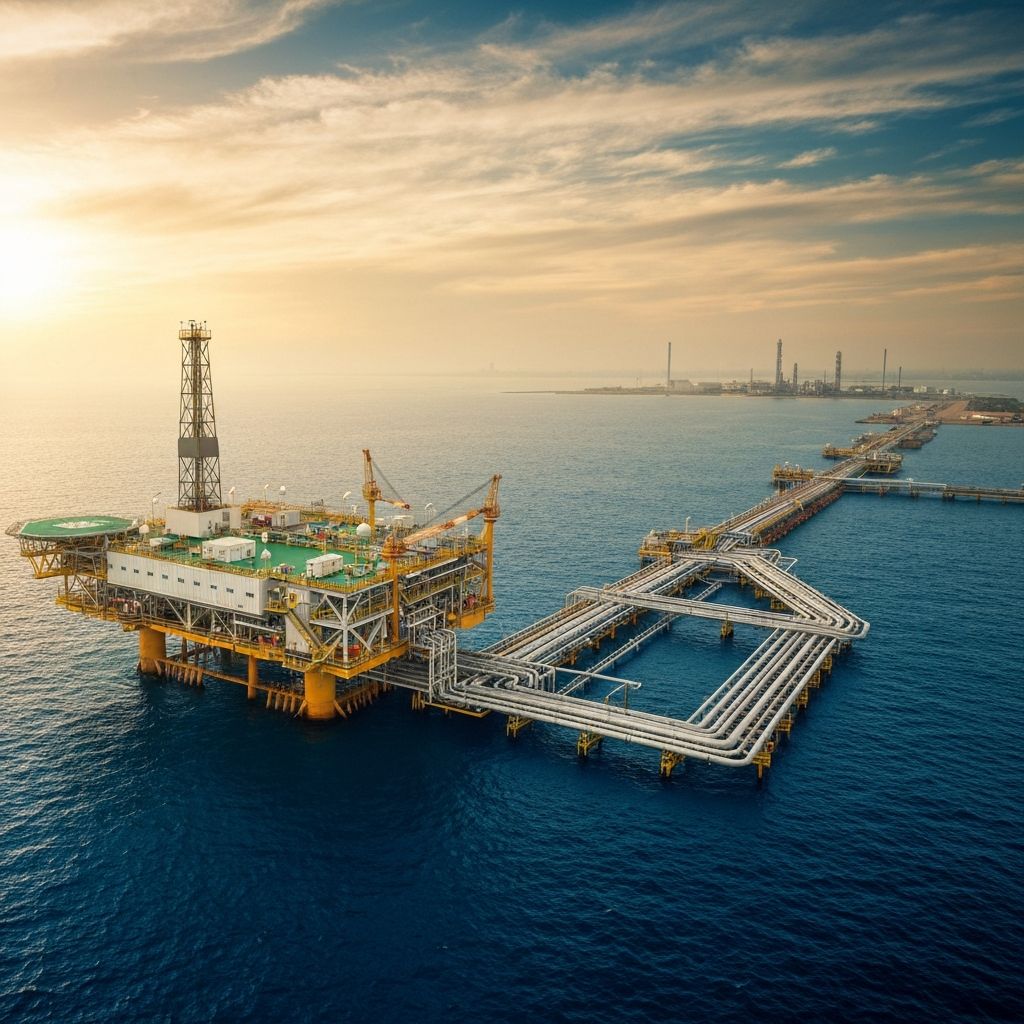
Turkey's Strategic Role in Oil and Gas
Turkey occupies a unique geographic position at the crossroads of Europe, Asia, and the Middle East, making it a critical hub for oil and gas flows between producing regions and major consumer markets. The country's extensive pipeline network, refining capacity, and growing offshore exploration activity have established it as one of the most strategically important energy markets in the wider region. Despite global momentum toward renewables, oil and gas continue to play a vital role in Turkey's economy, industrial activity, and security of supply.
Industry Structure and Market Dynamics
The Turkish oil and gas sector includes upstream exploration and production, midstream pipelines and storage, refining, and downstream retail and industrial distribution. The market features a mix of state-owned and private companies, with growing participation from international investors. Recent natural gas discoveries in the Black Sea have added new momentum to upstream activity, while petrochemicals, LNG terminals, and storage infrastructure remain key growth areas.
Top 10 Oil and Gas Companies in Turkey
1. Türkiye Petrolleri (TPAO) — The state-owned national oil company leading exploration and production activities both within Turkey and internationally, including major Black Sea natural gas projects.
2. BOTAŞ — The state pipeline and trading company responsible for transporting natural gas and managing key infrastructure including LNG terminals and storage facilities.
3. Tüpraş — Turkey's largest refiner and one of the most significant industrial companies in the country, operating multiple refineries with substantial throughput capacity.
4. Opet Petrolcülük — A major fuel distribution and retail company known for its extensive station network and strong brand presence across Turkey.
5. Shell & Turcas Petrol — A long-standing joint venture combining Shell's global expertise with strong Turkish market knowledge in retail and commercial fuels.
6. BP Petrolleri Turkey — A major international energy player active in retail fuels, lubricants, and aviation across Turkey.
7. Petrol Ofisi — One of the country's largest fuel and lubricants distributors, with a wide network of service stations, terminals, and aviation operations.
8. Total Energies Turkey — Operating in lubricants and specialty fuels, the company brings advanced product technologies and global standards to the local market.
9. Aygaz — A leader in LPG distribution, supplying autogas, cylinder gas, and bulk LPG to households and industries nationwide.
10. Milangaz — A prominent LPG company offering both cylinder and autogas products, recognized for safety standards and service reliability.
Upstream Exploration and Production
Upstream activities in Turkey are concentrated in the southeast Anatolia region, Thrace basin, and increasingly the Black Sea. The Sakarya gas field discovery has been a significant milestone, with phased development expected to substantially reduce the country's import dependence over the coming years. Several international and domestic players are partnering on exploration in both onshore and offshore blocks.
Refining and Petrochemicals
Tüpraş anchors Turkey's refining sector, processing crude into gasoline, diesel, jet fuel, and feedstocks for petrochemicals. The integration with downstream marketing companies and proximity to major export markets gives Turkish refining a strong competitive position. Petrochemical complexes such as Petkim further enhance the country's value chain in plastics and chemicals.
Distribution and Retail
Turkey has one of the most competitive fuel retail markets in the region, with thousands of service stations operated by major brands. Convenience retail, premium fuels, and electric vehicle charging are increasingly integrated into station networks. Leading retailers invest heavily in customer experience, loyalty programs, and digital payment technologies.
Natural Gas and LNG
Natural gas plays a central role in Turkey's heating, power generation, and industrial sectors. BOTAŞ manages the bulk of import and transmission infrastructure, complemented by LNG terminals that diversify supply sources. As renewable generation grows, natural gas continues to provide flexibility, balancing intermittent power supply on the national grid.
Sustainability and Energy Transition
Top oil and gas companies in Turkey are increasingly investing in low-carbon strategies. These include refinery emissions reduction, biofuels, hydrogen pilots, and partnerships in renewable power. Industry leaders recognize that long-term competitiveness depends on adapting to global decarbonization trends while maintaining reliable supply for current economic needs.
Outlook for the Sector
The outlook for Turkey's oil and gas sector is shaped by domestic discoveries, regional geopolitical dynamics, and the broader energy transition. Increased domestic gas production, expansion of storage and trading capability, and modernization of refineries are key priorities. The leading companies featured here are well positioned to navigate these shifts and continue to underpin Turkey's energy security.
Conclusion
Oil and gas remain integral to Turkey's economy, even as the country accelerates its clean energy transition. The top companies in this sector combine technical capability, infrastructure scale, and strategic vision to serve domestic consumers and connect global energy markets. Understanding their roles offers important insight into one of the most pivotal energy markets at the intersection of Europe and Asia.
