
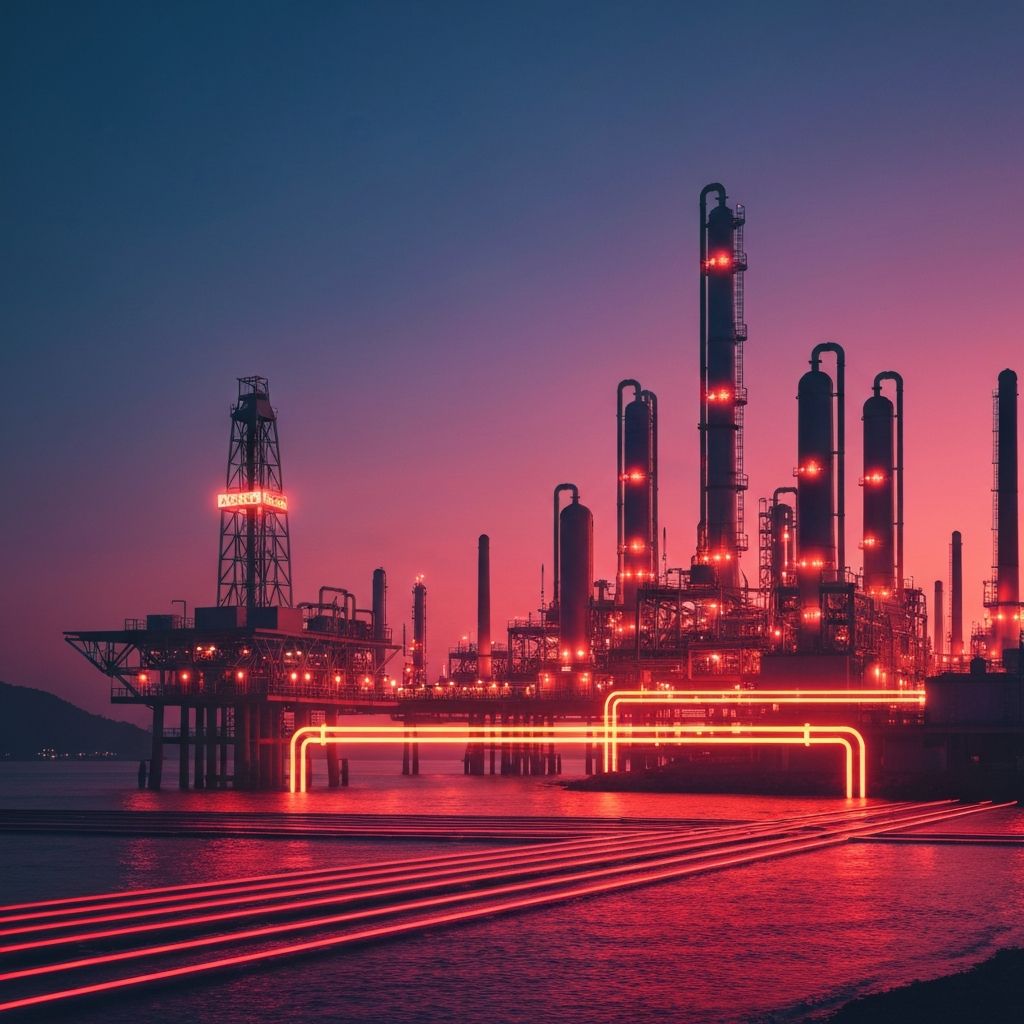
Thailand's Oil and Gas Industry at a Glance
The oil and gas industry remains a cornerstone of Thailand's economy, supporting transportation, manufacturing, petrochemicals, and power generation. Despite the global shift toward renewable energy, hydrocarbons continue to play a vital role in meeting the country's energy demands. Thailand's strategic location, robust infrastructure, and skilled workforce have made it a regional hub for upstream exploration, midstream logistics, and downstream refining and distribution.
From the gas-rich fields of the Gulf of Thailand to sophisticated refineries along the eastern seaboard, the country's oil and gas ecosystem is diverse and well-established. The companies operating in this sector are also leading efforts in energy transition, investing in cleaner fuels, carbon capture, and renewable diversification.
Leading Oil and Gas Companies in Thailand
1. PTT Public Company Limited is the country's largest energy company and a Fortune Global 500 enterprise. As Thailand's national oil and gas champion, PTT operates across the entire energy value chain, including exploration, refining, petrochemicals, and retail. Its extensive network of service stations and diversified portfolio make it a household name.
2. PTT Exploration and Production Public Company Limited (PTTEP) is the upstream arm of the PTT group and a major regional player in oil and gas exploration. The company operates fields in Thailand and abroad, contributing significantly to national energy security.
3. Thai Oil Public Company Limited operates one of the largest and most efficient refineries in Southeast Asia. The company is renowned for its integrated operations, producing fuels, lubricants, and petrochemical feedstocks of high quality.
4. Bangchak Corporation Public Company Limited blends traditional refining with renewable ventures. Known for its eco-friendly service stations and biofuel investments, Bangchak represents a forward-looking approach to fossil fuel businesses.
5. IRPC Public Company Limited is a fully integrated petroleum and petrochemical company. Its complex in Rayong is a vital part of Thailand's industrial base, supplying critical materials for various sectors.
6. Esso (Thailand) Public Company Limited, an affiliate of ExxonMobil, has long been part of the Thai energy landscape. The company operates refining facilities and a strong retail fuel network.
7. Chevron Thailand Exploration and Production has been a key upstream operator in the Gulf of Thailand for decades, contributing significantly to natural gas production and supporting domestic power generation.
8. Star Petroleum Refining Public Company Limited operates one of the country's most modern refineries, focusing on producing high-quality fuels that meet stringent environmental standards.
9. Susco Public Company Limited is a notable independent fuel retailer with a wide service station network and a focus on customer service and convenience.
10. PTG Energy Public Company Limited has rapidly expanded across Thailand with its PT-branded service stations, offering competitive pricing and modern facilities.
Industry Trends and Transformation
Thailand's oil and gas industry is undergoing significant transformation. Companies are diversifying into liquefied natural gas (LNG) imports, investing in petrochemicals to capture higher value, and exploring opportunities in hydrogen and biofuels. Digital transformation, including the use of advanced analytics and automation, is improving operational efficiency and safety.
Environmental sustainability has become a strategic priority. Many leading companies have committed to net-zero targets, are deploying carbon capture technologies, and are investing in renewable energy as part of their long-term strategies. This shift is critical to maintaining competitiveness in a global market increasingly focused on decarbonization.
Economic Significance and Future Outlook
The oil and gas sector contributes substantially to Thailand's GDP, government revenues, and employment. It supports countless downstream industries, from plastics to aviation. The companies leading this sector are not just energy suppliers; they are strategic enablers of the nation's industrial growth.
Looking forward, the industry will need to balance traditional operations with the demands of the energy transition. Investments in cleaner technologies, integrated energy solutions, and regional collaboration will define the next chapter. The top oil and gas companies in Thailand are well-positioned to lead this evolution, ensuring reliable energy supply while embracing a more sustainable future.
