
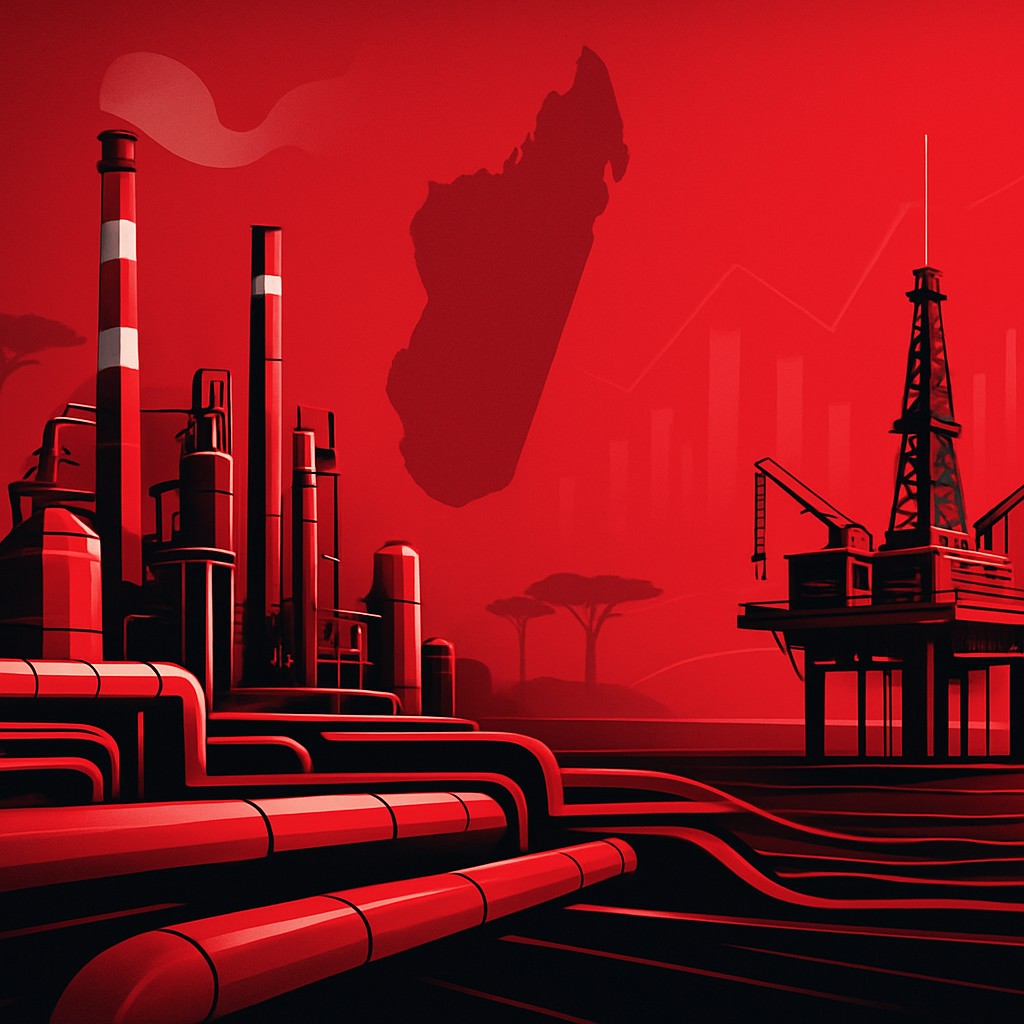
An Overview of Madagascar's Oil and Gas Sector
Madagascar's oil and gas industry is still in a relatively early stage of development, but it holds considerable promise. The island is home to significant heavy oil and tar sand deposits, particularly in the Bemolanga and Tsimiroro fields, as well as offshore exploration blocks that have drawn interest from international energy companies. Alongside exploration, a well-established network of fuel distributors and downstream service providers keeps the economy moving.
The sector encompasses upstream exploration and production, midstream logistics, and downstream distribution of petroleum products, each playing a vital role in meeting Madagascar's energy demands.
The Sector's Economic Importance
Oil and gas activities contribute to government revenue, create jobs, and supply the fuel that powers transportation, industry, and electricity generation. Reliable distribution networks ensure that fuel reaches even remote areas, supporting agriculture, mining, and commerce. As exploration advances, the sector could significantly reduce dependence on imported fuel and bolster energy security.
Leading Oil and Gas Companies
Galana Distribution Petroliere is one of the largest fuel distributors in Madagascar, operating an extensive network of service stations and supplying petroleum products nationwide.
Jovenna Madagascar is a major player in fuel retail and distribution, known for its widespread presence and reliable supply chain.
Total Energies Madagascar brings international expertise to the downstream market, offering fuels, lubricants, and energy solutions across the country.
Vivo Energy Madagascar, operating the Shell brand, provides high-quality fuels and lubricants supported by strong logistics and customer service.
Madagascar Oil is a key upstream company focused on developing the country's substantial heavy oil resources at Tsimiroro and beyond.
Other significant participants include Omnis, the national petroleum office overseeing exploration, along with Solima legacy operators, Energy Africa Madagascar, and various independent distributors that strengthen the supply ecosystem.
Services and Operations
Companies in this sector provide a broad spectrum of services. Upstream firms conduct exploration, drilling, and production, while downstream players manage refining logistics, storage, and retail distribution of gasoline, diesel, lubricants, and liquefied petroleum gas. Many also offer commercial and industrial fuel supply, aviation fuel, and bunkering services for maritime clients.
Industry Trends
The sector is gradually modernizing, with investments in storage infrastructure, safety standards, and cleaner fuel formulations. There is growing attention to environmental responsibility, including measures to prevent spills and reduce emissions. Liquefied petroleum gas is being promoted as a cleaner cooking fuel alternative to charcoal, which has positive implications for both public health and forest conservation. Exploration companies are also adopting advanced technologies to assess reserves more accurately.
What Distinguishes the Leaders
The top oil and gas companies in Madagascar are defined by reliability, safety, and operational excellence. They maintain robust supply chains that ensure consistent fuel availability, invest in modern infrastructure, and uphold international standards. Their contributions extend beyond commerce to supporting national development and energy security.
Conclusion
The oil and gas sector remains a cornerstone of Madagascar's energy landscape, supplying the fuel that drives economic activity. The companies profiled here lead the industry through dependable distribution, responsible operations, and ongoing investment. As exploration progresses and infrastructure improves, the sector is well positioned to support Madagascar's growth and energy ambitions in the years to come.
