
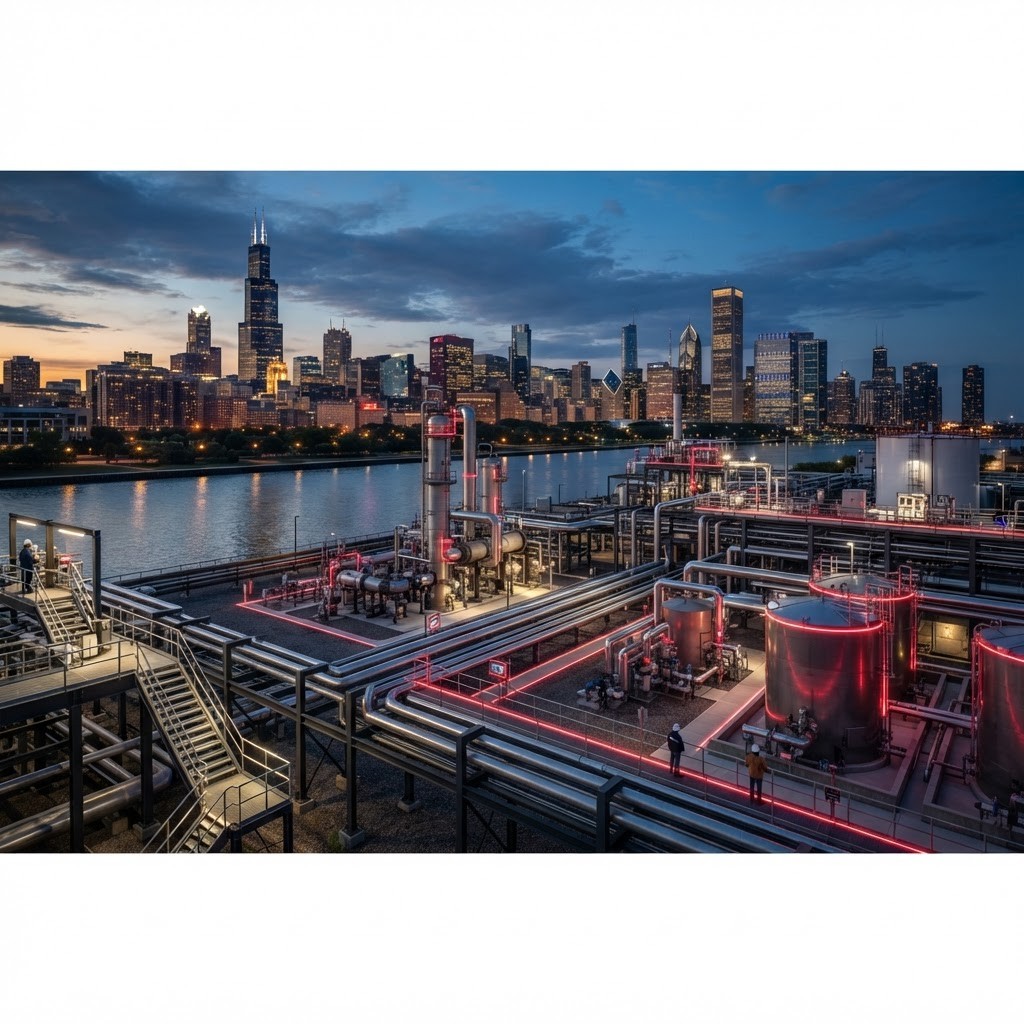
Understanding Chicago's Oil and Gas Sector
Chicago is not an upstream production hub, yet it occupies a crucial place in North American energy logistics. The region connects refineries, pipelines, rail networks, airports, industrial users, and a large consumer market. Corporate offices and trading operations add commercial depth. The companies below include refiners, midstream operators, fuel suppliers, and engineering organizations whose Chicago-area presence or market activity supports the movement and transformation of energy products.
1. BP
BP has a major Chicago-area presence, including the Whiting refinery in nearby Northwest Indiana and substantial corporate activity. Whiting is a significant Midwest refining asset supplying transportation fuels. BP's regional position combines refining, logistics, retail fuel relationships, trading expertise, and growing investment in lower-carbon energy businesses.
2. Citgo Petroleum
Citgo has long maintained its corporate headquarters in the Chicago area. The company refines, transports, and markets fuels, lubricants, and petrochemical products through an extensive network. Its regional corporate base and relationships with independently operated branded outlets make it one of the most recognizable energy businesses associated with metropolitan Chicago.
3. ExxonMobil
ExxonMobil participates in the Chicago market through fuel supply, lubricants, and broader commercial operations. As an integrated global energy company, it brings extensive technical research, refining, chemical, and logistics capabilities. Local businesses and consumers primarily encounter the company through products and distribution networks rather than upstream activity.
4. Shell
Shell serves the Chicago region through branded fuel supply, lubricants, commercial energy products, and trading relationships. Its global portfolio spans conventional energy, liquefied natural gas, chemicals, power, and emerging lower-carbon offerings. Scale and a broad product range allow it to support transportation and industrial needs while adapting to changing energy demand.
5. Kinder Morgan
Kinder Morgan operates pipelines, terminals, and energy infrastructure across North America with assets relevant to Midwest supply chains. Midstream companies are less visible than retail brands but are essential to safely moving and storing fuels. Kinder Morgan's specialization in infrastructure and long-term transportation services is its defining strength.
6. Enbridge
Enbridge's pipeline network is important to the broader Great Lakes and Midwest energy system. The company transports liquids and natural gas and also invests in gas distribution and renewable power. Its operations illustrate the scale of monitoring, integrity management, regulatory compliance, and community coordination required for cross-border energy infrastructure.
7. TC Energy
TC Energy owns and operates major natural gas pipeline systems serving North American markets, including the Midwest. Natural gas supports heating, industrial operations, and electricity generation in the Chicago region. The company's network scale and focus on long-distance infrastructure make it an important participant in regional reliability.
8. MPLX
MPLX provides midstream services through pipelines, terminals, storage, and processing assets. Its relationship with Marathon Petroleum and broad logistics capabilities connect production and refining centers with major demand markets. For the Chicago economy, such systems help maintain dependable flows of fuels and feedstocks.
9. Sargent & Lundy
Chicago-based Sargent & Lundy is an engineering firm serving energy and infrastructure clients, including projects related to natural gas and power generation. It provides design, consulting, project management, and technical services rather than producing fuel. Its inclusion reflects Chicago's strength in the specialized engineering expertise that enables complex energy facilities to operate.
10. UOP Honeywell
Honeywell UOP, based in the Chicago area, develops technologies used in refining, petrochemicals, gas processing, and sustainable fuels. Its catalysts, process designs, equipment, and technical services influence facilities around the world. Research and process innovation distinguish UOP from asset-owning oil and gas companies and make it one of the region's most consequential energy technology businesses.
An Industry in Transition
Refiners and logistics companies face demand uncertainty, tighter emissions expectations, and growing interest in renewable fuels, carbon management, hydrogen, and electrification. At the same time, Chicago's transportation system and cold-weather heating needs continue to require reliable conventional energy. Digital monitoring, predictive maintenance, methane reduction, and improved process efficiency are becoming central to competitiveness and risk management.
How to Assess an Energy Company
Customers and business partners should evaluate operational reliability, safety performance, financial strength, product quality, and responsiveness. Communities and prospective employees may also consider environmental transparency, emergency preparedness, workforce development, and transition strategy. No company is best for every requirement: an industrial buyer, fuel distributor, engineering client, and job seeker each needs different evidence. Chicago's oil and gas ecosystem is broad, technically sophisticated, and closely tied to regional infrastructure, making informed comparison more useful than simple brand familiarity.
