
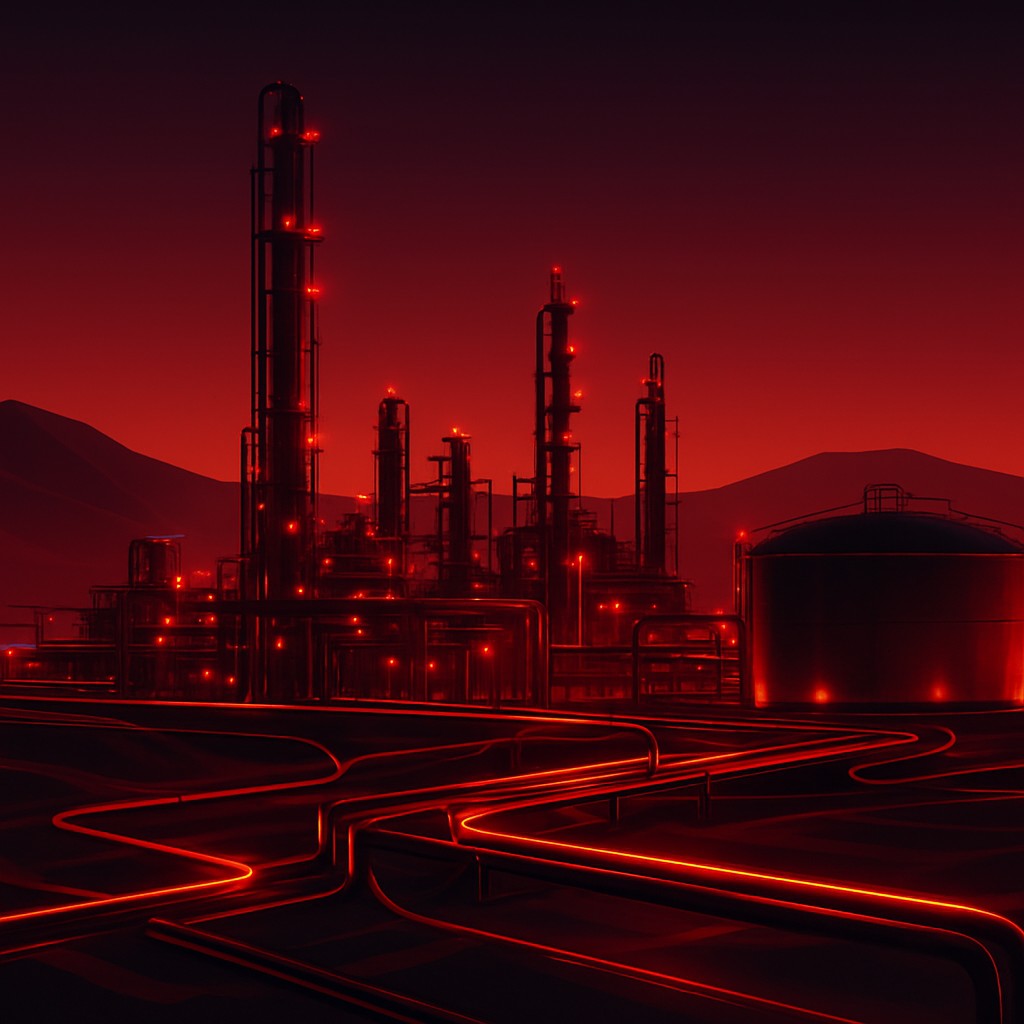
The Backbone of the Algerian Economy
Oil and gas have been the cornerstone of Algeria's economy for decades, generating the majority of export revenue and funding national development. The country sits atop some of the largest natural gas reserves in Africa and continues to be a major supplier to European markets through an extensive pipeline and liquefied natural gas network. The companies operating in this sector range from the dominant state enterprise to specialized international partners, all working within one of the most resource-rich landscapes on the continent.
Understanding the leading oil and gas companies in Algeria offers insight into how the nation manages its most valuable assets, balances domestic energy needs with export commitments, and positions itself within an evolving global energy market.
Sonatrach: The National Champion
Sonatrach stands at the very center of Algeria's hydrocarbon industry. As the state-owned energy company, it is by far the largest enterprise in Africa and one of the most significant national oil companies in the world. Sonatrach oversees exploration, production, refining, transportation, and marketing of oil and gas, both domestically and internationally. Its operations span the vast Saharan fields, coastal refineries, and an export infrastructure that connects Algeria to markets across the Mediterranean.
Sonatrach's scale and integration make it the defining force in the sector. The company partners with numerous international firms through joint ventures, sharing technology and risk while retaining majority control over national resources.
International Partners and Joint Ventures
Algeria's hydrocarbon wealth has attracted leading global energy companies, many of which operate through partnerships with Sonatrach. Eni, the Italian energy major, has a long-standing presence in the country and is deeply involved in gas production and supply to Europe. TotalEnergies of France maintains significant upstream and downstream interests, contributing technical expertise and investment.
Other notable international players include Equinor, the Norwegian company with experience in major gas developments, and BP, which has participated in large field operations in the Saharan region. American firms such as Occidental Petroleum and Anadarko have also historically contributed to production-sharing arrangements. These companies bring advanced extraction technologies and global market access that complement Sonatrach's local strengths.
Service and Engineering Specialists
Beyond the producers, a layer of service and engineering companies supports the sector's day-to-day operations. Global oilfield services firms like Schlumberger and Halliburton provide drilling, well-completion, and reservoir-management services that are essential to maintaining output from mature and new fields alike. Baker Hughes contributes specialized equipment and technology that improve efficiency and recovery rates.
These service providers play a quiet but critical role, ensuring that the complex machinery of extraction operates safely and productively across remote desert sites.
Key Producing Regions
The heart of Algeria's hydrocarbon production lies in the Sahara, with the Hassi Messaoud oil field and the Hassi R'Mel gas field being among the most significant. These giant fields have sustained production for generations and remain central to national output. Newer developments in the In Salah and In Amenas areas have expanded gas capacity, reinforcing Algeria's role as a reliable supplier.
Companies operating in these regions must contend with challenging desert conditions, requiring robust logistics, security, and engineering capabilities.
Industry Trends and Modernization
The Algerian oil and gas sector is undergoing gradual modernization. Recent reforms to hydrocarbon legislation have aimed to make the investment climate more attractive to international partners, encouraging exploration in underdeveloped basins. There is also growing interest in reducing gas flaring, improving energy efficiency, and integrating cleaner technologies into traditional operations.
At the same time, the industry is mindful of the global energy transition. Many of the leading companies are exploring how to leverage their gas resources as a relatively lower-carbon bridge fuel while investing in adjacent sectors such as petrochemicals and renewables.
Economic and Strategic Importance
The oil and gas companies operating in Algeria are far more than commercial enterprises; they are strategic actors that shape the country's fiscal stability and international relationships. Export revenues fund public services and infrastructure, while long-term supply agreements with European nations underscore Algeria's geopolitical significance as an energy partner.
Conclusion
From the towering presence of Sonatrach to the technical contributions of international majors and service specialists, Algeria's oil and gas industry is built on a network of capable, experienced companies. Together they manage some of Africa's richest hydrocarbon resources, balancing the demands of domestic development, export commitments, and a changing global energy landscape. For anyone seeking to understand the engine of the Algerian economy, these leading companies offer the clearest window into a sector that remains both vital and dynamic.
