
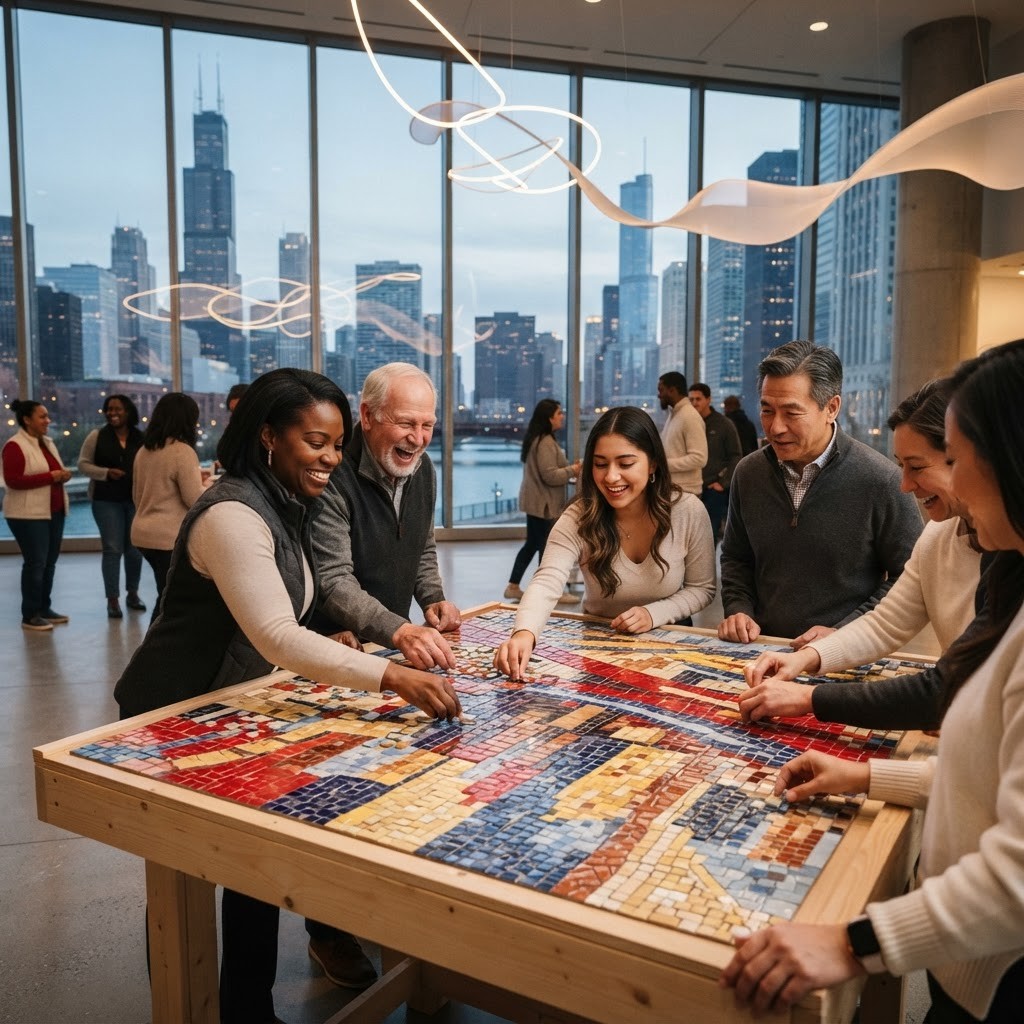
How Chicago Nonprofits Strengthen the City
Chicago’s neighborhoods are supported by thousands of mission-driven organizations, from major regional institutions to focused community groups. The strongest nonprofits pair immediate services with long-term strategies, credible partnerships, transparent leadership, and measurable outcomes. Donors and volunteers should consider how an organization defines impact, works with residents, and sustains programs rather than relying on name recognition alone.
This list highlights established organizations with meaningful Chicago operations across food security, housing, youth development, healthcare, disability inclusion, arts, and economic mobility. Each demonstrates a different way to create durable civic value.
1. Greater Chicago Food Depository
The Greater Chicago Food Depository anchors a large network of food pantries, soup kitchens, shelters, and community partners across Cook County. Beyond distributing food, it invests in nutrition, benefits access, job training, and public policy. Its scale and logistics expertise help move fresh and shelf-stable food efficiently while addressing the underlying conditions that drive hunger.
2. Metropolitan Family Services
Metropolitan Family Services provides counseling, education, legal assistance, workforce development, and programs for children and families. Its neighborhood-based model recognizes that financial stability, safety, mental health, and educational opportunity are interconnected. A long Chicago history and wide service footprint make it an important resource for families navigating several challenges at once.
3. Chicago Cares
Chicago Cares connects volunteers with service opportunities while developing civic leadership and stronger relationships across neighborhoods. Projects respond to needs identified by community partners rather than treating volunteering as a one-time gesture. The organization is especially valuable for companies and individuals seeking structured service experiences informed by Chicago’s history and local priorities.
4. Cara Collective
Cara Collective focuses on employment pathways for people experiencing poverty and other barriers to work. Participants receive training, coaching, placement support, and ongoing encouragement. Its model combines practical job readiness with personal development and employer partnerships, helping people secure work while building the confidence and stability needed to retain it.
5. PAWS Chicago
PAWS Chicago has helped advance the city’s no-kill movement through adoption, spay and neuter services, medical care, and community outreach. Its programs address both animal welfare and the circumstances that lead pets into shelters. Strong volunteer engagement and modern adoption practices make it one of the region’s most visible companion-animal organizations.
6. La Casa Norte
La Casa Norte supports youth and families experiencing homelessness or housing instability. Services include emergency support, housing, nutrition, case management, and youth development. The organization’s culturally responsive approach and focus on dignity are particularly important in a city where housing pressures affect communities differently and young people may face distinct safety concerns.
7. After School Matters
After School Matters gives Chicago teens paid opportunities to explore arts, communications, sports, science, and technology with professional instructors. Programs build technical skills, teamwork, and confidence while creating constructive spaces outside school hours. Its citywide reach helps young people connect interests to education and career possibilities.
8. Misericordia
Misericordia supports children and adults with intellectual and developmental disabilities through residential, vocational, clinical, and recreational programs. The organization emphasizes personal potential, community, and quality of life. Its comprehensive campus and family support network address changing needs across a participant’s lifetime rather than offering a narrow or temporary intervention.
9. Thresholds
Thresholds delivers services for people living with serious mental illnesses and substance-use conditions. Its work includes housing, employment, care coordination, clinical support, and programs designed for veterans, young adults, and people experiencing homelessness. The integrated approach recognizes that recovery is strengthened by stable housing, relationships, purpose, and accessible healthcare.
10. My Block, My Hood, My City
My Block, My Hood, My City develops young leaders and supports communities through educational experiences and neighborhood initiatives. Its programs encourage teens to explore places, cultures, careers, and possibilities beyond their immediate surroundings. The organization’s highly local identity and emphasis on civic responsibility resonate with Chicago’s neighborhood-centered character.
Choosing Where to Give or Volunteer
Prospective supporters should begin with the issue they care about and the form of contribution they can sustain. Review annual reports, governance, financial disclosures, program outcomes, and the voices of people served. Effective organizations explain both successes and limitations, protect participant dignity, and direct resources toward a clear theory of change.
Chicago’s needs are complex, but its nonprofit ecosystem is exceptionally capable. Whether someone offers funds, professional expertise, recurring volunteer hours, or advocacy, consistent engagement usually produces more value than a single seasonal action. These organizations provide strong starting points for meaningful involvement in the city.
A Practical Final Check
Before making a commitment, compare at least three suitable options using the same criteria. Write down the result you need, the features that genuinely support it, the complete cost, and the service expected after the purchase or engagement. Ask direct questions about limitations, policies, availability, and who will be responsible if circumstances change. Recent independent feedback can reveal patterns, but individual reviews should be weighed against verified experience, professional credentials, and clear documentation.
Local fit also deserves attention. Chicago and Houston are large, diverse markets where neighborhood access, seasonal demand, transportation, climate, and regional expertise can materially affect convenience and performance. A thoughtful choice should remain useful after the initial excitement has passed. Taking time to evaluate quality, communication, long-term upkeep, and total value produces a more dependable decision than selecting the most visible name or the lowest advertised price.
