
Why Memphis Is a Natural Home for Metal Fabrication
Memphis sits at a rare logistical crossroads. Five Class I railroads, the fourth-largest inland port on the Mississippi River, the intersection of three interstate corridors, and one of the busiest cargo airports in the world all converge within a single metropolitan area. For metalworks companies, that convergence translates into something very practical: raw steel and aluminum arrive cheaply, and finished assemblies leave quickly. A fabricator in Memphis can receive coil steel by barge on a Monday and have a laser-cut, welded, powder-coated assembly on a customer dock in Dallas or Atlanta before the end of the week.
That advantage has attracted a deep base of manufacturing demand. Automotive suppliers, medical device manufacturers, agricultural equipment producers, food processing plants, and commercial construction contractors all pull from the same regional pool of fabricators. The result is a metalworking community that is unusually versatile: many Memphis shops handle structural steel, precision sheet metal, and custom machining under one roof rather than specializing narrowly.
What Separates the Best Metalworks Companies
Before reviewing specific companies, it helps to understand the criteria that experienced buyers actually use. Certification is the first filter. AISC certification matters for structural steel, AWS D1.1 welder qualification matters for load-bearing work, and ISO 9001 registration signals that a shop has documented, repeatable processes rather than tribal knowledge. For food, pharmaceutical, and medical applications, sanitary welding practice and passivation capability become non-negotiable.
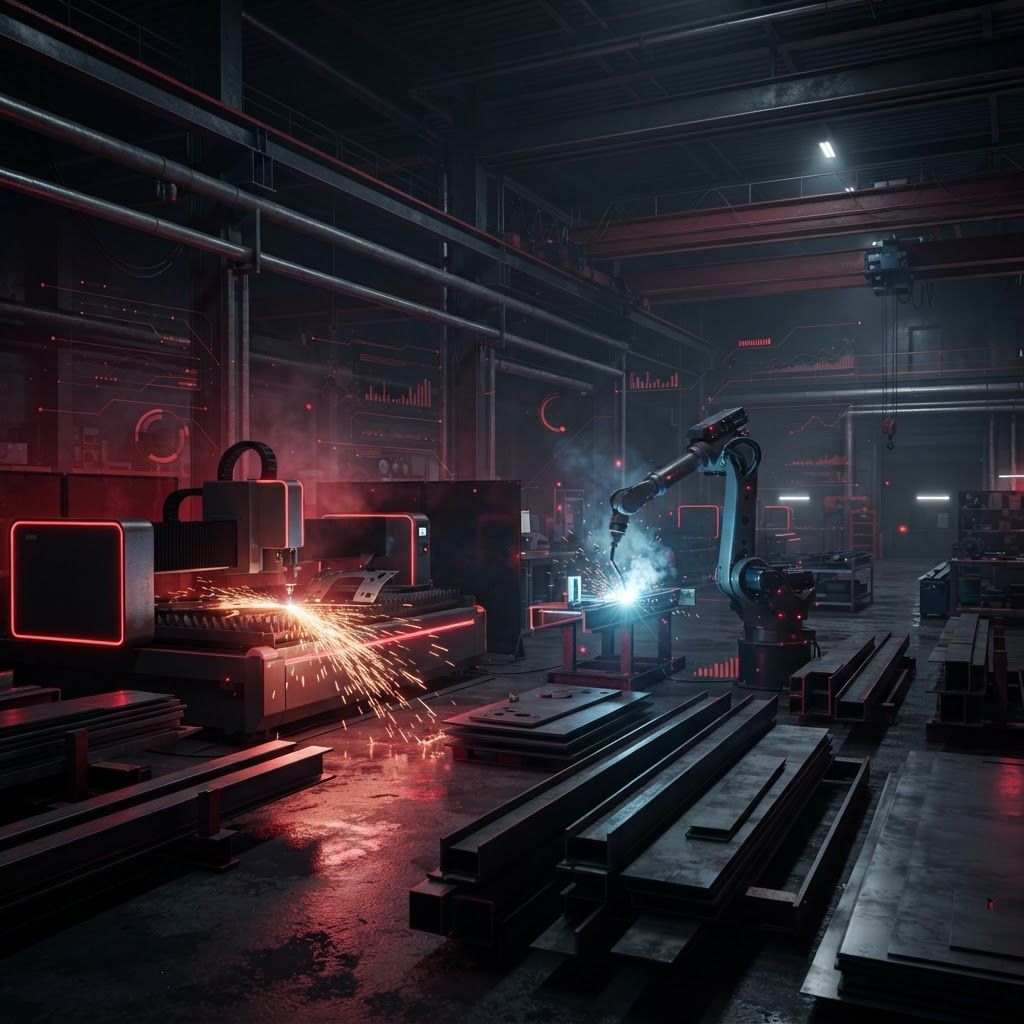
Equipment depth is the second filter. Fiber laser cutting has largely replaced plasma for thin- and mid-gauge work because it delivers cleaner edges with less secondary finishing. Press brakes with CNC backgauges reduce setup time on complex bends. Robotic welding cells improve consistency on production runs, while skilled manual TIG welders remain essential for prototypes, stainless work, and repair. The strongest shops maintain both.
The third filter is engineering support. A fabricator that reviews your drawings and suggests a design change to eliminate a weld, consolidate two parts, or shift a tolerance can save more money than the lowest per-unit quote. This design-for-manufacturability input is where the best Memphis metalworks firms genuinely differentiate themselves.
1. Bluff City Steel Fabricators
Bluff City Steel Fabricators is known across the region for heavy structural work. The company handles beams, columns, stair towers, mezzanines, and platform systems for warehouse and distribution construction, a category of work that has grown steadily as logistics real estate expanded around the airport corridor. Their reputation rests on detailing accuracy: fabrication drawings are produced in-house, which shortens the approval cycle and reduces field-fit problems. Contractors frequently mention their willingness to sequence deliveries to match an erection schedule rather than dumping an entire package on site at once.
2. Riverline Precision Metalworks
Riverline Precision Metalworks focuses on tight-tolerance sheet metal and light assembly. The shop runs fiber laser cutting, CNC forming, hardware insertion, and in-house powder coating, which allows it to deliver finished enclosures, brackets, chassis, and panels without outside processing. Customers in electronics, instrumentation, and medical equipment value this single-source model because it eliminates the quality gaps that appear when parts travel between vendors. Riverline is also recognized for prototype responsiveness, often turning first articles in days rather than weeks.
3. Delta Ironworks Company
Delta Ironworks Company occupies the architectural and ornamental end of the market. Its portfolio includes handrails, guardrails, decorative gates, canopies, sunshades, and custom interior features for restaurants, hotels, and civic buildings. The company blends traditional blacksmithing craft with modern CNC processes, which lets it produce visually distinctive work at a cost that competes with catalog products. Designers appreciate that Delta will build physical mockups and finish samples before committing a full production run.
4. Wolf River Machine and Weld
Wolf River Machine and Weld serves the industrial maintenance market. The company specializes in emergency repair, machine rebuilding, shaft and bearing work, and custom replacement parts for equipment whose original manufacturer no longer supports it. For plants where an hour of downtime carries a serious cost, this reverse-engineering capability is the entire value proposition. Wolf River maintains mobile welding units and offers after-hours response, a service level that few general fabricators match.
5. Memphis Stainless Solutions
Memphis Stainless Solutions builds exclusively in stainless steel and food-grade alloys. Its work covers process tanks, hoppers, conveyor frames, wash-down stations, and sanitary piping for the region's substantial food and beverage processing base. Sanitary fabrication demands full-penetration, crevice-free welds, controlled surface finishes, and thorough passivation, and the company documents each of these steps for audit purposes. That documentation discipline is why processors under strict inspection regimes return to them repeatedly.
6. Southgate Laser and Forming
Southgate Laser and Forming is a high-volume production shop. The business model is built on throughput: nested laser programs to maximize material yield, automated part sorting, robotic bending, and long-run press brake work. Southgate is typically the right choice for annual contracts and released blanket orders rather than one-off custom projects. Buyers cite consistent unit pricing and on-time performance as the main reasons for long-term relationships.
7. Cordova Custom Metal Craft
Cordova Custom Metal Craft sits between industrial and consumer work. The company produces custom trailers, truck bodies, equipment racks, tool storage systems, and specialty fixtures for small businesses and tradespeople. Its strength is collaborative design: customers often arrive with a rough sketch and a functional requirement rather than a finished drawing, and the shop develops the solution with them. This accessibility makes it a favorite among contractors, landscapers, and mobile service operators.
8. Harbor Town Aluminum Works
Harbor Town Aluminum Works concentrates on aluminum extrusion fabrication, marine components, docks, gangways, ramps, and lightweight structural assemblies. Aluminum requires different welding parameters, filler selection, and distortion control than carbon steel, and the company's specialization shows in the quality of its finished welds. Their anodizing partnerships and knowledge of alloy selection help customers avoid corrosion and fatigue problems in outdoor and waterfront service.
9. Frayser Industrial Fabrication
Frayser Industrial Fabrication handles pressure vessels, skid packages, structural supports, and process modules for energy, chemical, and utility clients. Code work under recognized boiler and pressure vessel standards requires qualified procedures, traceable material certification, and third-party inspection coordination, and Frayser manages all three. The company's modular skid approach lets clients complete significant portions of a plant build in a controlled shop environment rather than in the field, reducing schedule risk.
10. Crosstown Metal Finishing and Fabrication
Crosstown Metal Finishing and Fabrication combines fabrication with a broad finishing menu including powder coating, wet paint, media blasting, and plating coordination. For customers whose parts fail on appearance rather than function, the finishing depth is decisive. The company also runs a small-batch service that welcomes low quantities, which makes it useful for startups, artists, and product developers who need production-quality finishes without production-scale volume.
Industry Trends Shaping Memphis Metalworks
Three trends are reshaping the local landscape. Automation continues to spread downward into smaller shops as the cost of robotic welding cells and automated bending falls, which raises consistency expectations across the board. Skilled labor remains the binding constraint, so the shops investing in apprenticeship programs and partnerships with regional technical colleges are the ones positioned to grow. Finally, supply chain reshoring has increased demand for domestic fabrication, favoring firms that can scale capacity without sacrificing lead time.
How to Choose the Right Fabricator
Match the shop to the work rather than searching for a single best provider. Structural packages belong with certified structural fabricators, sanitary work belongs with stainless specialists, and production runs belong with automated high-volume shops. Visit the floor before awarding significant work: organization, fixture quality, and how welders talk about their own processes reveal more than a brochure. Ask for references in your specific industry, confirm insurance and certification currency, and clarify who owns responsibility for material procurement and finishing.
Memphis offers unusual breadth for a metropolitan area of its size. Whether the requirement is a single architectural stair, a fleet of custom trailers, or a multi-year production contract, the depth of local metalworking talent means the right partner is almost certainly within a short drive.
