
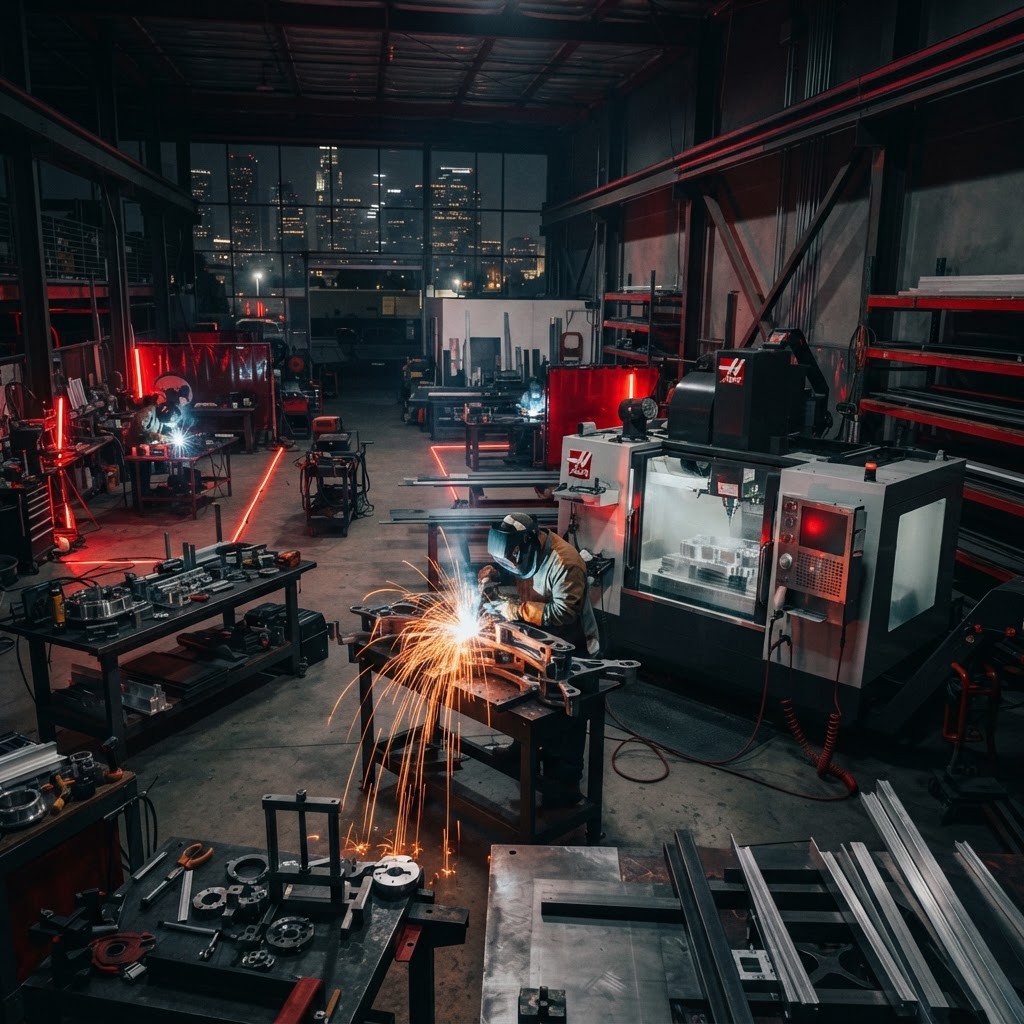
The Breadth of Los Angeles Metalworking
Metalwork in Los Angeles supports architecture, entertainment, transportation, aerospace, manufacturing, restaurants, and luxury homes. One shop may build a monumental staircase, while another machines components measured in thousandths of an inch. Choosing well therefore begins with matching the supplier’s process and quality system to the job.
The following companies illustrate this range. Buyers should verify service areas, capacity, certifications, material experience, and whether installation or engineering is included.
1. Zahner
Zahner is internationally recognized for architectural metal systems and complex facades, with capabilities serving ambitious projects in Los Angeles. The company combines engineering, digital fabrication, surface development, and installation planning. It is best considered when metal is a defining architectural element rather than a simple commodity.
2. Móz Designs
Móz Designs produces decorative metal surfaces and architectural products used in walls, columns, ceilings, elevators, and feature installations. Its patterned and colored metal options give designers a controlled alternative to one-off artistic finishes. Commercial buyers value systems that balance visual impact with repeatable fabrication.
3. California Metal & Supply
California Metal & Supply serves aerospace and industrial customers with specialty metals and processing support. Material traceability, alloy knowledge, and dependable supply are essential in technical sectors. The company is relevant when buyers need more than common structural steel.
4. Industrial Metal Supply
Industrial Metal Supply is a major Southern California source for steel, aluminum, stainless, brass, copper, and related products. Its inventory supports fabricators, machine shops, contractors, artists, and maintenance teams. Cut-to-size availability can save time on prototypes and urgent repairs.
5. Bobco Metals
Bobco Metals is a familiar Los Angeles supplier of metal stock, fencing components, ornamental materials, and fabrication essentials. The company serves both trade professionals and smaller buyers. Its broad selection makes it useful for structural, decorative, repair, and do-it-yourself applications.
6. West Coast Metalcrafts
West Coast Metalcrafts creates custom architectural metalwork for residential and commercial settings. Railings, gates, stairs, canopies, and decorative features require careful field measurement as well as shop skill. A fabricator’s ability to coordinate with architects and installers is often as important as welding quality.
7. Kloeckner Metals
Kloeckner Metals is a large metals service organization supplying processed material to manufacturers. Its capabilities can include cutting, forming, and supply-chain coordination. Larger customers may benefit from consistent specifications, inventory programs, and access to multiple processing methods.
8. Reliance Steel & Aluminum
Los Angeles-based Reliance Steel & Aluminum operates a broad network of metals service businesses. The group supports many industries and material categories. Its scale is relevant to organizations seeking dependable supply and processed products across locations.
9. LA Metals
LA Metals serves regional customers requiring metal supply, recycling, and project materials. Local availability matters in a market where schedules can shift quickly and transporting long stock is difficult. Buyers should clarify grade, condition, dimensions, and processing before pickup or delivery.
10. Standard Metal Products
Standard Metal Products supports custom fabrication and manufacturing needs with formed and fabricated components. Shops of this type are useful when a customer needs repeatable parts rather than purely decorative work. Drawings, tolerances, fixtures, and inspection plans become central to a successful relationship.
Evaluating a Metal Fabricator
Provide drawings, models, material grades, weld requirements, tolerances, finish specifications, and quantities. Ask which processes are completed in-house and which are subcontracted. For exposed architectural work, review samples of weld blending, corners, fasteners, patinas, powder coating, and directional grain. For precision parts, discuss inspection equipment, calibration, first-article reports, and revision control.
Installation conditions in Los Angeles can be demanding. Existing buildings may be out of square, hillside access can be limited, and urban sites may offer little staging space. Confirm field verification, engineering responsibility, permits, protective coatings, transport, rigging, and touch-up procedures. The best metalworks company is not simply the shop with the largest machines; it is the team that understands the design intent and can execute it safely, accurately, and consistently.
Planning a Successful Supplier Relationship
Before opening an account, create a written purchasing brief that defines required products, expected order frequency, acceptable lead times, quality standards, budget limits, and delivery constraints. Share realistic forecasts without presenting them as guaranteed orders. Ask each supplier how quotations are updated, how backorders are communicated, who handles quality concerns, and what documentation accompanies a shipment. A trial order can reveal far more about picking accuracy, packaging, communication, and product consistency than a polished sales presentation.
It is also wise to avoid dependence on a single source for every critical item. Maintain approved alternatives while giving strong primary suppliers enough predictable business to invest in the relationship. Review performance quarterly using measurable factors such as on-time delivery, defect rate, response speed, invoice accuracy, and resolution of claims. In Los Angeles, delivery plans should account for traffic, loading zones, limited warehouse space, seasonal demand, and the distance between coastal, central, and inland locations. Clear receiving procedures help teams photograph damage, check quantities, preserve lot information, and report discrepancies promptly.
Finally, treat the list above as a starting point rather than a substitute for due diligence. Visit showrooms or facilities when practical, request samples, verify business credentials and insurance where relevant, and speak with comparable customers. The best long-term partner is transparent about both strengths and limitations. Consistent communication, documented expectations, and fair payment practices create a more resilient supply chain for buyer and supplier alike.
