
Why Metalworking Still Thrives in Greater Boston
Boston is not usually described as a heavy manufacturing city, yet its metalworking sector is remarkably strong. The reason is demand density. Within a short drive of the city sit world-leading hospitals, medical device firms, robotics companies, defense contractors, universities with research labs, and a construction market that never slows. Each of those customers needs metal parts made precisely, quickly, and often in very small quantities. That is exactly the work that high-mix, low-volume American job shops do best.
The result is a metalworks ecosystem built around engineering collaboration rather than commodity output. Shops in this market compete on tolerance, turnaround, finishing quality, and their willingness to solve a design problem alongside the customer, not on being the cheapest source of a mass-produced bracket.
The Capabilities That Define a Quality Shop
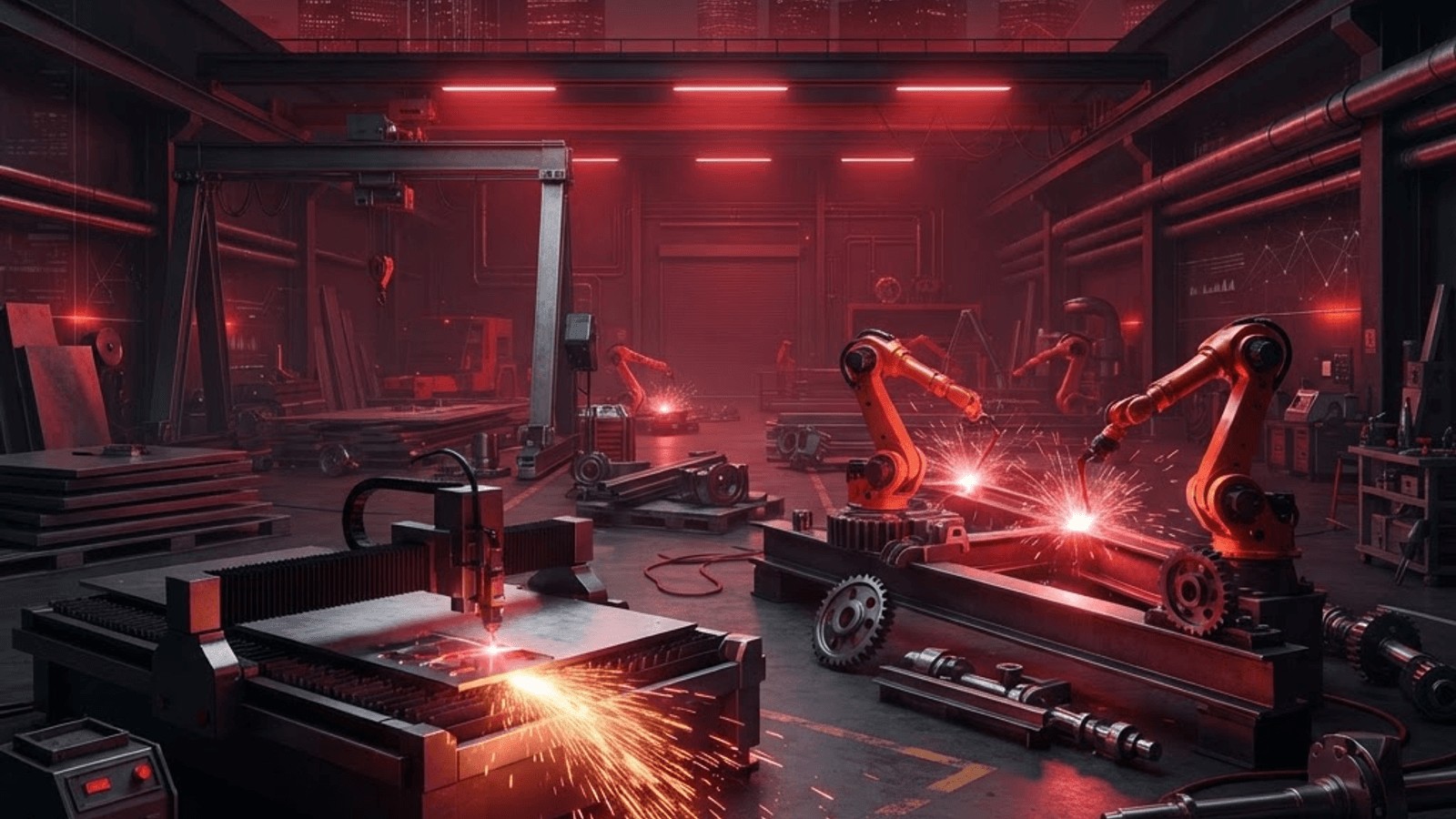
Buyers evaluating a fabricator should look first at process breadth. A shop that can laser cut, form, weld, machine, and finish under one roof eliminates handoffs that add days and introduce quality risk. Equipment matters: fiber laser cutting, press brakes with automatic tool changers, multi-axis CNC machining centers, and robotic welding cells all signal investment in repeatability. Certifications tell you where a shop can compete, with quality management systems for general industry, aerospace standards for flight hardware, medical quality systems for device work, and welding procedure qualifications for structural applications. Finally, look at inspection: coordinate measuring machines, optical comparators, and documented first-article reports separate suppliers who can prove quality from those who merely claim it.
The Top 10 Metalworks Companies Serving Boston
1. Boston Centerless
A nationally recognized name in precision bar grinding and material preparation, Boston Centerless serves medical device and aerospace manufacturers that need extremely tight diameter tolerances and surface finishes on raw stock. Its differentiator is upstream value: by supplying ground bar to exact specification, it removes machining steps and scrap for downstream customers, which is enormously valuable in the region's implant and instrument industry.
2. Precision Machine Shops of the Route 128 Corridor
The technology belt west of the city hosts a concentration of CNC machining specialists supporting robotics, semiconductor equipment, and life-science instrumentation. These shops build reputations on prototype-to-production continuity, holding micron-level tolerances on aluminum, stainless, and exotic alloys while turning quotes around in days rather than weeks.
3. Sheet Metal Fabricators Serving the Seaport Lab Market
Laboratory and cleanroom construction generates constant demand for custom stainless enclosures, casework, ductwork, and equipment skirts. Fabricators in this niche differentiate through welded and polished stainless finishes, cleanroom-compatible assembly practices, and field measurement teams that can adapt fabrication to as-built conditions.
4. Ornamental Iron and Architectural Metal Studios
Boston's historic neighborhoods keep traditional ironwork alive. Studios in this category produce railings, fences, gates, window guards, and restoration components that must satisfy both structural code and preservation review. Their competitive edge is craftsmanship: hand-forged details, historically accurate profiles, and finishing systems that survive coastal winters.
5. Structural Steel Fabricators and Erectors
Mid-rise residential, institutional, and laboratory construction all rely on regional steel fabricators who detail, fabricate, and erect frames. The strongest firms invest in 3D detailing software integrated with the design model, which reduces field conflicts, and they maintain erection crews familiar with the logistical realities of building in a dense city.
6. Waterjet and Laser Cutting Service Bureaus
Service bureaus offering waterjet, fiber laser, and plasma cutting have become essential to designers, artists, and manufacturers alike. Waterjet in particular allows cutting of thick plate, stone, glass, and heat-sensitive alloys without a thermal affected zone, making these shops the go-to resource for one-off parts and architectural panels.
7. Welding and Mobile Repair Specialists
Not all metalwork happens in a shop. Mobile welding services keep Boston's building systems, marine equipment, and industrial facilities running by performing certified repairs on site. Their value proposition is uptime, and the best operators carry qualified procedures for stainless, aluminum, and structural steel so they can work legally on regulated equipment.
8. Metal Finishing, Plating, and Powder Coating Houses
Finishing determines how a metal part performs and how long it lasts. Regional anodizers, platers, passivation specialists, and powder coaters support the machining community with corrosion protection, biocompatible surfaces, and durable architectural colors. Environmental compliance and consistent color matching are their key differentiators.
9. Marine and Waterfront Metal Fabricators
With a working harbor and a large recreational boating community, Boston sustains fabricators focused on marine-grade aluminum and stainless work such as railings, hardware, tanks, and dock structures. Corrosion knowledge is the core competency here, particularly correct alloy selection and isolation of dissimilar metals.
10. Prototype and Research Fabrication Labs
Serving universities, startups, and research hospitals, prototype-oriented shops specialize in single units, rapid iteration, and unconventional requirements. They thrive on ambiguity, working from sketches and evolving CAD models, and they often become long-term manufacturing partners as a research project matures into a product.
Trends Influencing Boston Metal Fabrication
Automation is spreading beyond large plants. Compact robotic welding cells, automated bending, and lights-out machining now appear in shops with fewer than fifty employees, driven by the region's tight labor market and high wages. Digital quoting and online part ordering have compressed the front end of the sales process, and customers increasingly expect an instant price on a simple laser-cut part. Additive manufacturing has found a complementary role, producing fixtures, jigs, and complex prototypes that then transition to machining for production. Reshoring interest continues to benefit local shops, particularly for medical and defense work where supply chain security and traceability outweigh unit cost. Sustainability is also entering the conversation, with buyers asking about scrap recycling, energy sourcing, and lower-impact finishing chemistry.
How to Select the Right Metalworks Partner
Define your true requirement before you shop. If tolerance is the constraint, prioritize inspection capability and machine quality. If speed is the constraint, look for shops with in-house finishing and open capacity. If aesthetics dominate, review physical samples of welds and finishes rather than photographs. Provide complete drawings with critical dimensions identified, because a shop that must guess will either overbuild the price or underbuild the part. Ask for a first-article inspection on new work and keep that report as your baseline. Visit the floor if you can. Organization, tooling condition, and how the team talks about problems will tell you more about future performance than any capability brochure.
Conclusion
Boston's metalworks companies are a quiet strength of the regional economy, capable of supporting both a surgical instrument program and a restored brownstone balcony. The market rewards buyers who choose specialists deliberately and who treat their fabricator as an engineering resource. Do that, and you gain something more valuable than a vendor: a local partner who can turn an idea into a finished part quickly and reliably.
