
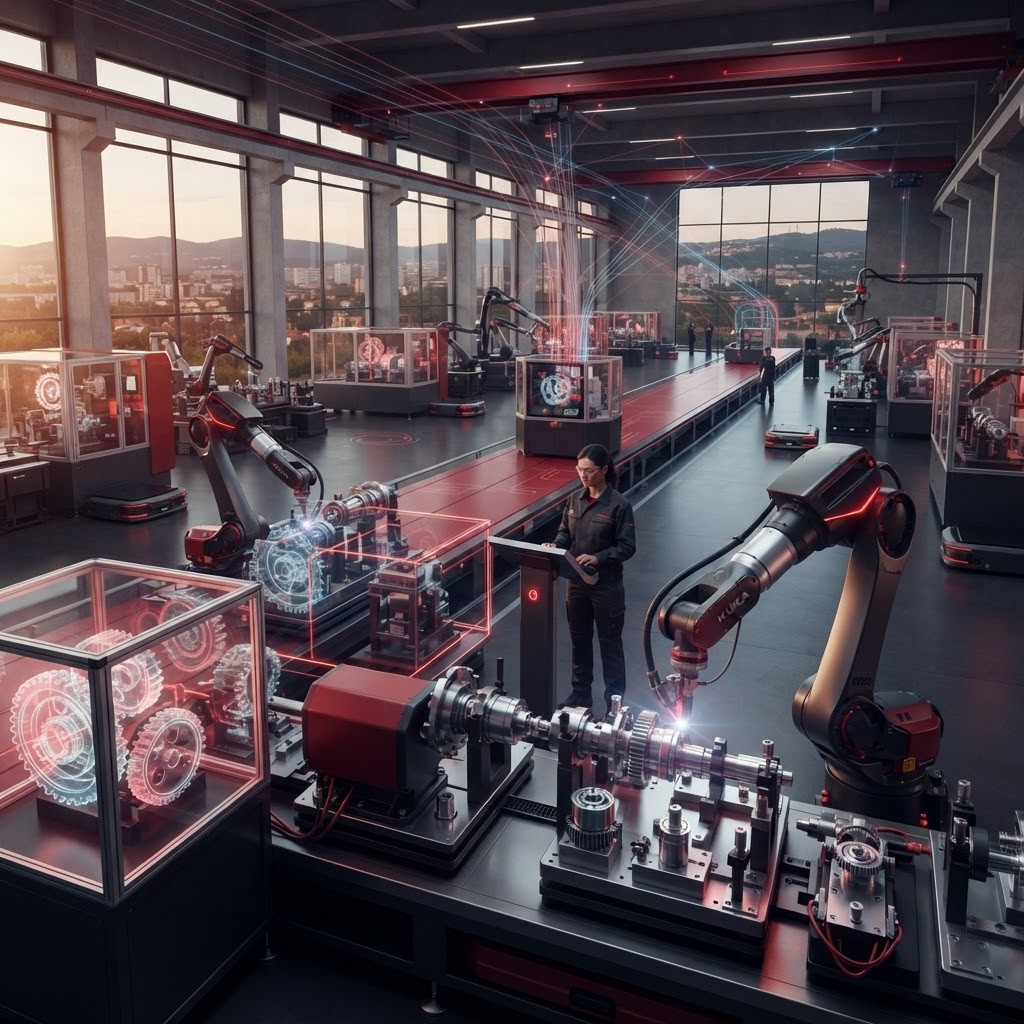
Portugal's Rise as an Industrial Machinery Powerhouse
Over the past two decades, Portugal has transformed from a supplier of raw components into a genuine centre of advanced machinery engineering. Clustered largely around Marinha Grande, Leiria, Porto and Aveiro, the country's machine builders combine skilled craftsmanship with modern automation, delivering equipment trusted by the automotive, aerospace, packaging and consumer goods sectors across the globe. The reputation rests on a rare blend of precision, competitive pricing and a willingness to engineer bespoke solutions rather than off-the-shelf products.
What makes the Portuguese machinery scene distinctive is its ecosystem. Toolmakers, mould specialists and automation firms often work side by side, sharing talent trained at institutions with deep engineering roots. This concentration of know-how allows even mid-sized firms to compete internationally, exporting the majority of their output to Germany, France, the United States and beyond.
What Sets the Leading Manufacturers Apart
The best machinery manufacturers in Portugal are defined by a few recurring qualities: strong in-house design departments, integrated CAD/CAM and simulation capabilities, and a commitment to Industry 4.0 principles such as connected sensors, predictive maintenance and data-driven quality control. Many have invested heavily in robotics and additive manufacturing to shorten lead times and improve repeatability. Just as important is their after-sales culture, offering commissioning, operator training and lifetime support that keeps global clients returning.
The Top 10 Machinery Manufacturers
1. Iberomoldes. One of the most recognised names in Portuguese engineering, Iberomoldes has long been synonymous with high-precision moulds and integrated engineering services. The company supports clients from concept and prototyping through to full production tooling, serving demanding sectors such as automotive and medical devices.
2. Simoldes. A major force in the plastics and mould-making world, Simoldes is respected for large, complex tooling used in vehicle interiors and exteriors. Its scale and multi-site structure allow it to manage substantial international programmes with consistent quality.
3. Motofil. Specialising in robotic welding and automation systems, Motofil designs turnkey production lines that bring flexibility and speed to metal fabrication. Its solutions are widely adopted by manufacturers looking to modernise labour-intensive processes.
4. Adira. A historic name in metal-forming, Adira produces press brakes, shears and laser cutting systems. The brand is known for robust construction and for embracing fibre-laser technology that keeps its equipment relevant in modern sheet-metal shops.
5. TJ Moldes. Focused on precision plastic injection moulds, TJ Moldes builds tooling for packaging, electronics and automotive applications. Its engineering team is valued for translating challenging designs into reliable, high-cavitation moulds.
6. Mold-Tip / Vangest Group. The Vangest ecosystem brings together tooling, plastics and engineering services under one umbrella, delivering complete product-development support. This vertical integration lets clients move seamlessly from idea to serial production.
7. Neutroplast. While rooted in pharmaceutical packaging, the company's engineering and machinery expertise in cleanroom production and automated assembly makes it a notable technical player in regulated manufacturing.
8. Sakthi Portugal. Operating in the foundry and precision-machining space, Sakthi supplies safety-critical components and demonstrates the country's capability in high-volume, high-tolerance metal production for the automotive industry.
9. Palbit. A specialist in cemented carbide tools and cutting solutions, Palbit produces the tooling that other machinery relies upon. Its focus on materials science underpins the productivity of countless machining operations.
10. Frezite. Known for advanced cutting tools and tooling systems, Frezite serves woodworking, metalworking and composite industries. Continuous investment in research keeps its products at the sharp end of manufacturing performance.
Industry Trends Shaping the Sector
Several trends are reshaping Portuguese machinery manufacturing. Digitalisation is the most visible: smart sensors and cloud connectivity now allow manufacturers to monitor equipment remotely and offer predictive maintenance contracts. Sustainability is equally important, with builders redesigning machines for lower energy consumption and integrating systems that reduce material waste. There is also a strong shift toward flexible automation, where robotic cells can be reconfigured quickly to handle shorter, more varied production runs.
Talent development remains a quiet strength. Close collaboration between industry clusters and technical schools ensures a steady flow of engineers fluent in both traditional toolmaking and modern software-driven design. This human capital is arguably Portugal's most valuable machinery export.
Choosing the Right Machinery Partner
For buyers evaluating a Portuguese manufacturer, the decision should go beyond price. Consider the depth of the engineering team, the ability to co-develop custom solutions, and the quality of after-sales support. Ask about simulation capabilities, material traceability and how the company approaches commissioning and training. A strong partner will treat a purchase as the beginning of a long relationship rather than a single transaction.
Conclusion
Portugal's machinery manufacturers punch well above their weight, combining craftsmanship, engineering discipline and modern automation to serve some of the world's most demanding industries. Whether the requirement is precision moulds, robotic welding cells or metal-forming presses, the companies profiled here represent the depth and reliability that have made Portuguese engineering a trusted name across global markets.
