
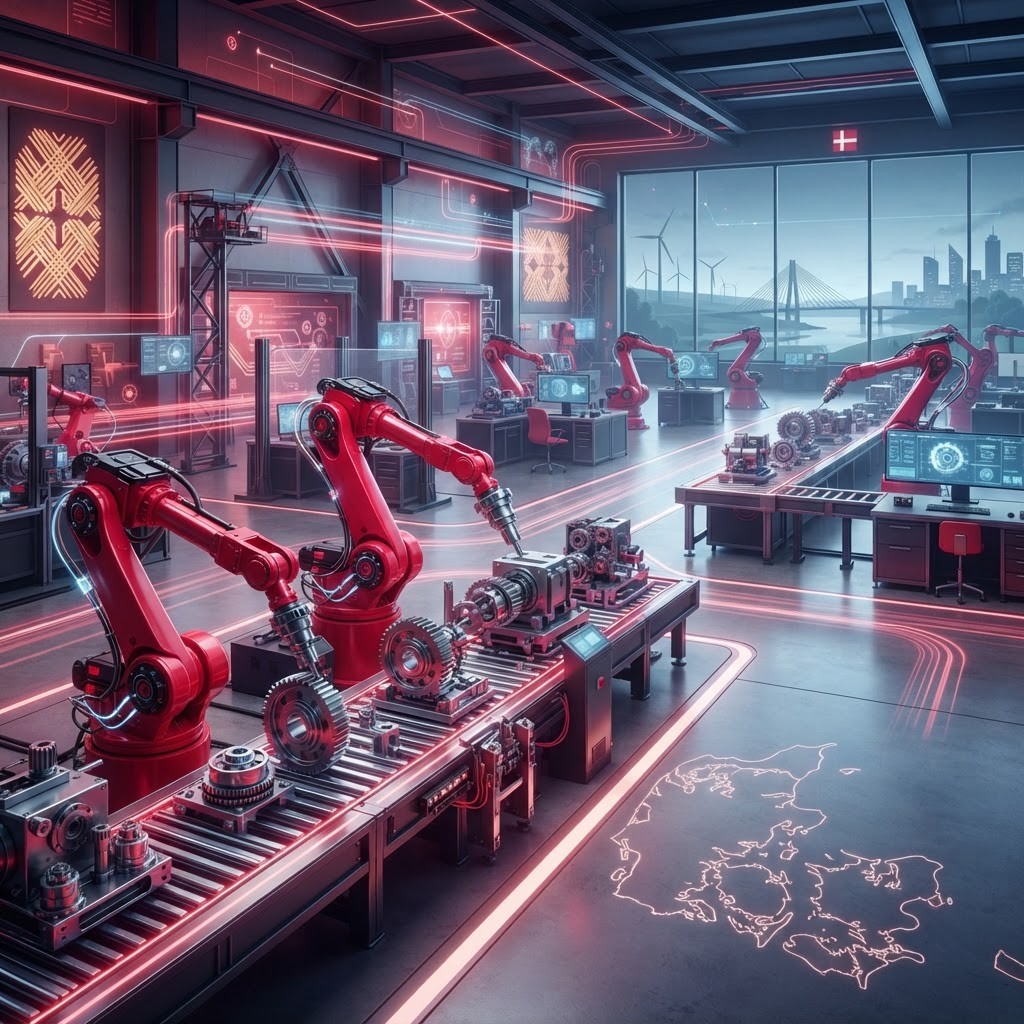
Denmark's Machinery Manufacturing Legacy
Denmark has quietly become one of Europe's most respected centres for advanced machinery manufacturing. Rooted in a culture of engineering precision, functional design, and long-term reliability, Danish machine builders serve global sectors ranging from food processing and pharmaceuticals to marine, energy, and agriculture. The country's manufacturers are known less for sheer volume and more for specialised, high-value equipment that solves demanding technical problems with elegant, durable solutions.
What distinguishes the Danish approach is a blend of automation expertise, energy efficiency, and a genuine commitment to sustainability. As industries worldwide seek partners that can help them decarbonise and digitalise, Denmark's machinery sector has positioned itself as a trusted source of both hardware and know-how.
What Sets Danish Machine Builders Apart
Several themes recur across the country's leading manufacturers. First is a deep focus on niche leadership rather than broad competition, allowing companies to dominate specific categories such as pumps, dosing systems, or processing lines. Second is an early and enthusiastic embrace of Industry 4.0, with sensors, remote monitoring, and predictive maintenance now standard on much of the equipment produced. Third is a design sensibility that values clean lines, serviceability, and operator safety.
The Leading Machinery Manufacturers
Danfoss is arguably the flagship of Danish engineering. Headquartered in Nordborg, the company produces components and systems for heating, cooling, motor control, and power electronics. Its drives and climate solutions are found in factories, buildings, and vehicles across the planet, and its investment in energy efficiency has made it a reference point for responsible industrial technology.
Grundfos, based in Bjerringbro, is one of the world's largest pump manufacturers. Its circulator and centrifugal pumps power water supply, wastewater treatment, and building services globally. Grundfos has built a strong reputation for intelligent, connected pumping systems that reduce energy consumption while improving reliability.
SPX FLOW / APV carries forward a long Danish heritage in process technology, supplying mixing, heat transfer, and separation equipment to the dairy, food, and beverage industries. Its hygienic processing lines are trusted by producers who cannot compromise on cleanliness or consistency.
GEA Process Engineering maintains a significant Danish presence, particularly in spray drying and liquid processing. The company's technology is central to producing everything from infant formula to detergents, reflecting Denmark's strength in food and ingredient manufacturing.
Cimbria specialises in equipment for handling, drying, and storing grain and seed. Its systems support agricultural supply chains around the world, combining robust mechanical design with modern automation for high-throughput operations.
Schur Technology designs packaging and end-of-line automation machinery, helping producers wrap, sort, and palletise products efficiently. Its solutions reflect the Danish talent for practical, well-built automation.
PM Group / IRAS and other regional specialists supply waste handling and recycling machinery, an area where Denmark's circular-economy ambitions have spurred considerable innovation.
Kramp / Baettr and related suppliers support the wind and heavy-industry supply chains with castings and machined components, underpinning Denmark's leadership in renewable energy hardware.
JORO Technologies and similar mid-sized firms offer custom automation cells and robotic integration, serving manufacturers that need tailored production equipment rather than off-the-shelf machines.
Bila rounds out the list as a robotics and automation integrator, delivering turnkey systems that bring flexible, high-precision automation to Danish and international factories.
Industry Trends Shaping the Sector
Automation and robotics continue to be the dominant growth story, with Danish firms integrating collaborative robots and vision systems into ever more compact machines. Energy efficiency is a second powerful trend, driven both by regulation and by customers seeking lower operating costs. Digital services, including remote diagnostics and software-based performance guarantees, are increasingly bundled with physical equipment, turning one-time sales into long-term partnerships.
Choosing the Right Manufacturing Partner
For buyers evaluating Danish machinery manufacturers, the key considerations are domain expertise, aftersales support, and total cost of ownership rather than headline price. The best Danish suppliers offer strong documentation, responsive service networks, and equipment engineered to last for decades. Their emphasis on efficiency also means that lifetime energy savings frequently offset a higher initial investment.
Conclusion
Denmark's machinery manufacturers demonstrate that a small country can wield outsized influence when it commits to quality, specialisation, and sustainability. From global giants like Danfoss and Grundfos to focused innovators in processing and automation, these companies exemplify the reliability and forward thinking that define Danish industry. For any organisation seeking durable, efficient, and intelligent equipment, Denmark remains a first-class destination.
