
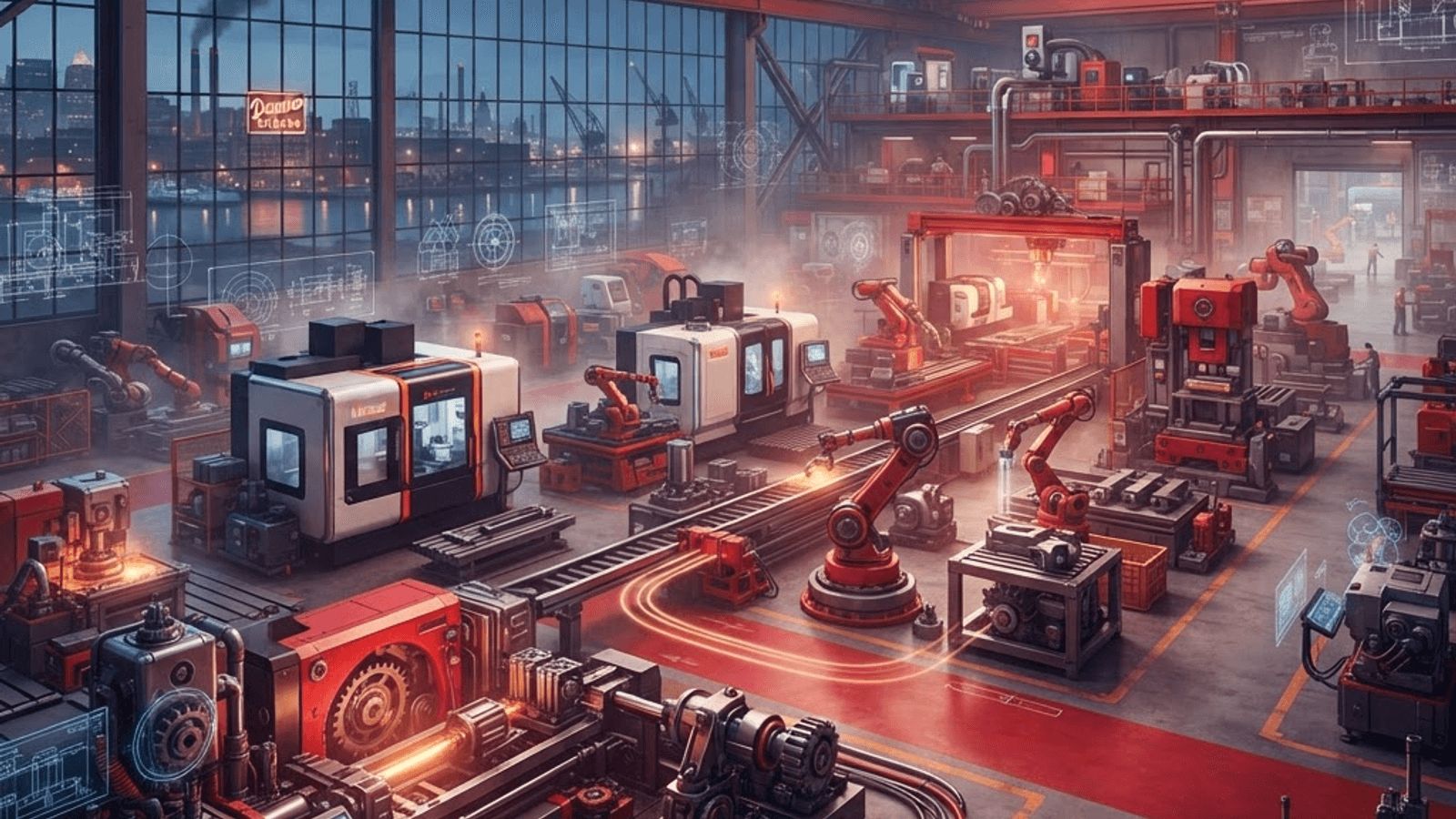
The Enduring Strength of Baltimore Machinery Manufacturing
Machinery manufacturing is the least visible and most consequential part of any industrial economy. Every bottling line, conveyor system, dredge, crane, water treatment plant, and food processing facility depends on custom equipment designed and built by firms most people never hear about. Baltimore has an unusually deep bench in this field, a direct legacy of shipbuilding, steelmaking, and port operations that demanded heavy fabrication and precision machining for well over a century.
What sustains the sector today is not nostalgia but need. Regional manufacturers, utilities, food producers, pharmaceutical plants, and marine operators require equipment built to their specific processes, plus the ongoing service to keep it running. Offshoring rarely works for this category, because a broken machine needs an engineer on site within hours, not a container in six weeks.
The Segments Within Machinery Manufacturing
Understanding capability categories prevents mismatched sourcing. Custom machine builders design and construct purpose-built equipment from a functional specification. Precision machine shops produce components to tight tolerances using CNC milling, turning, and grinding. Heavy fabricators cut, form, and weld large structural assemblies. Automation integrators combine mechanical systems with controls, robotics, and software. Rebuilders and service providers overhaul existing equipment and manufacture obsolete replacement parts.
A project frequently requires several of these. A new packaging line might involve a machine builder for the core mechanism, a precision shop for tooling, a fabricator for frames and guarding, and an integrator for controls. Firms that self-perform multiple functions reduce coordination risk, which is often worth more than a lower quoted price.
The Top Machinery Manufacturers Serving Baltimore
Danaher Corporation, headquartered in the Washington-Baltimore corridor, operates a portfolio of industrial and life-sciences equipment businesses. Its differentiator is disciplined operational methodology and product breadth, from marking and coding systems to laboratory instrumentation, backed by extensive service networks.
Baltimore Aircoil Company is a globally recognized manufacturer of heat transfer and cooling equipment, including cooling towers and industrial refrigeration systems. Engineers value its thermal performance data, product certification, and the fact that a Maryland-based manufacturer supports installations worldwide.
Patapsco Machine Works provides precision CNC machining and custom component production for industrial and marine clients. Its strengths are tight-tolerance capability, material versatility including stainless and exotic alloys, and quick-turn support when a plant is down.
Sparrows Point Heavy Fabrication handles large structural weldments, pressure components, and heavy assemblies that require substantial crane capacity and certified welding procedures. Buyers of oversized equipment appreciate waterfront access that permits barge shipment of pieces too large for highways.
Chesapeake Automation Systems integrates programmable logic controllers, robotics, vision systems, and human-machine interfaces into production lines. Its differentiator is controls documentation and operator training, which determine whether an automated line actually improves throughput.
Harbor Conveyor and Material Handling designs and builds conveying, sorting, and bulk handling systems for ports, recycling operations, and food processors. Application experience matters here because bulk material behavior is notoriously difficult to model from catalogs alone.
Locust Point Hydraulics and Machinery manufactures and rebuilds hydraulic cylinders, power units, and heavy equipment components. Marine and construction clients rely on its ability to reverse-engineer parts for equipment whose original manufacturer no longer exists.
Bmore Precision Gear and Drive produces gearing, shafts, and drive components for industrial machinery. Gear manufacturing is a specialized discipline requiring dedicated equipment and inspection capability, and regional access shortens repair cycles dramatically.
Federal Hill Process Equipment builds tanks, mixers, and sanitary process systems for food, beverage, and pharmaceutical clients. Sanitary construction demands specific finishes, drainability, and documentation, and specialists in this niche deliver validation packages generalists cannot.
Maryland Machine Rebuilders focuses on overhauling and retrofitting existing machine tools and production equipment, including control upgrades on mechanically sound machines. For capital-constrained manufacturers, a well-executed rebuild delivers most of the performance of new equipment at a fraction of the cost.
Trends Shaping the Industry
Automation and labor scarcity are linked and dominant. Regional manufacturers cannot hire enough skilled operators, so they are automating repetitive tasks, adding collaborative robots, and instrumenting machines for remote monitoring. This shifts demand toward integrators and away from purely mechanical builders.
Predictive maintenance is the second trend. Vibration sensors, thermal monitoring, and connected controls now allow equipment to signal degradation before failure. Machine builders who deliver monitoring capability alongside hardware create ongoing service relationships and reduce customer downtime.
Reshoring and infrastructure investment form the third trend, increasing demand for domestically built equipment with documented material origin, particularly for projects with federal funding requirements.
How to Evaluate a Machinery Manufacturer
Write a functional specification rather than a design. State throughput, materials, tolerances, footprint, utilities, and safety requirements, and let experienced builders propose approaches. Prescriptive designs from buyers frequently eliminate better solutions.
Assess engineering capacity, not just shop capacity. Ask how many mechanical and controls engineers are on staff and who will lead your project. Request a factory acceptance test plan up front, because agreeing on acceptance criteria before fabrication prevents disputes at delivery. Verify welding certifications, inspection equipment calibration, and spare parts support commitments.
Finally, weigh service seriously. Custom machinery runs for decades, and the manufacturer's ability to supply parts and technicians in year fifteen matters more than the price difference in year one.
Final Thoughts
Baltimore's machinery manufacturers combine heavy industrial heritage with modern automation and precision capability. From globally significant equipment producers to specialized machinists, fabricators, and rebuilders, the region can support a project from concept through decades of service. For plant engineers and operations leaders across the Mid-Atlantic, that local depth translates directly into shorter downtime and better equipment outcomes.
