
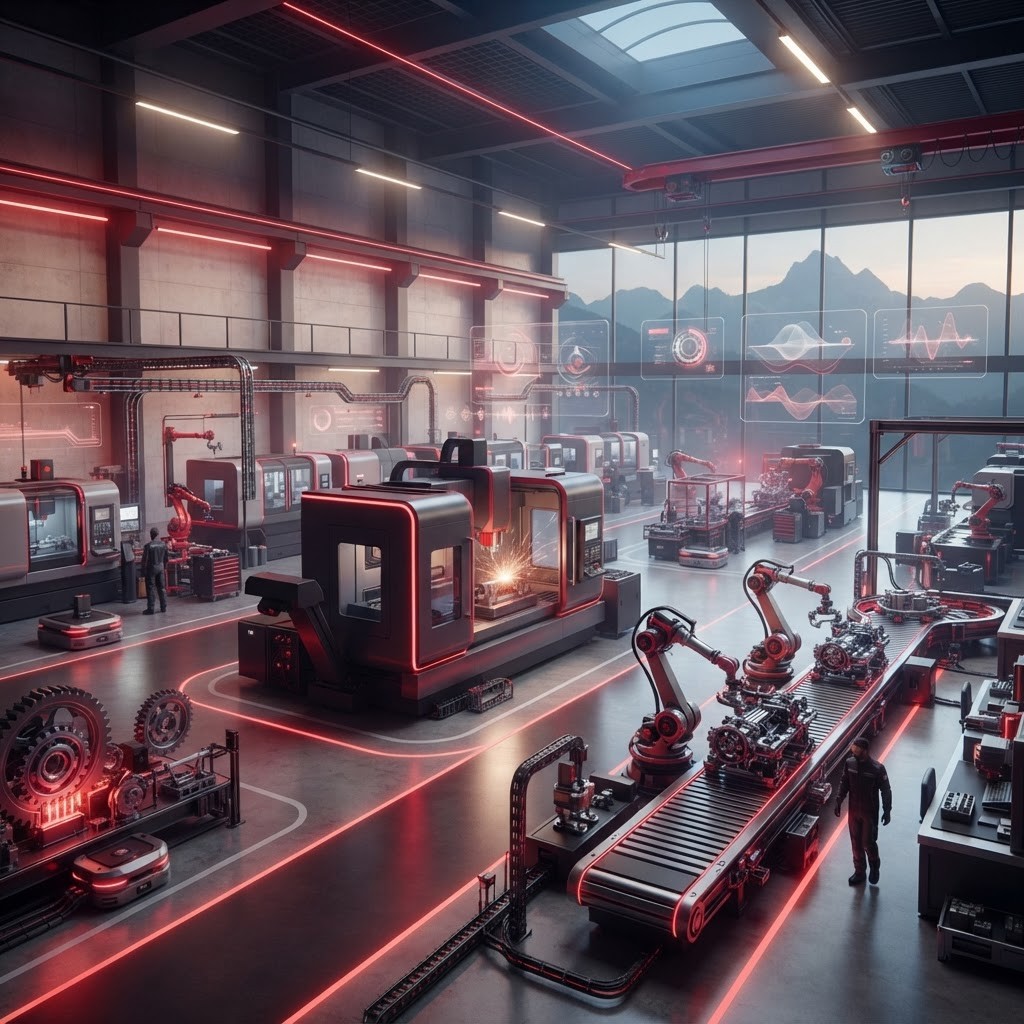
Austria's Machinery Manufacturing Legacy
Austria has long stood as one of Europe's most respected centres for machinery manufacturing, combining a deep tradition of engineering excellence with a forward-looking appetite for automation and digitalisation. The sector is a cornerstone of the national economy, contributing significantly to exports and employing a highly skilled workforce concentrated in industrial hubs such as Upper Austria, Styria, and Vienna. Austrian machine builders are known worldwide for reliability, precision, and the ability to deliver customised solutions for demanding industrial applications.
What sets the Austrian machinery landscape apart is its focus on specialised, high-value equipment rather than mass-market commodity production. Companies here frequently occupy leadership positions in narrow but critical niches, from metal forming and plastics processing to injection moulding and industrial automation. This niche dominance, often described as the "hidden champion" model, allows Austrian manufacturers to compete globally against far larger rivals.
Leading Machinery Manufacturers
ENGEL is one of the most recognisable names in the field, renowned for its injection moulding machines and turnkey production systems. The family-owned company has built a reputation for energy efficiency and smart manufacturing solutions that serve the automotive, medical, and packaging industries.
Andritz operates as a global technology group supplying plants, equipment, and services for hydropower, pulp and paper, metals, and separation technologies. Its engineering breadth and international footprint make it a flagship of Austrian industrial capability.
Rosenbauer is a world leader in firefighting technology and vehicles, demonstrating how Austrian machinery expertise extends into highly specialised safety equipment trusted by emergency services across the globe.
GFM (Group Feichtinger Maschinen) and WFL Millturn Technologies are prized for their multi-tasking machine tools and forging systems, serving aerospace and heavy-duty precision manufacturing sectors.
Innovation and Industry Trends
Digital transformation is reshaping the Austrian machinery industry. Manufacturers are embedding sensors, connectivity, and data analytics into their equipment to enable predictive maintenance, remote monitoring, and adaptive production. This shift toward Industry 4.0 principles is not merely a marketing trend but a competitive necessity, as customers increasingly demand smart machines that reduce downtime and optimise output.
Sustainability has also become a central theme. Energy-efficient drives, resource-saving processes, and machines designed for recyclable materials reflect the sector's response to tightening environmental regulations and rising customer expectations. Austrian firms often position energy performance as a key differentiator, helping clients lower operating costs while meeting climate goals.
Why Austrian Machinery Stands Out
Several factors underpin the enduring strength of Austria's machinery manufacturers. The country benefits from a robust dual education system that produces technically proficient apprentices and engineers, ensuring a steady pipeline of talent. Close collaboration between industry and research institutions accelerates the transfer of new ideas into practical products.
Geographic positioning at the heart of Europe gives Austrian manufacturers efficient access to major markets in Germany, Italy, and Eastern Europe, while established logistics networks support worldwide distribution. This blend of skilled labour, research linkages, and strategic location creates fertile ground for sustained industrial success.
Choosing the Right Machinery Partner
For businesses evaluating machinery suppliers in Austria, several considerations matter. Buyers should assess a manufacturer's track record in their specific industry, the availability of after-sales service and spare parts, and the flexibility to customise equipment for unique production needs. Long-term partnerships often deliver the greatest value, as suppliers who understand a client's operations can propose targeted improvements over time.
Reputation and references remain powerful indicators of quality. The leading Austrian firms have earned trust through consistent performance, transparent communication, and a willingness to stand behind their products for years after installation. This reliability is precisely why Austrian machinery continues to command respect in global markets.
Conclusion
The Austrian machinery manufacturing sector exemplifies how a relatively small nation can achieve outsized global influence through specialisation, quality, and innovation. From injection moulding pioneers to hydropower technology leaders, these companies demonstrate the enduring value of engineering craftsmanship paired with modern digital capabilities. For any organisation seeking dependable, high-performance industrial equipment, Austria's machinery manufacturers represent a compelling choice built on a foundation of proven expertise.
