
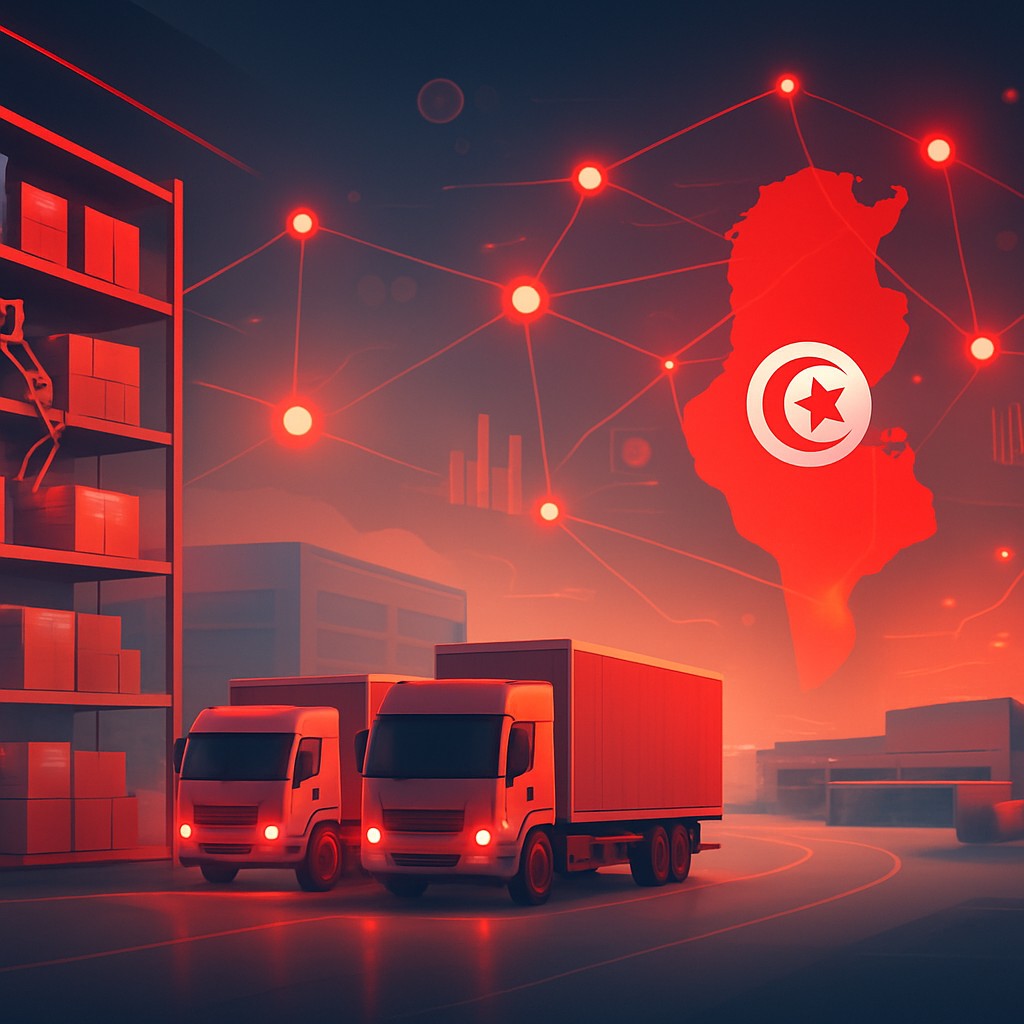
Logistics as the Backbone of Tunisian Commerce
Logistics is the invisible infrastructure that keeps Tunisia's economy functioning smoothly. Behind every product on a store shelf, every export bound for Europe, and every component delivered to a factory lies a complex network of warehousing, transport, inventory management, and distribution. Logistics companies orchestrate these processes, ensuring that goods move efficiently from origin to destination while minimizing costs and delays. As Tunisia strengthens its position as a trade hub between Africa and Europe, the role of logistics has become more important than ever.
The logistics sector in Tunisia encompasses a wide range of services, including freight forwarding, warehousing, customs clearance, supply chain management, and last-mile distribution. Leading companies integrate these functions to provide end-to-end solutions that help businesses operate efficiently in an increasingly competitive and globalized marketplace.
What Sets Top Logistics Companies Apart
The best logistics companies in Tunisia distinguish themselves through comprehensive service portfolios, technological capability, reliability, and deep expertise in both domestic and international operations. Effective logistics requires careful coordination across multiple stages, and top providers excel at managing complexity while maintaining transparency and control. Advanced tracking systems, modern warehousing facilities, and efficient distribution networks are hallmarks of industry leaders.
Expertise in customs and international trade is particularly valuable given Tunisia's role in cross-Mediterranean commerce. Companies that can navigate regulations, optimize routes, and provide integrated multimodal solutions offer significant advantages to their clients. Strong customer service, scalability, and the ability to tailor solutions to specific industries further set the leaders apart.
Leading Logistics Providers
Bollore Logistics Tunisia is a prominent name in the sector, offering integrated logistics, freight forwarding, and supply chain solutions backed by international expertise and a strong local presence.
DB Schenker Tunisia provides comprehensive logistics services spanning land, sea, and air, supported by global infrastructure and advanced supply chain management capabilities that serve a wide range of industries.
Kuehne and Nagel Tunisia is recognized for its professional logistics and freight forwarding services, combining international reach with reliable local execution.
DHL Supply Chain Tunisia brings world-class logistics expertise to the market, offering warehousing, distribution, and integrated solutions valued for their efficiency and reliability.
GEFCO Tunisia specializes in industrial and automotive logistics, providing tailored supply chain solutions for manufacturing and complex distribution needs.
Other respected firms include Geodis Tunisia, known for its broad logistics and supply chain services; CEVA Logistics Tunisia, valued for contract logistics and freight management; Maghreb Logistics, a regional specialist serving North African distribution; Tunisia Supply Chain Solutions, a capable local provider offering warehousing and distribution; and Express Logistics Tunisia, appreciated for efficient last-mile delivery and responsive service. Together, these companies cover the full spectrum of logistics requirements.
Core Logistics Services
Warehousing and storage form a foundational element of logistics, with modern facilities offering secure, organized space for inventory management, order fulfillment, and distribution. Leading providers operate strategically located warehouses that reduce transit times and support efficient supply chains.
Freight forwarding and transport coordination ensure that goods move smoothly across road, sea, and air, often combining modes for optimal efficiency. Customs clearance services are essential for international trade, helping businesses navigate documentation and regulations to avoid costly delays. Increasingly, value-added services such as inventory management, packaging, and supply chain consulting allow companies to outsource complex logistics functions and focus on their core operations.
Trends Shaping the Industry
Technology is transforming logistics in Tunisia, with growing adoption of digital tracking, warehouse automation, and data-driven supply chain management. These tools improve visibility, reduce errors, and enhance efficiency across the entire chain. Sustainability is also emerging as a priority, with companies exploring greener transport options and more efficient operations to reduce environmental impact.
The continued expansion of e-commerce is driving demand for faster, more flexible distribution and last-mile delivery, prompting logistics providers to adapt their networks and capabilities. As regional trade grows, the integration of Tunisia into broader supply chains positions the logistics sector for ongoing development and innovation.
Choosing the Right Logistics Partner
Selecting the right logistics partner depends on a business's specific needs, including the type of goods, geographic scope, and required services. Companies engaged in international trade benefit from providers with strong customs expertise and global networks, while those focused on domestic distribution may prioritize warehousing and last-mile capabilities. Reliability, transparency, scalability, and industry experience are all critical factors in making the right choice.
Final Thoughts
Logistics companies are essential to the efficient functioning of Tunisia's economy, enabling the seamless movement and management of goods across the country and beyond. With a strong mix of international leaders and capable local providers offering integrated, technology-driven solutions, the logistics sector supports trade, industry, and commerce at every level. By partnering with a reputable and capable logistics company, businesses can optimize their supply chains, reduce costs, and position themselves for success in a dynamic and connected marketplace.
