
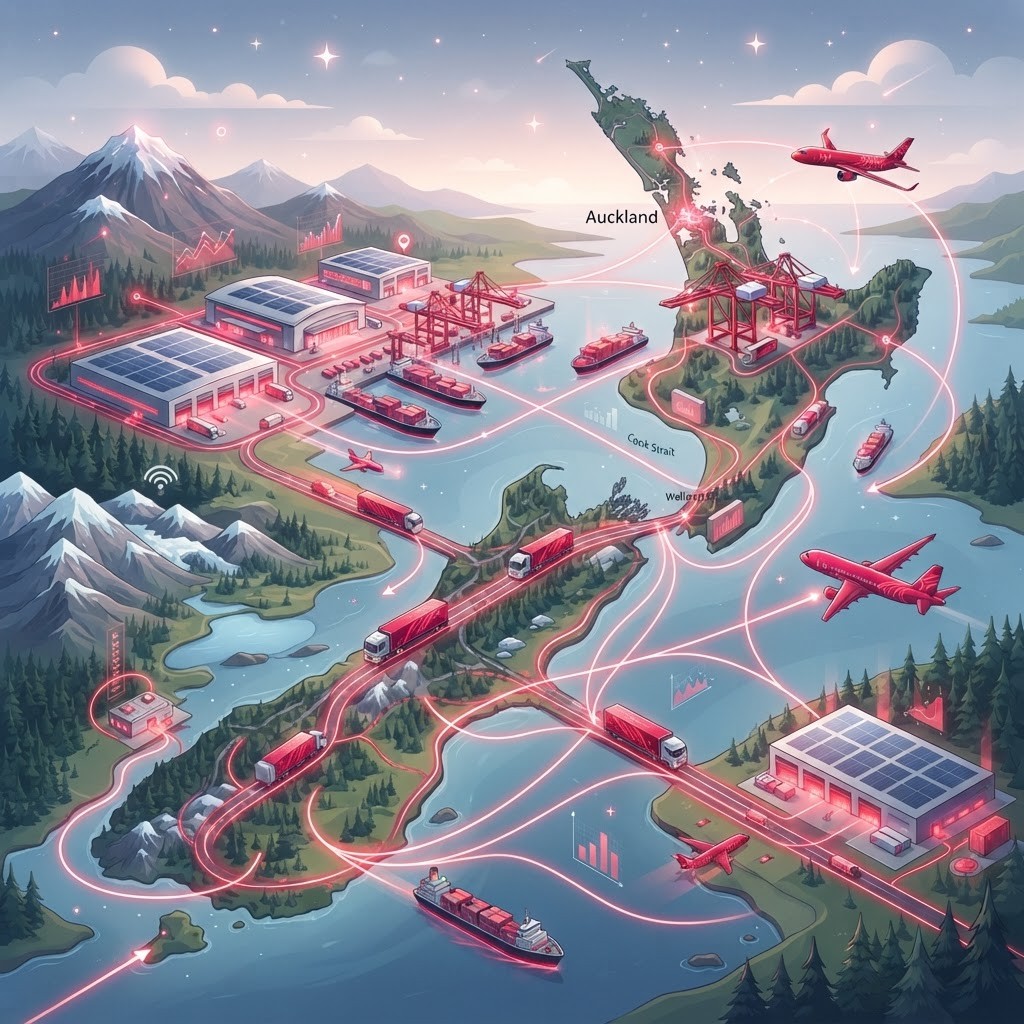
The Vital Role of Logistics in New Zealand
Logistics is the engine that keeps New Zealand's economy moving, coordinating the complex flow of goods from suppliers to end customers. In a country with a significant reliance on exports and imports, efficient logistics management is essential for businesses to remain competitive and responsive. Leading logistics companies provide far more than simple transport; they offer integrated solutions encompassing warehousing, distribution, inventory management, and supply-chain optimisation. Their expertise ensures products reach the right place at the right time, supporting industries ranging from agriculture to retail and manufacturing.
Industry Leaders
New Zealand is home to several highly regarded logistics companies. Mainfreight stands out as a global leader with deep New Zealand roots, offering comprehensive logistics, warehousing, and supply-chain services across the country and internationally. Toll Group and Fliway also provide extensive logistics solutions, serving diverse industries with reliable and scalable services. These companies combine strong domestic networks with international connectivity, enabling businesses to manage complex supply chains efficiently. Their scale, experience, and infrastructure make them trusted partners for organisations with demanding logistics requirements.
Warehousing and Distribution
Warehousing and distribution are core components of modern logistics. Leading providers operate strategically located facilities equipped with advanced storage, handling, and order-fulfilment capabilities. These warehouses support efficient inventory management, allowing businesses to reduce costs while maintaining product availability. Distribution networks ensure timely delivery to retailers, businesses, and consumers throughout the country. As e-commerce continues to grow, the demand for sophisticated warehousing and fast, accurate order fulfilment has increased, prompting logistics companies to invest heavily in facilities and technology to meet evolving expectations.
End-to-End Supply Chain Solutions
The most capable logistics companies offer end-to-end supply-chain solutions that manage the entire journey of goods. This includes procurement support, freight forwarding, customs clearance, warehousing, distribution, and returns management. By providing a single point of coordination, these integrated services simplify operations for businesses and improve overall efficiency. Companies can outsource complex logistics functions to trusted specialists, allowing them to focus on their core activities. This comprehensive approach is particularly valuable for businesses engaged in international trade, where coordination across multiple stages is critical.
Technology-Driven Logistics
Technology has revolutionised the logistics sector in New Zealand. Advanced warehouse management systems, real-time tracking, and data analytics enable companies to optimise operations and provide greater visibility to customers. Automation and robotics are increasingly used in warehouses to improve speed and accuracy, while intelligent route planning reduces transport costs and delivery times. These digital capabilities allow logistics providers to respond swiftly to disruptions and changing demand, delivering the reliability and transparency that modern businesses require in an increasingly fast-paced marketplace.
Supporting Key Industries
New Zealand's logistics companies play a crucial role in supporting the country's most important industries. The agricultural and food sectors depend on efficient cold-chain and export logistics to deliver perishable products to global markets. Retailers rely on smooth distribution to keep shelves stocked and meet consumer demand, while manufacturers need dependable supply chains for raw materials and finished goods. By tailoring their services to the specific needs of these industries, logistics providers contribute significantly to economic growth and the international competitiveness of New Zealand businesses.
Sustainability and the Future
Sustainability is increasingly shaping the future of logistics in New Zealand. Companies are adopting greener practices such as fuel-efficient fleets, optimised routing, and energy-efficient warehouses to reduce their environmental footprint. There is also a growing emphasis on circular supply chains and responsible resource use. As customers and regulators place greater importance on environmental performance, logistics providers that embrace sustainability are well positioned for long-term success. Combined with ongoing technological advancement, these efforts are driving the industry toward a more efficient and responsible future.
Adapting to a Changing Marketplace
The logistics landscape in New Zealand is evolving rapidly in response to shifting consumer behaviour and global trade dynamics. The rise of online shopping has increased demand for fast, flexible last-mile delivery, prompting companies to rethink distribution models and invest in urban fulfilment centres. At the same time, businesses expect greater resilience following recent global supply-chain disruptions, driving interest in diversified sourcing and robust contingency planning. Leading logistics providers are responding with agile, scalable solutions that can adapt to fluctuating demand and unexpected challenges. Their ability to combine local knowledge with international connectivity positions them as strategic partners, helping New Zealand businesses navigate uncertainty while continuing to deliver reliable service to customers at home and abroad.
Final Thoughts
Logistics companies are essential partners in New Zealand's economy, enabling businesses to move goods efficiently and compete effectively at home and abroad. From industry leaders with global reach to specialised providers offering tailored solutions, the sector delivers the warehousing, distribution, and supply-chain expertise that modern commerce demands. With strong investment in technology and sustainability, New Zealand's logistics companies continue to enhance efficiency, reliability, and environmental responsibility. For businesses seeking to optimise their operations, choosing the right logistics partner is a decision that can drive lasting success.
