
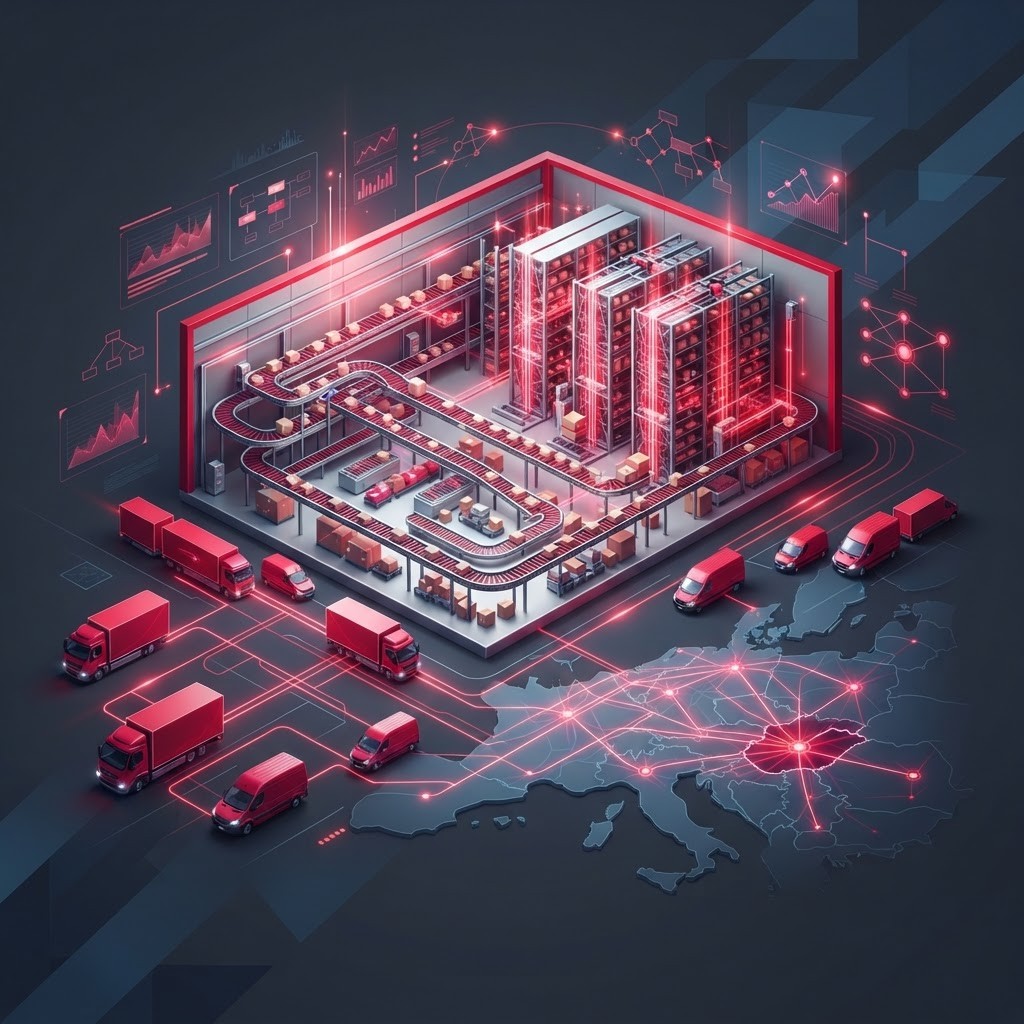
Why Logistics Matters in Hungary
Logistics is the invisible engine behind everyday commerce, and in Hungary it plays an outsized role thanks to the country's central European location. Situated along key trade corridors, Hungary serves as a distribution springboard for companies serving markets across the region. The sector encompasses far more than transport, extending into warehousing, inventory management, customs handling, and value-added services that streamline the entire supply chain.
Growth in e-commerce, manufacturing, and cross-border trade has fueled steady demand for sophisticated logistics solutions. As a result, both global providers and strong domestic players have built extensive operations in and around Budapest and other regional hubs.
Leading Logistics Companies in Hungary
DHL Supply Chain Hungary is a prominent player offering end-to-end logistics, from warehousing to distribution. Its global network and advanced technology make it a preferred partner for multinational clients.
Waberer's extends beyond freight into comprehensive logistics services, leveraging its large fleet and warehousing footprint to deliver integrated solutions for demanding supply chains.
DSV Hungary provides air, sea, and road logistics under one roof, giving customers flexible multimodal options and strong international connectivity.
Gebrüder Weiss combines transport, warehousing, and supply-chain consulting, earning a reputation for reliability and tailored service across diverse industries.
Trans-Sped stands out among domestic providers, pairing contract logistics with a modern warehouse network to support manufacturers and retailers alike.
Rhenus Logistics Hungary and Kuehne+Nagel Hungary further strengthen the market with specialized contract logistics, freight forwarding, and industry-specific expertise.
What Distinguishes the Best Providers
The finest logistics companies excel at visibility and control. Clients increasingly expect real-time tracking, accurate inventory data, and predictive insights that help them plan with confidence. Providers that invest in warehouse automation, robotics, and integrated software platforms deliver measurable gains in speed and accuracy.
Flexibility is equally important. The ability to scale operations up or down in response to seasonal peaks, or to design bespoke solutions for unique products, sets leading firms apart. Strong customs expertise is another crucial differentiator, particularly for businesses managing cross-border shipments where compliance and speed are paramount.
Innovation and Emerging Trends
Automation is transforming Hungarian warehouses, with automated storage and retrieval systems, conveyor technology, and robotics boosting throughput and reducing errors. Data analytics and artificial intelligence are increasingly used to forecast demand, optimize inventory, and streamline routing.
Sustainability has become a central concern. Logistics providers are investing in energy-efficient warehouses, cleaner vehicle fleets, and packaging optimization to lower their carbon footprint. Meanwhile, the surge in e-commerce continues to reshape the sector, driving demand for faster fulfillment, flexible last-mile delivery, and efficient returns handling.
Selecting the Right Logistics Partner
Choosing a logistics provider in Hungary requires a clear understanding of your business needs. Companies should assess a provider's network coverage, technological capabilities, industry experience, and capacity to scale. For businesses with complex or specialized requirements, a provider offering integrated warehousing and value-added services can deliver significant efficiencies.
Beyond capabilities, cultural fit and communication quality shape a successful partnership. The best providers act as strategic collaborators, offering proactive advice and continuous improvement rather than simply executing transactions.
Conclusion
Hungary's logistics sector is a vibrant, technology-driven industry central to the country's economic strength. The leading companies featured here combine extensive networks, advanced automation, and deep expertise to keep supply chains running smoothly. As innovation accelerates and sustainability grows in importance, these providers are well equipped to meet the demands of an increasingly complex and fast-moving marketplace.
