
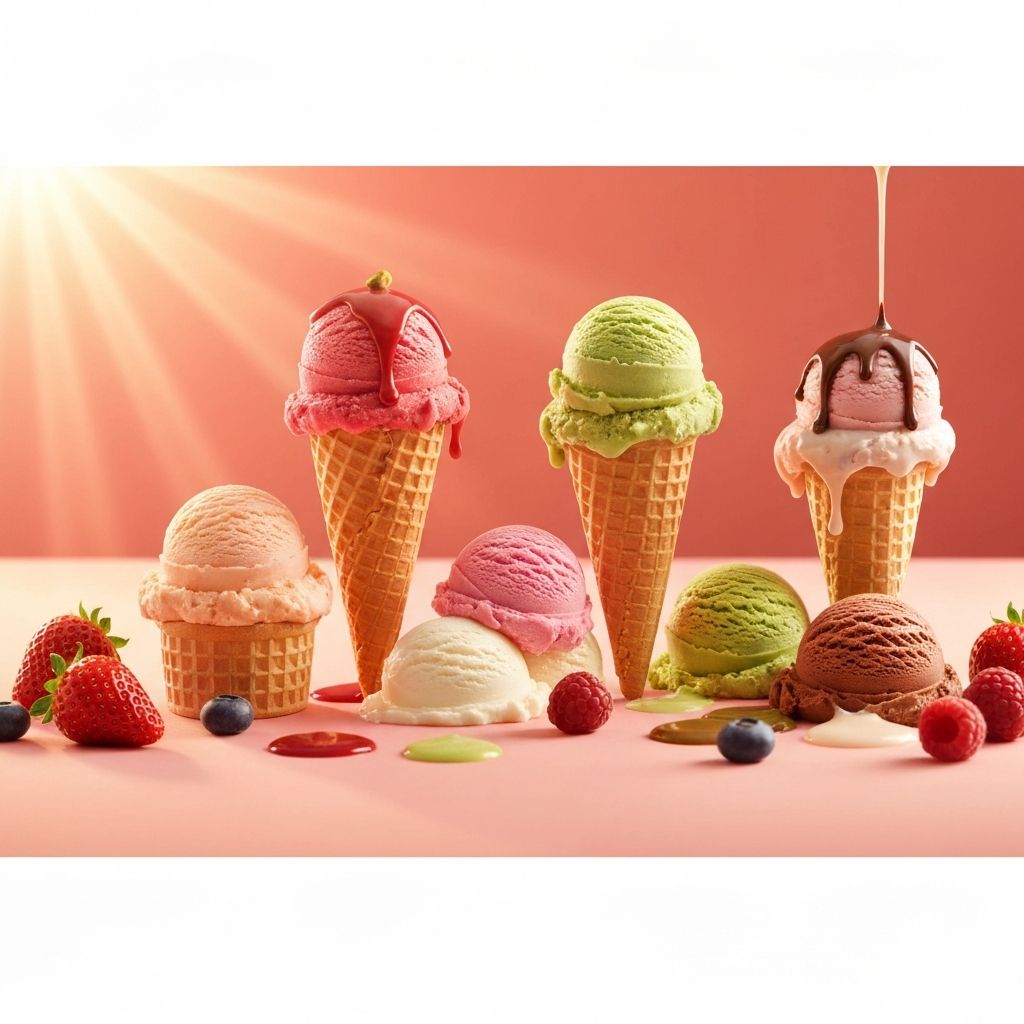
Germany's Love Affair with Ice Cream
Germans are among Europe's most enthusiastic ice cream consumers, with annual per-capita consumption rivaling that of Italy. From traditional Eisdielen on bustling pedestrian streets to premium supermarket pints, the country offers a remarkable variety of frozen treats. Many of the most beloved brands have roots in Italian immigrant communities who brought authentic gelato traditions to Germany decades ago.
The Top 10 Ice Cream Brands
1. Langnese, part of Unilever's global ice cream portfolio, is Germany's most recognizable mass-market brand, offering everything from classic Cornetto cones to Magnum bars.
2. Mövenpick, originally Swiss but widely loved in Germany, is synonymous with premium ice cream in elegant flavors like Maple Walnut and Swiss Chocolate.
3. Häagen-Dazs Germany is the go-to for indulgent super-premium pints, dominating the high-end retail segment.
4. Florida Eis, made in Berlin, is famous for its CO2-neutral production, natural ingredients, and rich, creamy texture without artificial additives.
5. Eiscafé Venezia chains, found throughout Germany, are family-run Italian-style parlors that have served generations of locals with classic gelato.
6. Schöller, a long-standing German brand now part of Nestlé, offers a broad range of family-friendly tubs and novelties.
7. Ben & Jerry's Germany brings its quirky, mission-driven flavors to German freezers, with strong appeal among younger consumers.
8. Eismanufaktur Hamburg and similar artisan brands have grown by emphasizing local milk, seasonal flavors, and small-batch production.
9. Bonneterre and Rosso Bianco gelaterias exemplify the upscale gelato segment found in cities like Munich, Düsseldorf, and Cologne.
10. Eiscafé Dolomiti, with multiple locations across Germany, is celebrated for its authentic Italian gelato made fresh daily by master gelatieri.
Mass Market vs. Artisan
German consumers can choose between convenient supermarket brands and artisanal parlors. Mass-market brands dominate in volume and variety, while artisanal gelaterias and ice cream manufactories win on freshness, creativity, and storytelling. Both segments are growing, suggesting healthy demand across price points.
Flavors That Define Germany
Classic flavors like vanilla, chocolate, and strawberry remain dominant, but Germans love variety. Stracciatella, hazelnut (Haselnuss), pistachio, and walnut are perennial favorites. Seasonal flavors such as elderflower, rhubarb, and pumpkin spice showcase the artisanal scene's creativity. Iconic novelties like Spaghettieis, invented in Mannheim, remain uniquely German.
Sustainability and Health Trends
Sustainability is reshaping the category, with brands investing in compostable packaging, regional dairy sourcing, and renewable energy. Plant-based ice creams have surged in popularity, with vegan options now standard on most menus. Reduced-sugar and protein-enriched varieties cater to health-conscious shoppers.
The Eisdiele Experience
The Eisdiele is a cherished German summer institution. Long lines form on warm afternoons as families queue for scoops served in cones or cups, often topped with whipped cream and fresh fruit. Many parlors stay open from spring through autumn, becoming social hubs in their neighborhoods.
Choosing an Ice Cream Brand
When picking ice cream, consider ingredient quality, fat and milk content, additives, and provenance. Artisans typically use higher butterfat and natural flavors, while mass-market brands offer convenience and consistency. For special occasions, premium pints or fresh gelato are worth the splurge.
The Future of German Ice Cream
The next chapter will be defined by plant-based innovation, hyper-local sourcing, and creative flavor partnerships with chefs and pastry makers. With strong consumer demand and a vibrant mix of traditional and modern players, ice cream remains one of Germany's most delicious cultural exports.
